OPTIMIZATION
Website developed by Piotr Tyrakowski

Key Technologies for Sugar Process Optimization
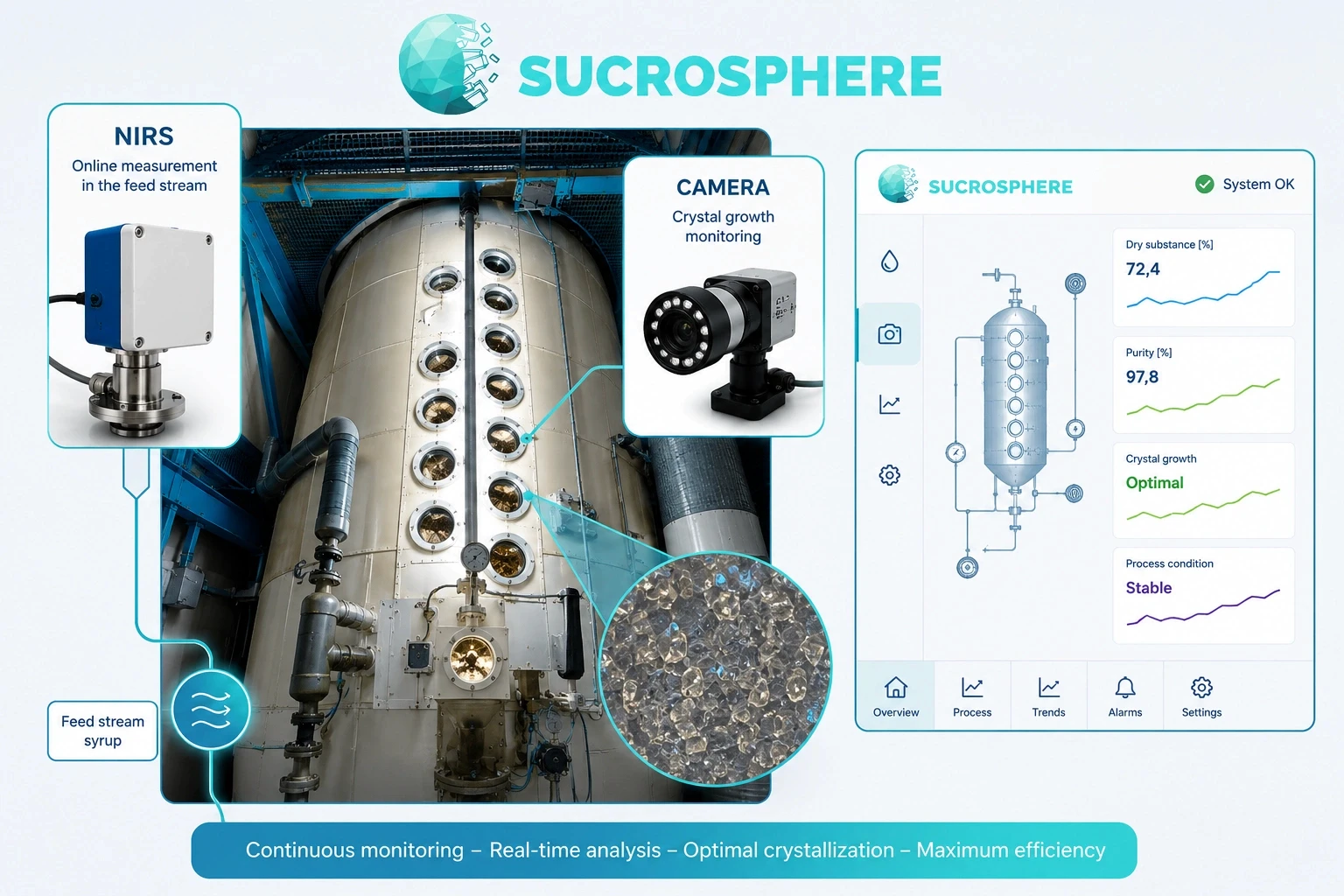
Near-Infrared Spectroscopy (NIRS) for Real-Time Quality Monitoring
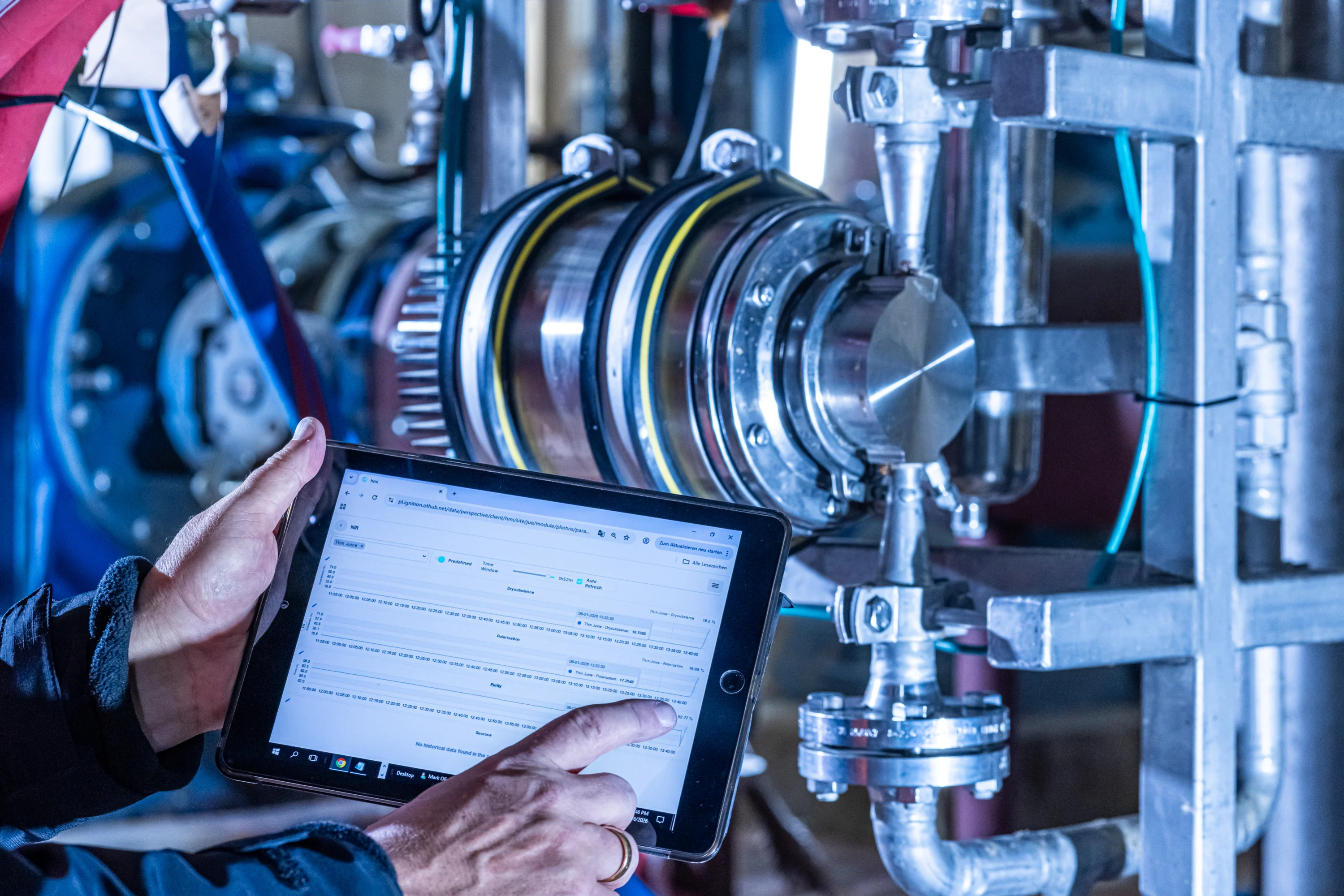
This technology enables continuous, real-time monitoring of the critical quality parameters of the sugar production process. On the other hand, traditional laboratory methods that would normally require 30-60 minutes for results, their sensors provide instant feedback on:
Polarimetric sucrose content (R² = 0.993, correlation with reference methods)
HPLC sucrose levels (R² = 0.982 correlation)
Dry substance content
Non-sugar impurities by comparison of HPLC Sucrose content and Polarimetric Sucrose content results++
This real-time data eliminates the lag between sampling and action, allowing operators to detect and correct process deviations immediately.
The result is more stable production, higher yield, and significantly reduced manual laboratory workload.
Model Predictive Control (MPC) Systems
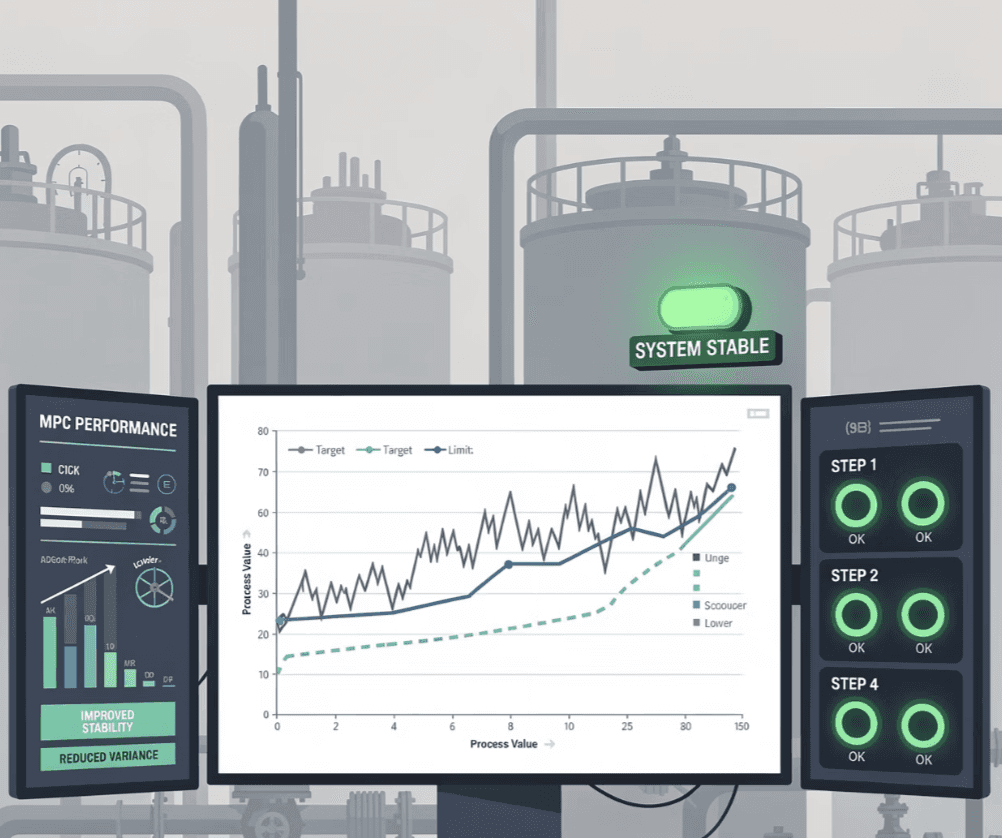
The Model Predictive Control is the next evolution of traditional PID control systems. It uses dynamic mathematical models of the entire production process to predict future behavior and automatically adjust multiple process variables simultaneously to achieve the most optimal outcomes possible.
MPC systems optimize complex, multi-variable processes by balancing competing objectives like the following:
Maximizing extraction yield from beets or cane
Minimizing sugar losses in pulp and press water
Reducing non-sugar extraction that complicates downstream processing
Minimizing steam and electricity consumption
The MPC controller uses an economic objective function to calculate the true cost of each decision in euros per tonne of beet processed, ensuring that every optimization action improves the process's profitability.
IoT Platform Integration
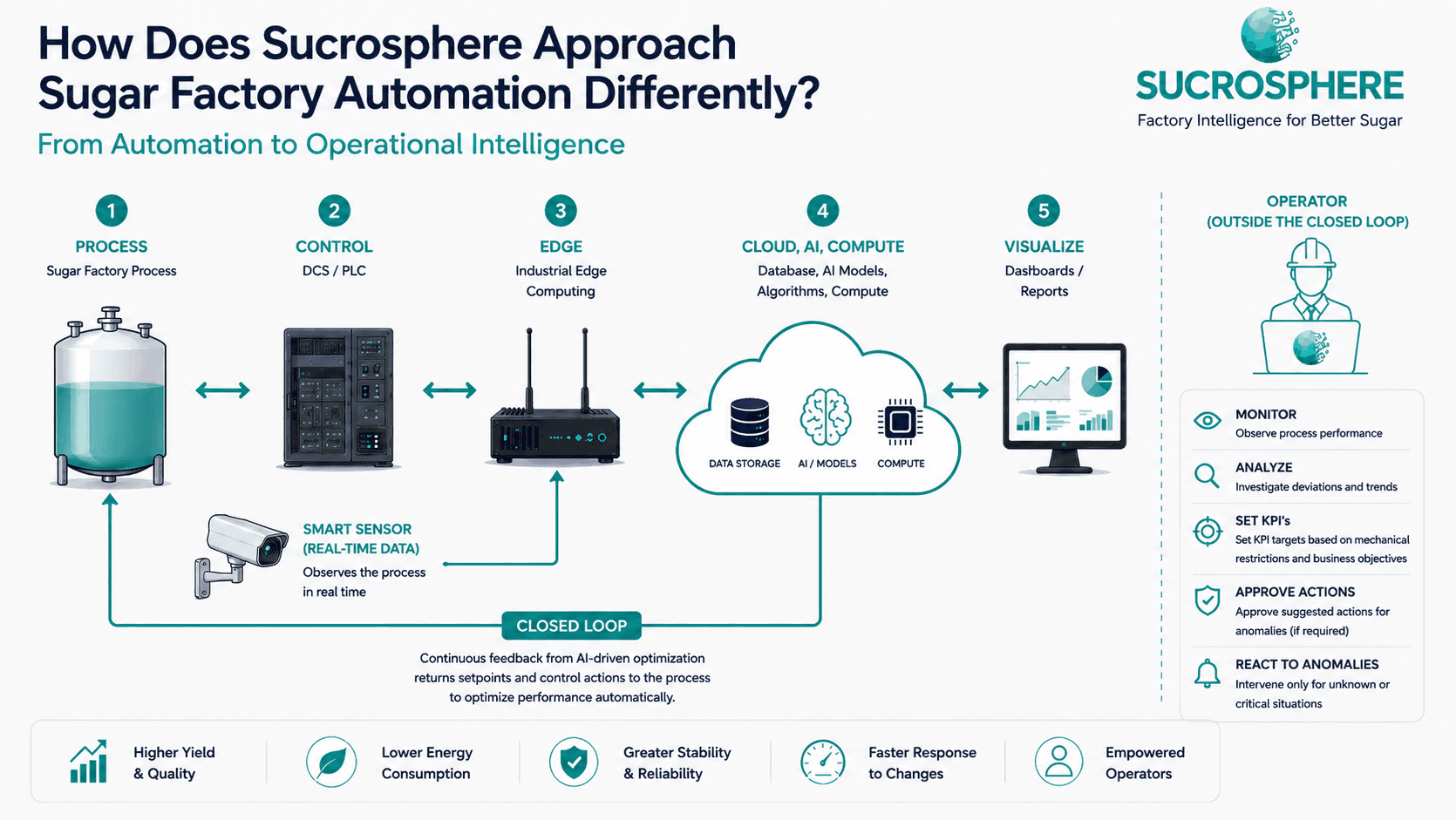
This technology allows the company managing it to access advanced capabilities like real-time KPI dashboards, automated anomaly detection, predictive maintenance alerts, and performance benchmarking across multiple production lines or even factory sites.
It adds data from distributed control systems, NIRS sensors, visual smart sensors, and laboratory instruments into more practical analytics.
Step-by-Step Guide to Increasing Sugar Yield
Step 1: Establish Baseline Performance Metrics
Before implementing optimization strategies like those mentioned, each company should establish its current performance across its key metrics.
They should collect at least 30-60 days of historical data on extraction yield, sugar in pulp, raw juice quality, energy consumption per tonne processed, and laboratory turnaround times.
Step 2: Install Real-Time Monitoring Sensors
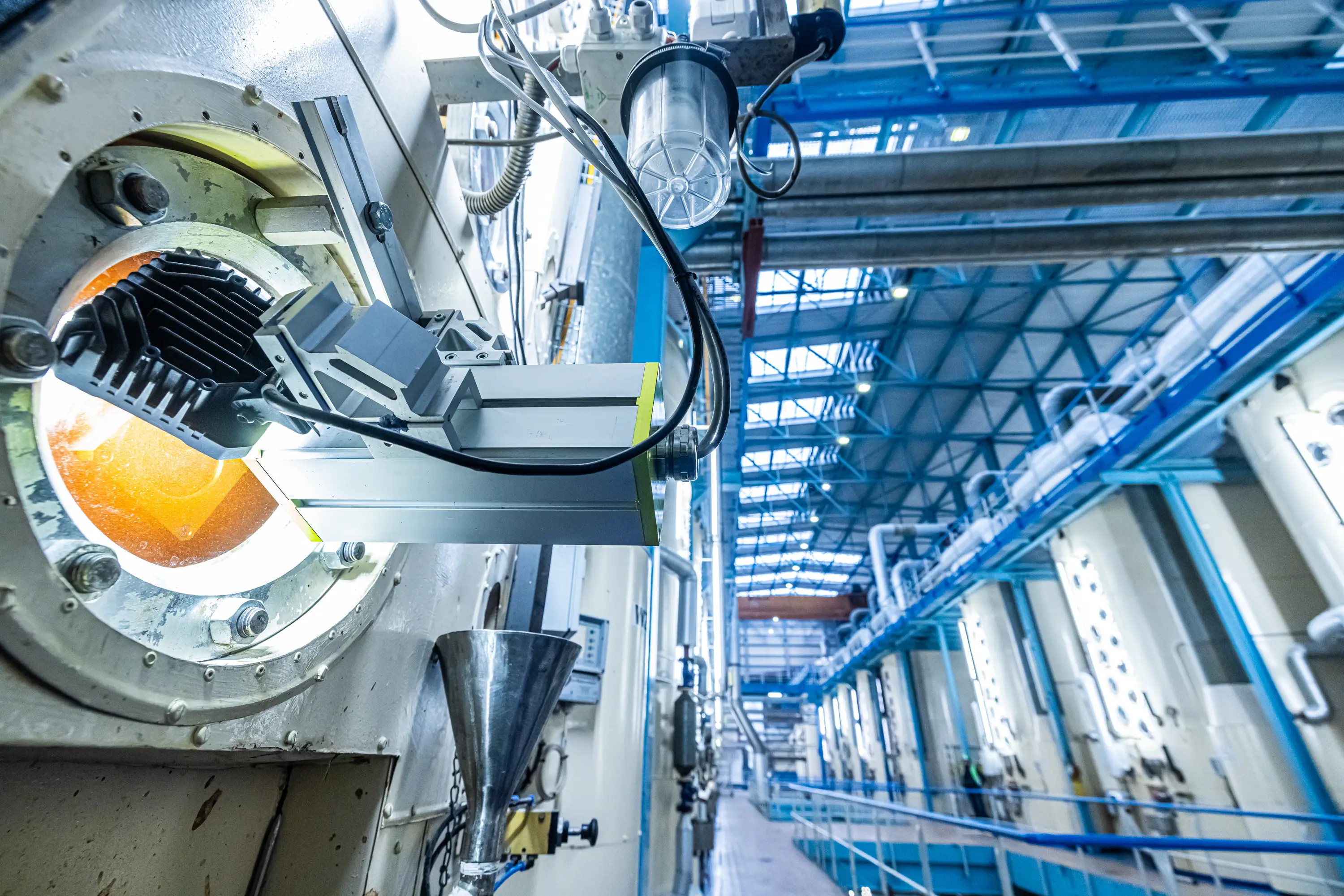
The next step is to deploy NIRS sensors at critical measurement points in the process.
With that, the company will be able to optimize extraction, prioritize sensor monitoring raw juice quality, press water, and exhausted cossettes.
They should also install sensors in bypass streams to avoid interruption in the production process and ensure continuous measurement even during cleaning cycles. While also developing calibration models that use representative samples across the full range of operating conditions and validate sensor accuracy against reference laboratory methods to ensure R² values above 0.95 for critical parameters.
Step 3: Implement Data Integration Infrastructure
Connect all sensors and process control systems to a single, user-friendly IoT platform. Make sure there's smooth, two-way communication between the platform and your DCS, so you can easily monitor and control everything. Set up secure, reliable network connections and take the necessary cybersecurity steps to keep everything safe and sound.
Step 4: Build and Validate Process Models
Create dynamic models that effectively capture how process inputs relate to outputs. For extraction processes, ensure the models account for factors such as cossette quality variations, temperature changes, mass transfer kinetics, and residence time effects. Always validate these models with historical data and refine them through carefully conducted process tests to improve accuracy.
Step 5: Deploy MPC in Advisory Mode
Start MPC deployment in advisory mode, where the system suggests actions while operators keep full control. This friendly phase helps operators get comfortable with the system, understand how it works, and spot any improvements needed. Usually, advisory mode lasts for 2-4 weeks.
Step 6: Transition to Automated Control
Once you've navigated the advisory mode, you can transition to automated control. Start by taking control of the less critical process variables, so that you can gradually grant more authority to the MPC.
Keep the operator override option available and establish clear procedures for any unexpected situations to ensure safety.
Step 7: Continuous Monitoring and Refinement
Optimizing the sugar process is a continuous journey. You should always keep an eye on KPIs, regularly check sensor calibrations, tweak process models as circumstances evolve, and update economic parameters so the company can mirror the current energy prices and sugar values. And, don’t forget to have performance reviews so you can discover even more opportunities for improvement!
Common Challenges in Sugar Process Optimization
Variable Raw Material Quality
The sugar beets and cane can vary in quality depending on weather, soil conditions, storage time, and harvest methods.
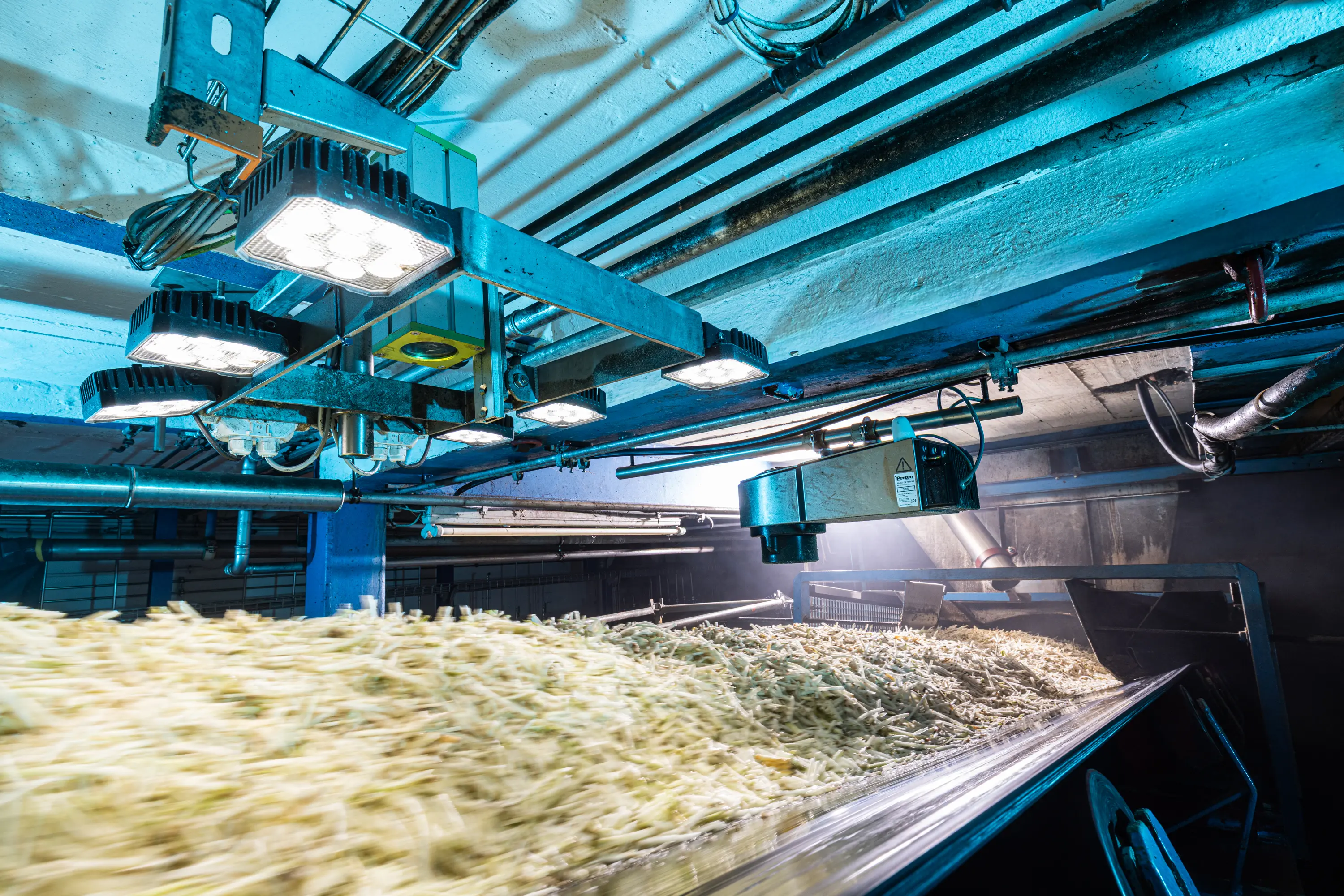
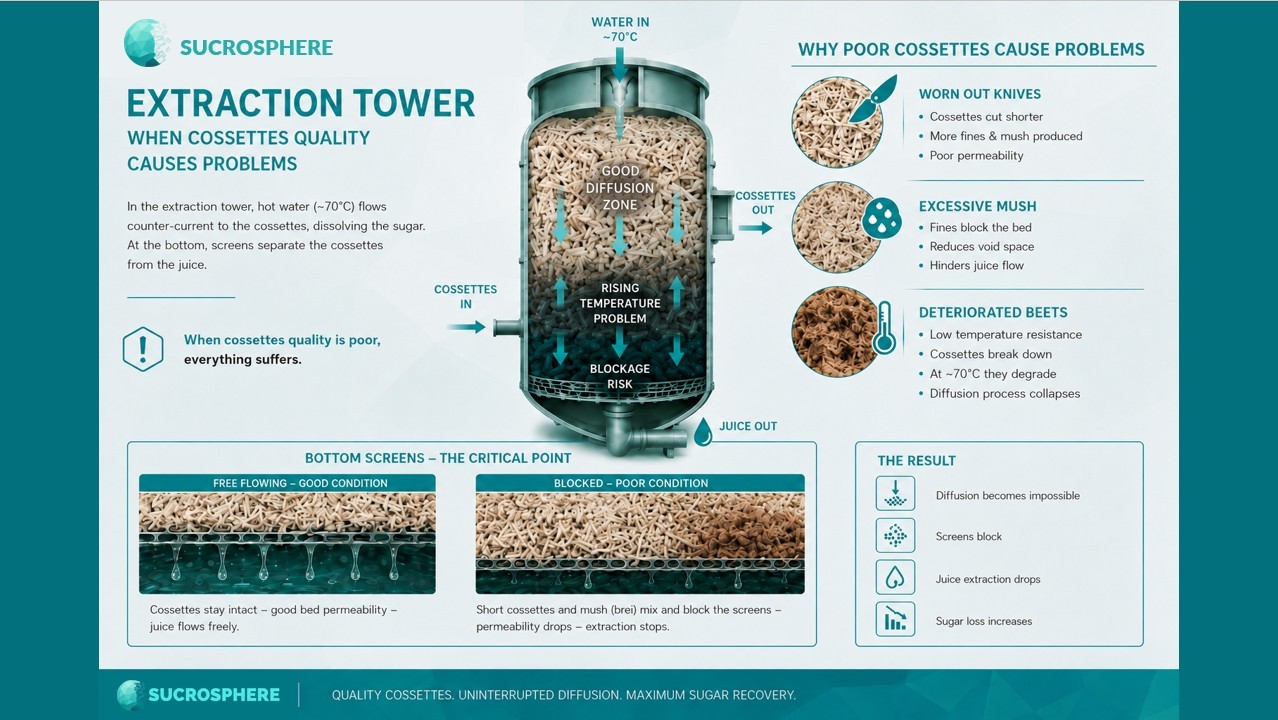
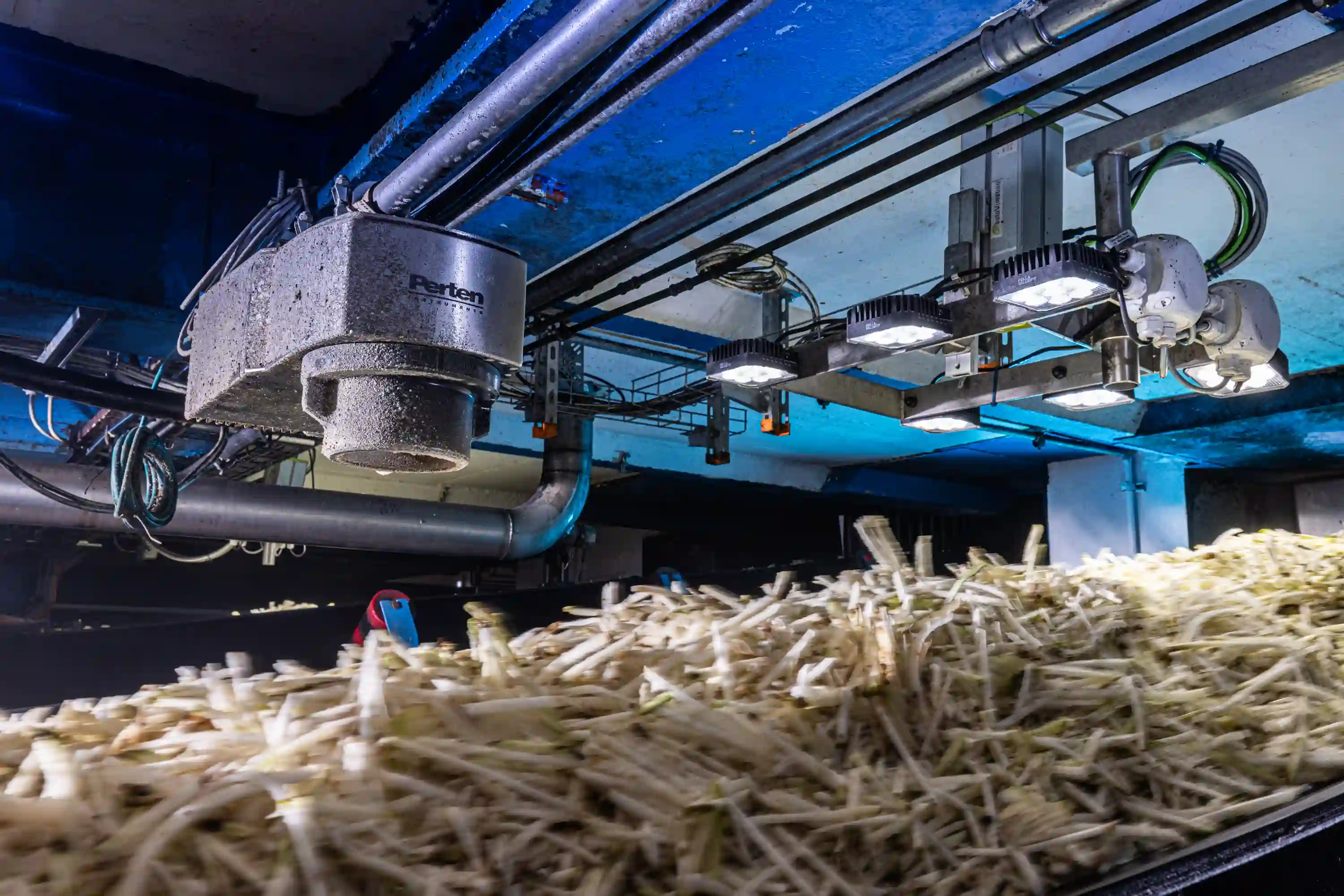
While Traditional fixed-parameter control strategies often struggle with this, the advanced optimization systems use visual smart sensors to characterize the cossette size distribution and adjust extraction parameters in real-time.
Slow Laboratory Feedback Loops
The normal laboratory analysis usually takes from 30 to 60 minutes just to sample results. By the time operators receive quality data, the process conditions that they were analyzing have already changed.
The NIRS technology completely removes this delay by updating measurements every few seconds.
Complex Multi-Variable Interactions
The process of sugar extraction involves dozens of interacting variables. A very important one is water addition, which affects not only extraction yield but also raw juice brix, downstream evaporator load, and energy consumption.
Human operators often struggle to optimally adjust water addition, but MPC technology solves exactly this by balancing multiple objectives simultaneously while respecting all operational constraints.
Measuring ROI from Process Optimization
Investing in sugar process optimization usually pays off quickly, often within just one or two production campaigns. To see how beneficial this can be, you can calculate ROI by summing the advantages across different areas.
Increased yield: Additional sugar recovered per tonne of raw material × campaign volume × sugar price
Reduced losses: Sugar saved from pulp and press water × campaign volume × sugar price
Energy savings: Reduction in steam and electricity consumption × energy costs
Labor savings: Reduced laboratory analysis requirements × labor costs
Quality improvements: Reduced downstream processing costs from more stable raw juice quality
For a typical 10,000-tonne-per-day beet sugar factory, a conservative 0.2% improvement in extraction yield generates €200,000 per campaign. Combined with energy and labor savings, total benefits often exceed €400,000 annually.
Future Trends in Sugar Process Optimization
The sugar industry continues advancing toward fully autonomous, self-optimizing production systems, some of these emerging trends:
Machine learning models that continuously improve optimization strategies based on historical performance data
Digital twins enabling offline simulation and testing of process changes before implementation
Predictive maintenance systems that prevent unplanned downtime through early fault detection
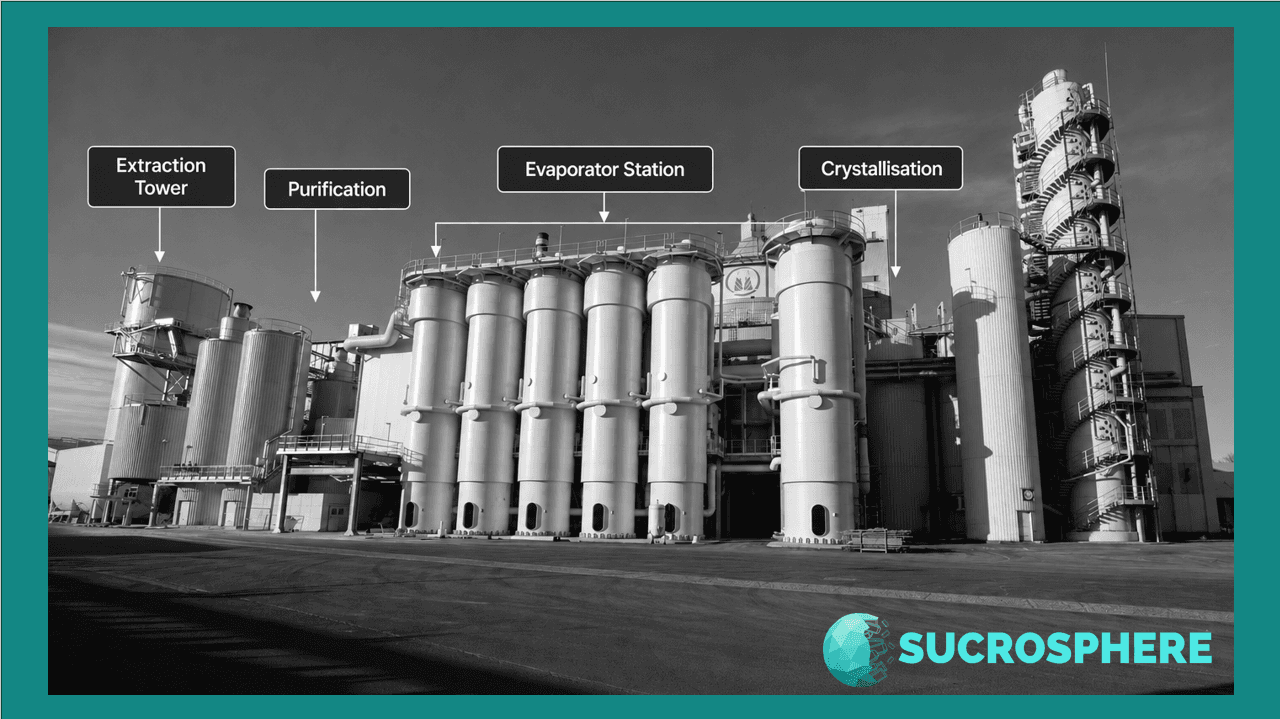
Plant-wide optimization coordinating extraction, purification, evaporation, and crystallization for maximum overall efficiency
Advanced analytics providing actionable insights for continuous process improvement
Conclusion: Transform Your Sugar Production with Process Optimization
The sugar process optimization delivers measurable financial benefits, but it also improves product quality, reduces environmental impact, and frees operators to focus on higher-leverage activities they would rather monitor.
Some leading sugar producers are already achieving extraction yield improvements of 0.2-0.6 percentage points and campaign savings of €200,000 to €400,000. As these technologies continue advancing and best practices mature, these benefits will only increase.
Ready to optimize your sugar production process?
Contact Sucrosphere to learn how our proven NIRS and MPC solutions can increase your extraction yield and reduce costs. Visit sucrosphere.com or request a demo today.