How NIR spectroscopy, visual sensors, and model-based control automate batch crystallisation in sugar factories.
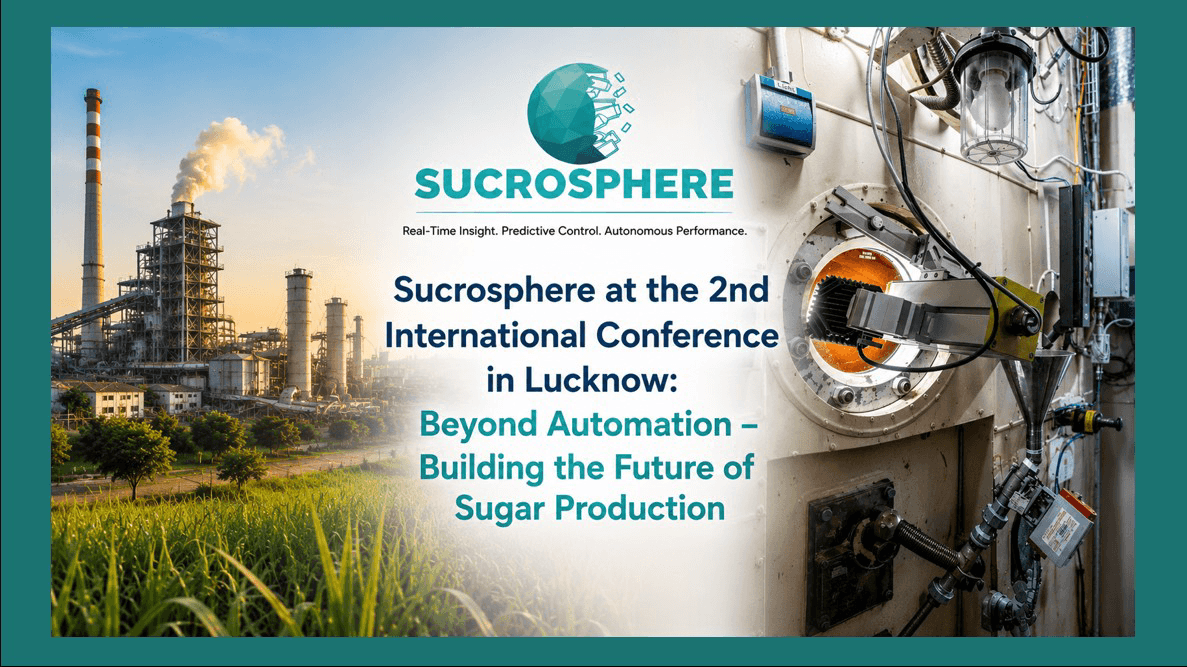
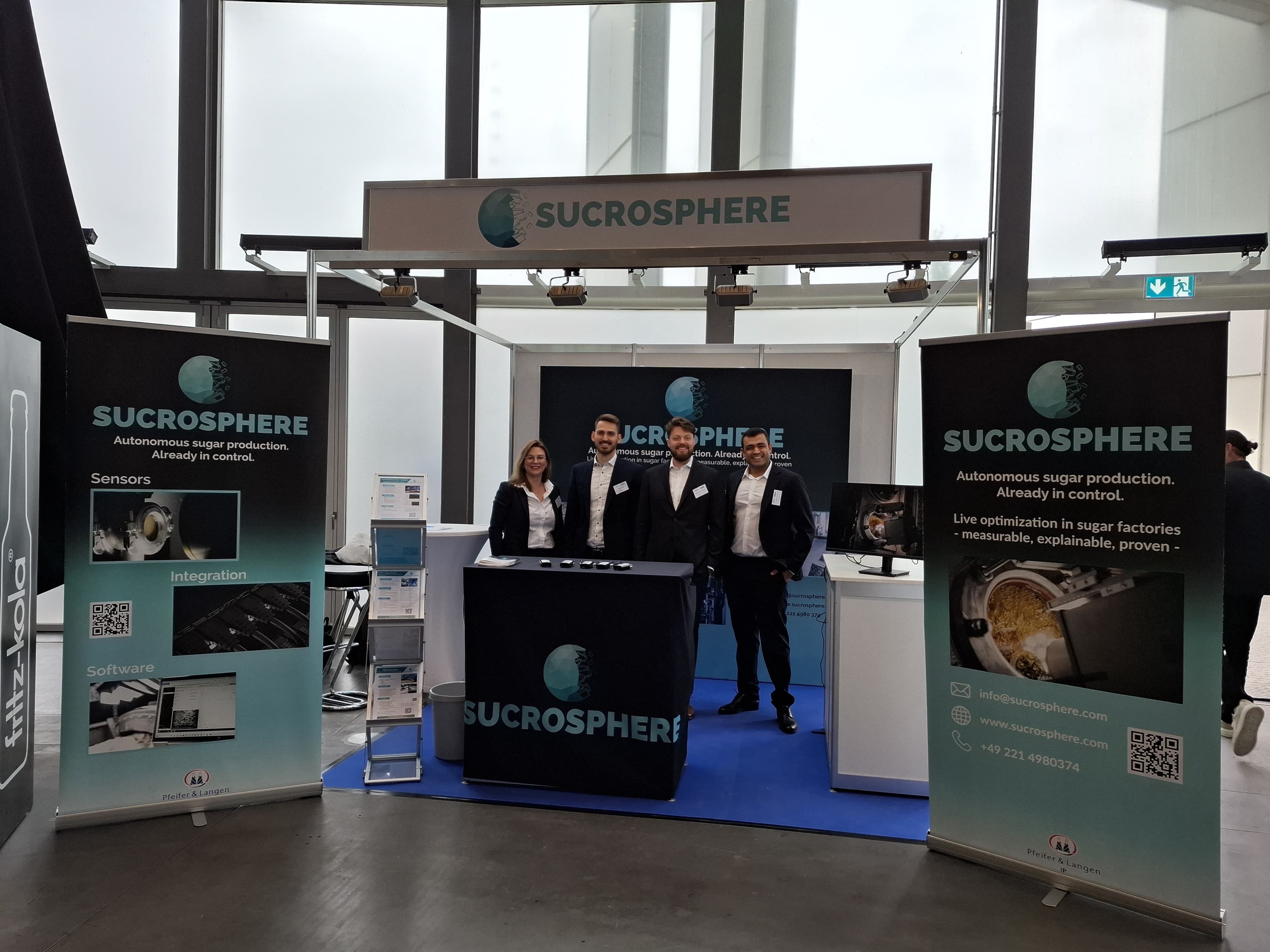
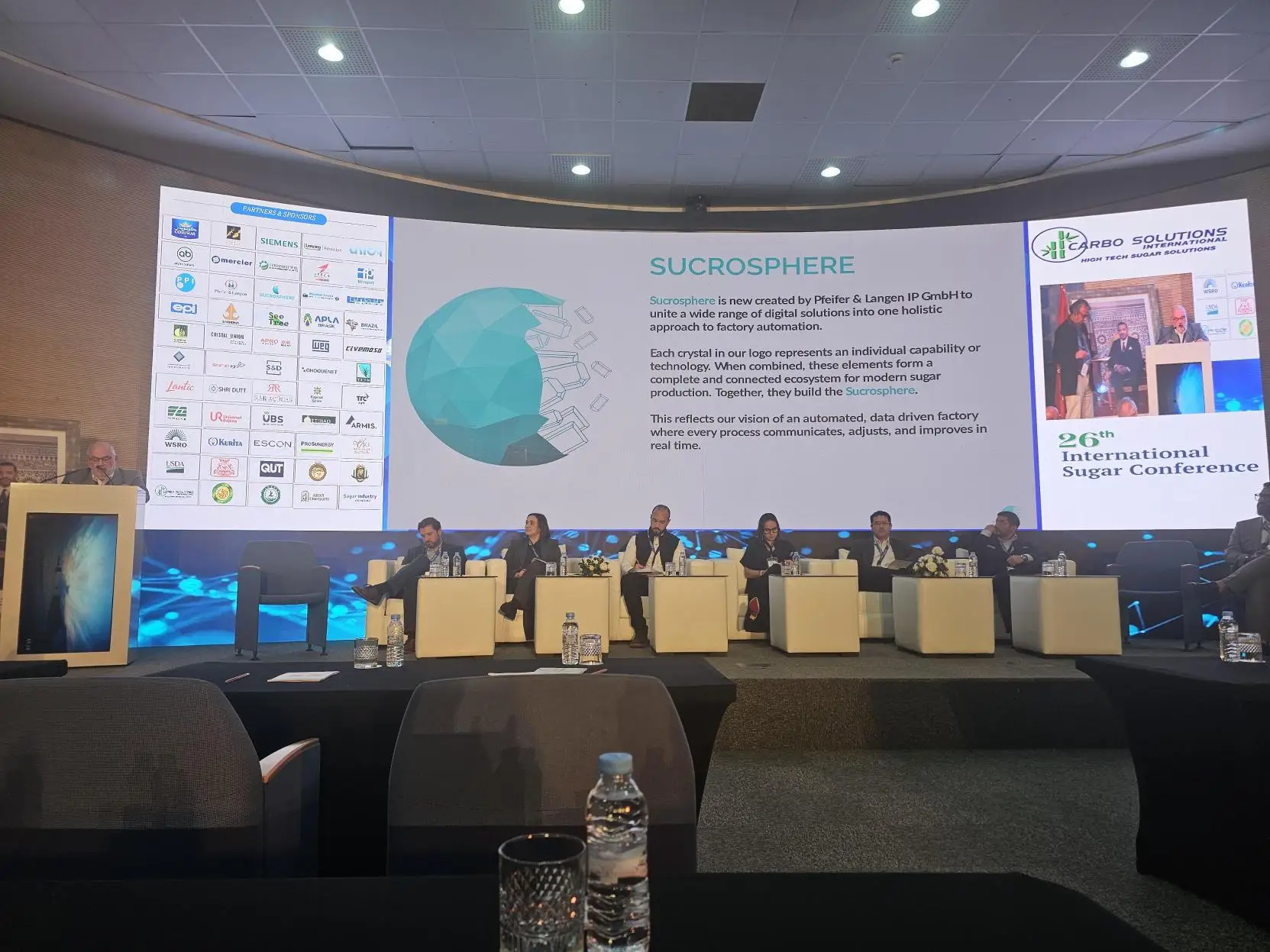
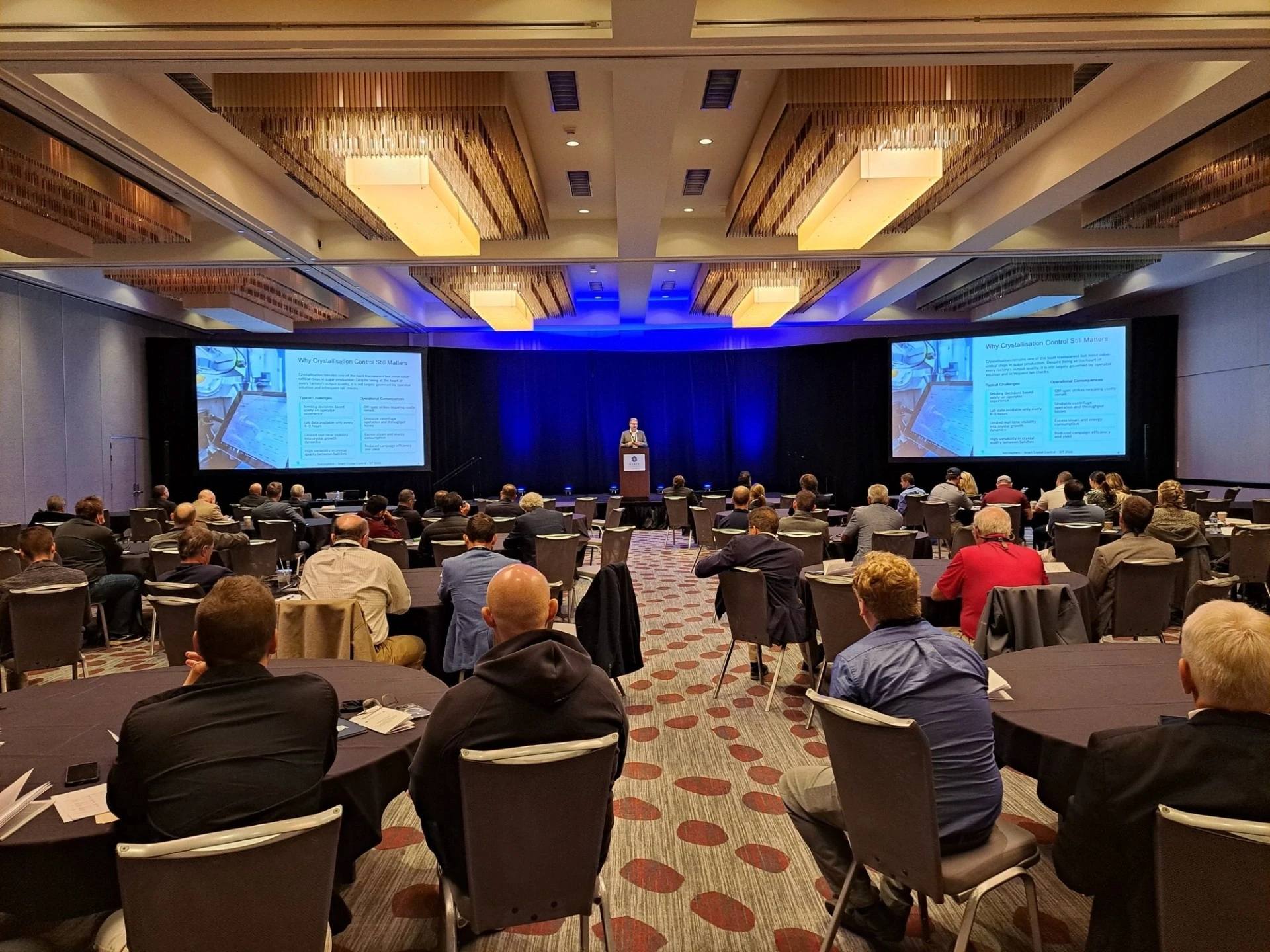
Sucrosphere is presenting this work at the 2026 SIT Annual Technical Meeting in Cincinnati, April 20–22. Several people have already reached out on LinkedIn asking to share the material ahead of the session. This post covers exactly what will be presented.
4 to 8 hours. That's how long an operator waits between laboratory samples before knowing whether the last batch went right. In a unit operation that runs around the clock, that feedback gap is where the money leaks.
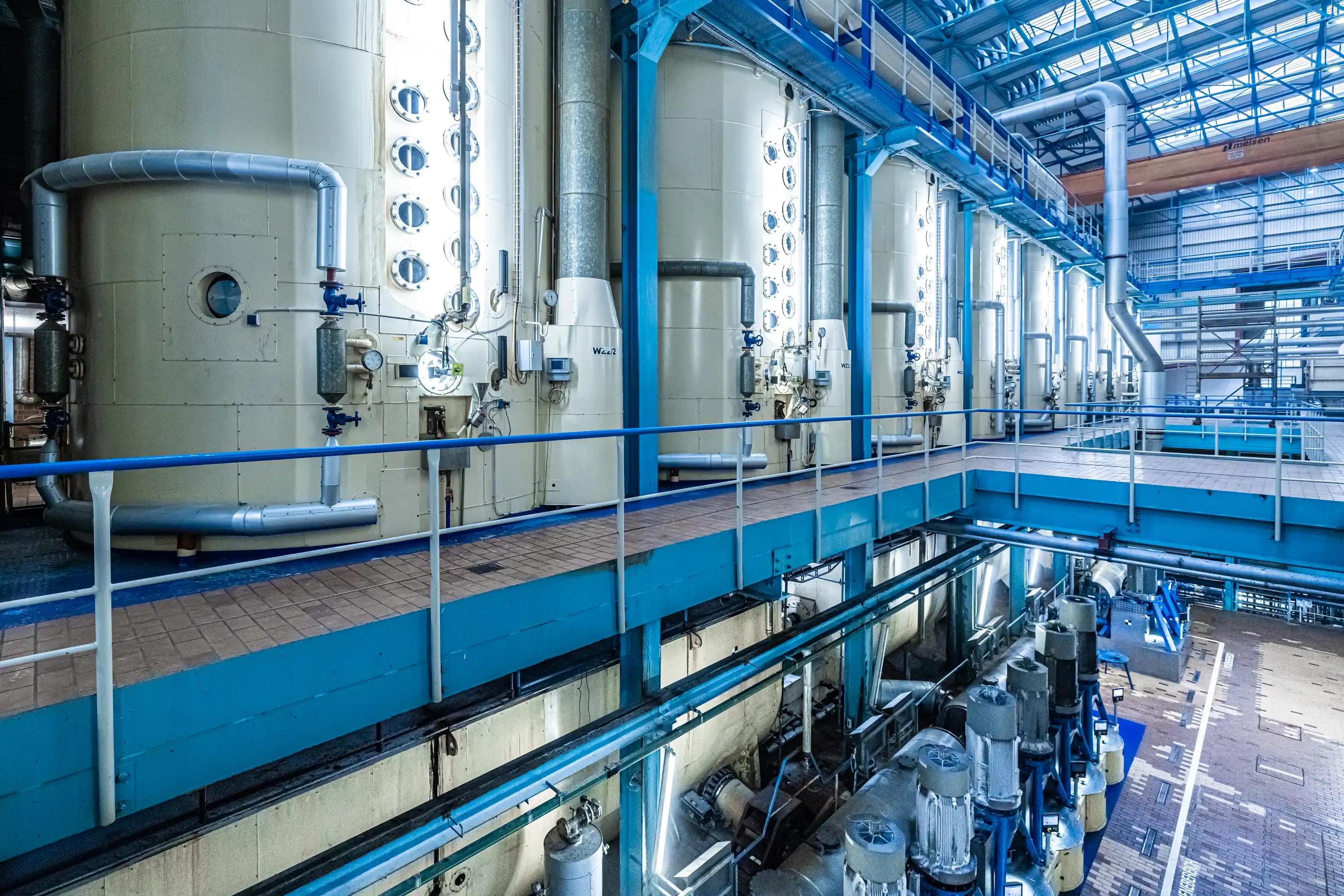
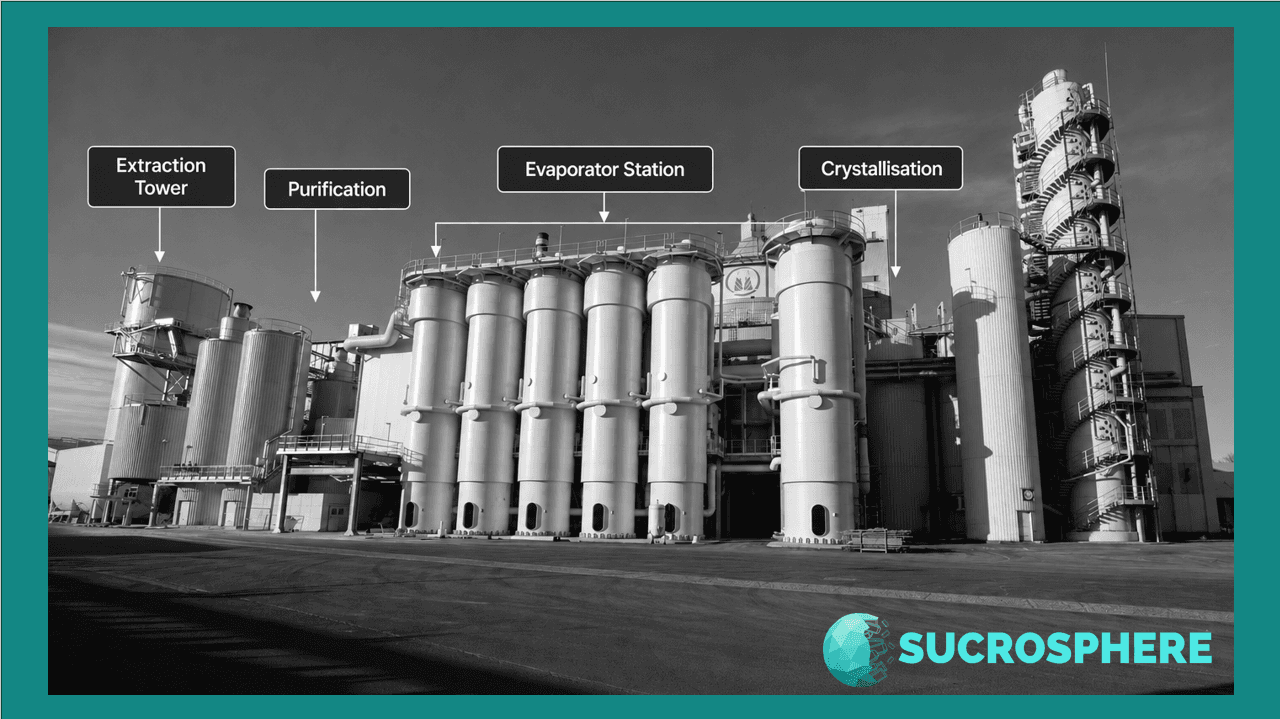
Extraction and evaporation have been well-automated for years. Crystallisation hasn't. Seeding, growth trajectory, timing: most factories still run these on operator intuition, backed by lab analyses that arrive hours late. The result: batch-to-batch variability, off-spec strikes that have to be remelted, unstable centrifuges, and steam consumption above the optimum.
Sucrosphere Smart Crystal Control closes that gap. It replaces the lab feedback cycle with sub-minute sensor feedback, and replaces operator-driven seeding with a model-based algorithm. Here's how it works.
| Traditional approach | Smart Crystal Control | |
|---|---|---|
| Crystallisation feedback | Lab sample every 4 to 8 hours | NIR and VSS: sub-minute, continuous |
| Seeding decision | Operator judgment | Model-based algorithm |
| Batch-to-batch consistency | Varies by shift and operator | Same trajectory every batch |
| Anomaly response | Detected after the fact via lab | Automatic corrective action mid-batch |
| DCS / PLC changes needed | N/A | None (supervisory layer only) |
How Does Smart Crystal Control Measure the Batch?
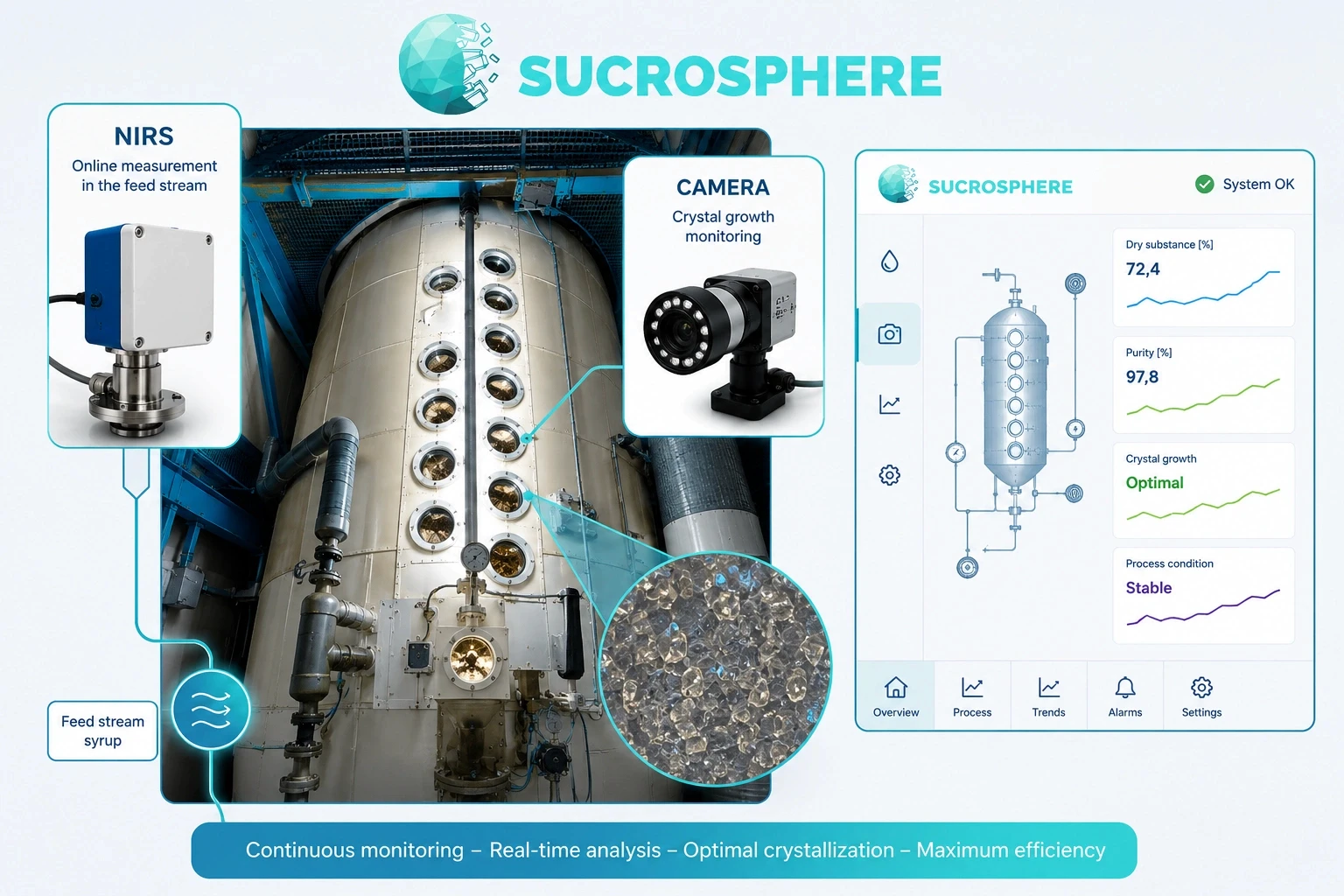
3 components work together:
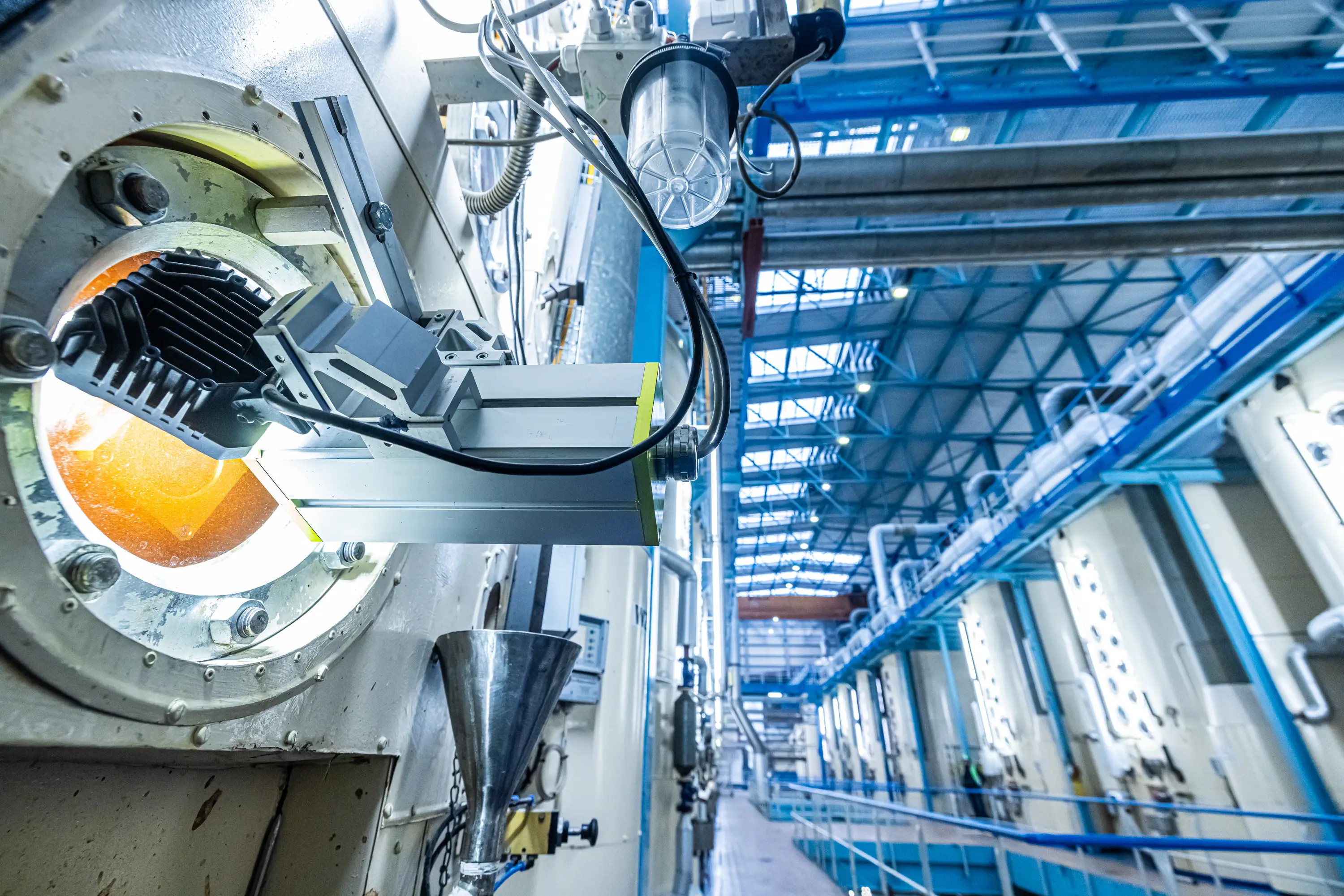
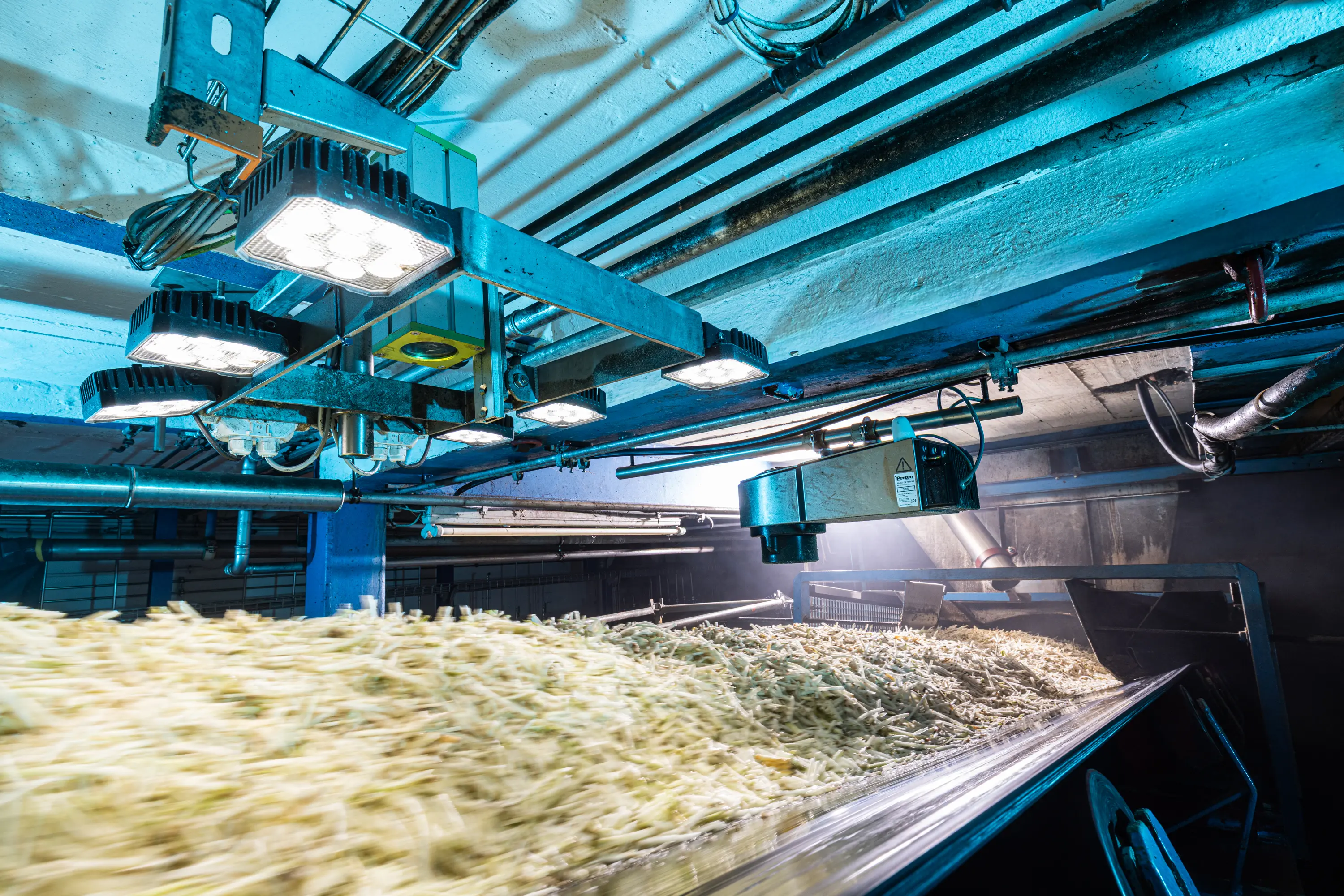
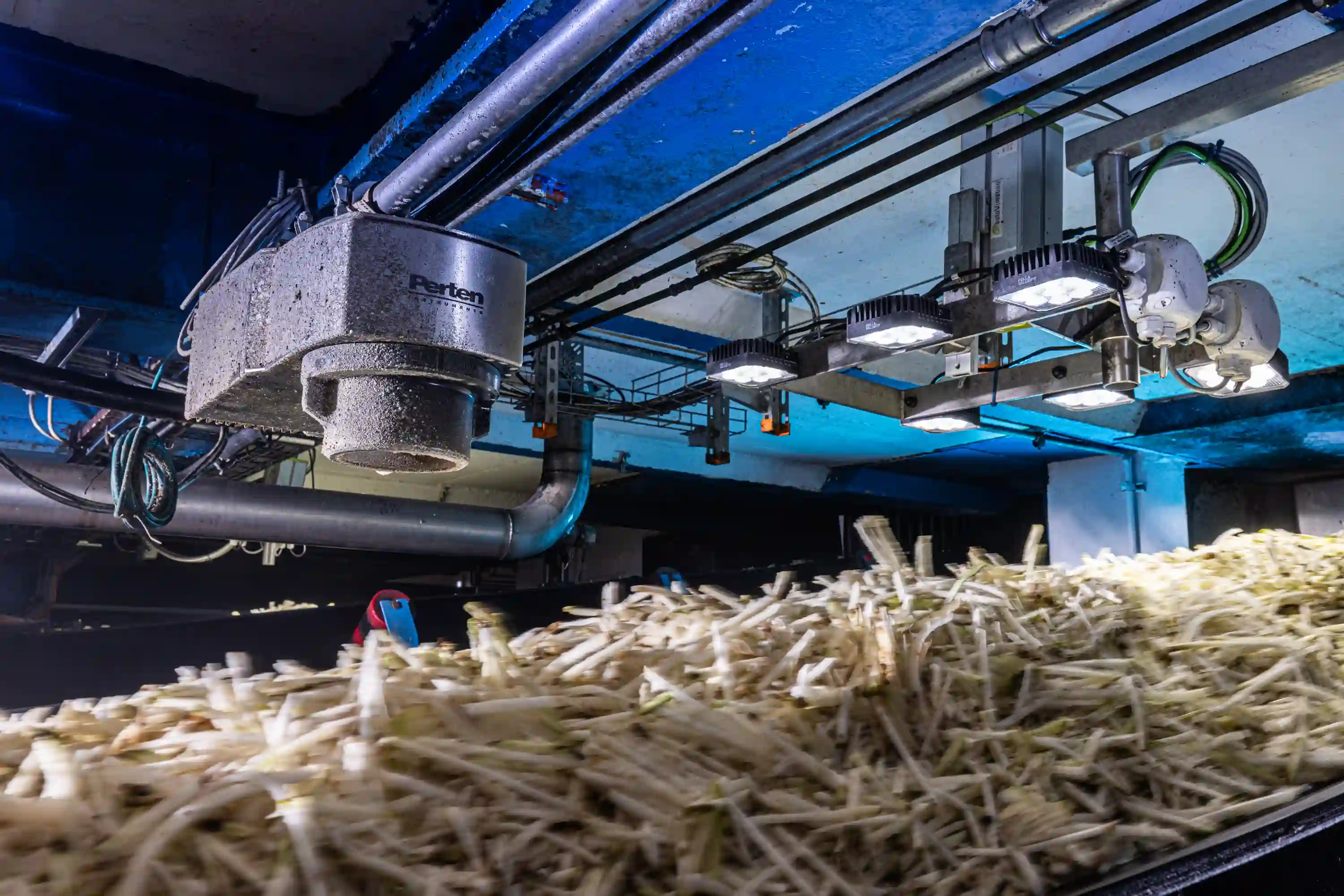
- A Visual Sensor System (VSS) at the crystalliser viewport, watching the crystal population in real time.
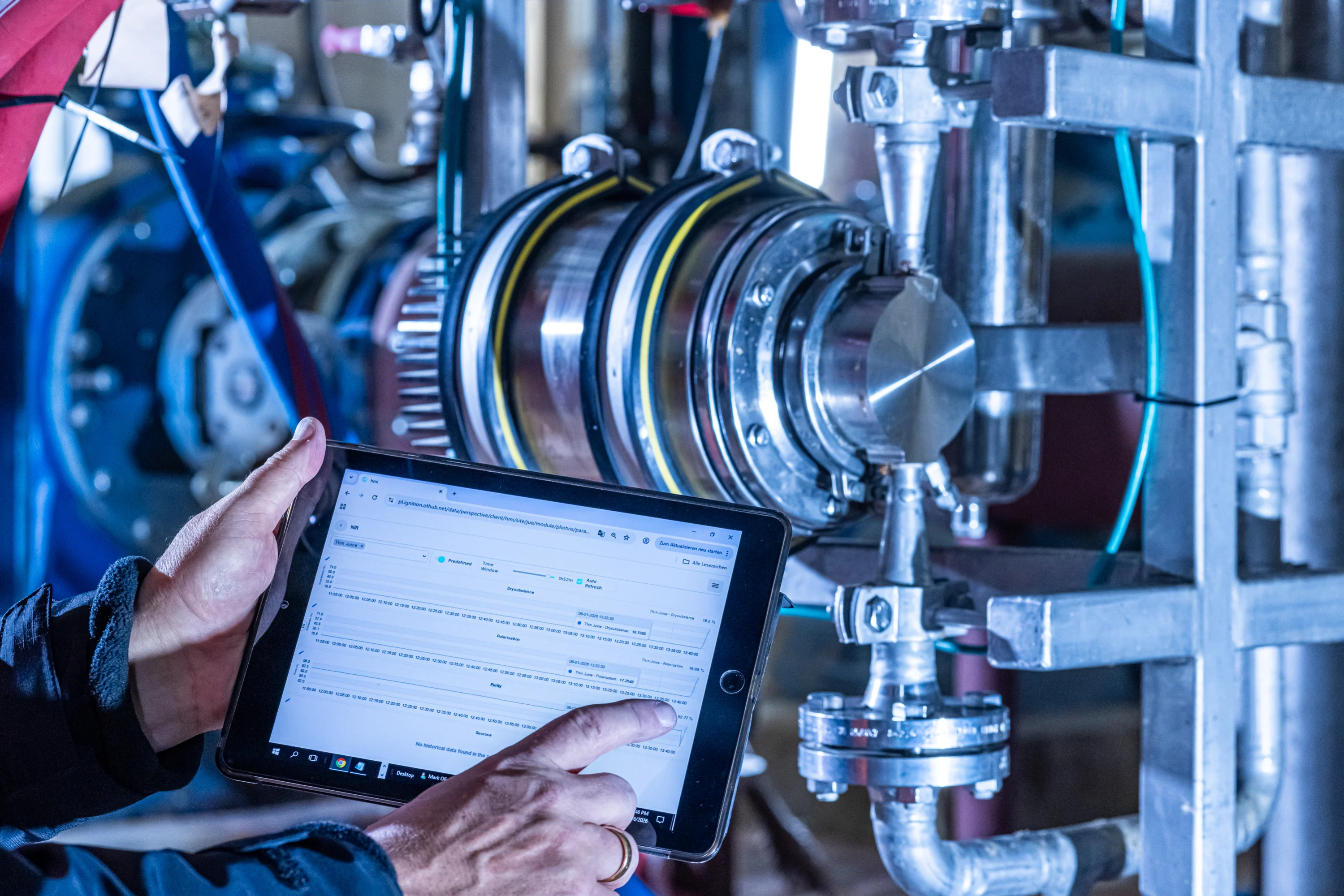
- An NIR spectrometer at the feed inlet, measuring syrup purity and Brix as the batch starts.
- The Sucrosphere Smart Crystal Control (SCC) algorithm, which reads both signals and adjusts steam, vacuum, feed flow, and seeding.
The crystalliser stops being a black box. You can see what's inside it, measure what's going in, and control both.
What the Visual Sensor System sees
A camera at the viewport takes images throughout the batch. Machine learning pulls out what matters from each frame: crystal size distribution, crystal count, fines concentration, bubble formation and fouling.
None of this can be inferred reliably from bulk measurements alone. You have to look.
What NIR measures in the feed
NIR sits at the inlet and reads feed syrup polarisation and dry substance (Brix) in real time. No lab samples, no 30-minute wait.
These 2 variables drive supersaturation, and supersaturation drives everything else: seeding timing, growth rate, final CSD. Get them wrong and the batch is compromised before it really starts.
How Does the Control Algorithm Decide?
The SCC algorithm takes VSS and NIR signals and calculates the optimal trajectory for each batch. It works out the required crystal surface area, the right seeding moment, and adapts steam, vacuum, and feed flow as the batch progresses.
When the prediction and the measurement diverge, the algorithm corrects. Every action is logged. Nothing runs that can't be traced.
What Happens When Something Goes Wrong?
Not every batch behaves. Nucleation events, melting events, sudden deviations in feed quality, they all happen. The system is built to respond without waking anyone up.
Typical corrections:
- Supersaturation stabilisation via feed flow or vacuum adjustment.
- Adaptive feed rate modulation during nucleation events.
- Vacuum and steam correction when melting occurs.
If the deviation is beyond what the controller can handle, the operator gets alerted, with context. They see which variables drifted, and what the system did about it.
What Results Does Smart Crystal Control Deliver?
Yield goes up by several tenths of a percent. Off-spec strikes go down. Specific energy consumption drops because steam and vacuum are managed with discipline instead of guesswork.
The gains compound across a campaign. A factory running 100 days straight stops losing money on every batch that's slightly off — and those losses were invisible before, because nobody was measuring them.
How Is Smart Crystal Control Deployed?
3 phases. No big bang.
Phase 1: Monitoring
VSS and NIR go in. The algorithm runs in read-only mode, predicting and recommending but not touching anything. This is where we calibrate the models to your specific factory and let the operators see what the system sees.
Phase 2: Advisory
The algorithm starts making active recommendations on the HMI. Operators accept or reject each one manually. Confidence builds. The algorithm gets tuned against real responses in real conditions.
Phase 3: Closed-loop
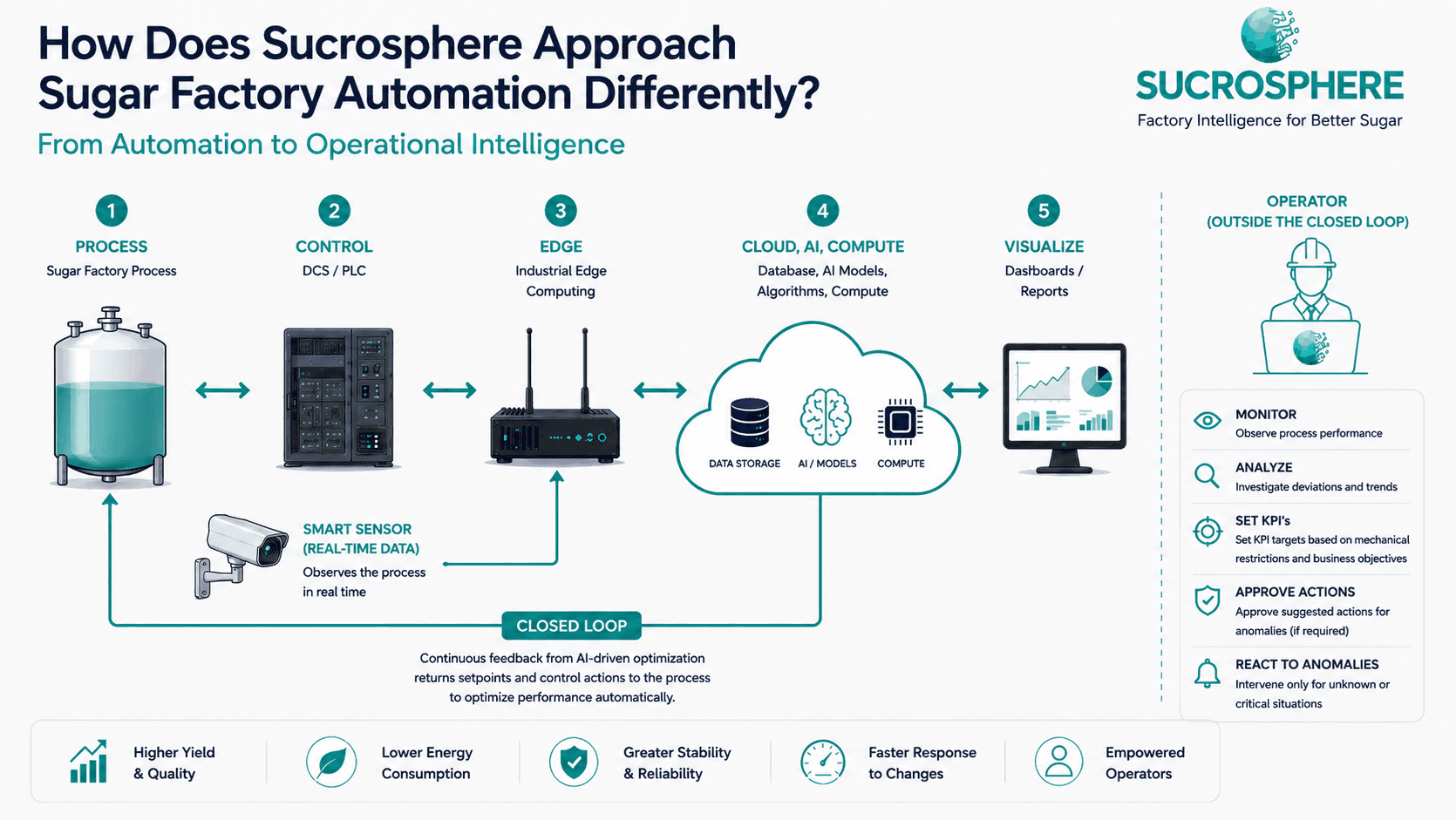
The algorithm writes setpoints directly to the DCS. Operators monitor and can override at any moment. Safety interlocks and DCS limits stay exactly where they were. The algorithm works within them, as a layer above the existing control loops. Nothing in the PLC logic changes.
Why Does This Matter Now?
Crystallisation has been the last manual step in a factory that's otherwise been automated for decades. Operators retire. Experienced crews get harder to hire. Meanwhile, energy costs keep climbing and margins keep shrinking.
Smart Crystal Control turns the most operator-dependent step into a process that runs the same way, every batch, every shift, whoever is on duty. And it does it without replacing the DCS, without rewriting the PLC, and without asking anyone to trust a black box on day one.
Where Is Sucrosphere Going Next?
Current development is focused on cross-unit coordination: extending the horizon beyond a single crystalliser to the sugar house, so the whole production line can optimise against shared constraints. The same architecture will also extend from beet to cane and refinery processes, where the physics is similar but the feed syrup behaves differently.
Attending SIT in Cincinnati?
We're presenting on April 20. Stop by, ask questions, and see the system in detail. Connect on LinkedIn beforehand to arrange a conversation outside the program.
Not attending? Get in contact with us and we'll share more details.
Want to See It Running?
The deployment methodology and results from our beet sugar factories are in the Sucrosphere white papers: sucrosphere.com/white-papers.
Or get in touch to talk through what Smart Crystal Control could look like at your factory: sucrosphere.com/contact.
Frequently Asked Questions
What is Smart Crystal Control?
Smart Crystal Control is a Sucrosphere system that combines a Visual Sensor System, NIR spectroscopy, and a model-based algorithm to automate batch crystallisation in sugar factories. It replaces the 4 to 8 hour laboratory feedback cycle with sub-minute real-time control of seeding, steam, vacuum, and feed flow.
Does Smart Crystal Control replace operators?
No. Operators monitor the process and can override at any moment. The system handles continuous adjustments that are difficult to make manually. It also runs through an advisory phase where operators accept or reject every recommendation before anything is automated.
Does it require changes to the DCS or PLC?
Only slight changes are needed. Smart Crystal Control sits as a supervisory layer above existing control loops. It reads measurements and writes setpoints via standard protocols (OPC-UA or MQTT).
How long does deployment take?
Deployment follows 3 phases: monitoring, advisory, and closed-loop. Phase 1 and 2 typically take a few weeks each to calibrate models and build operator confidence. Full closed-loop operation is reached within a single campaign in most factories.
What results can a sugar factory expect?
Observed results include yield improvements in the range of several tenths of a percent, reductions in off-spec strikes, and lower specific energy consumption from optimised steam and vacuum management. Gains compound over a 100-day campaign.