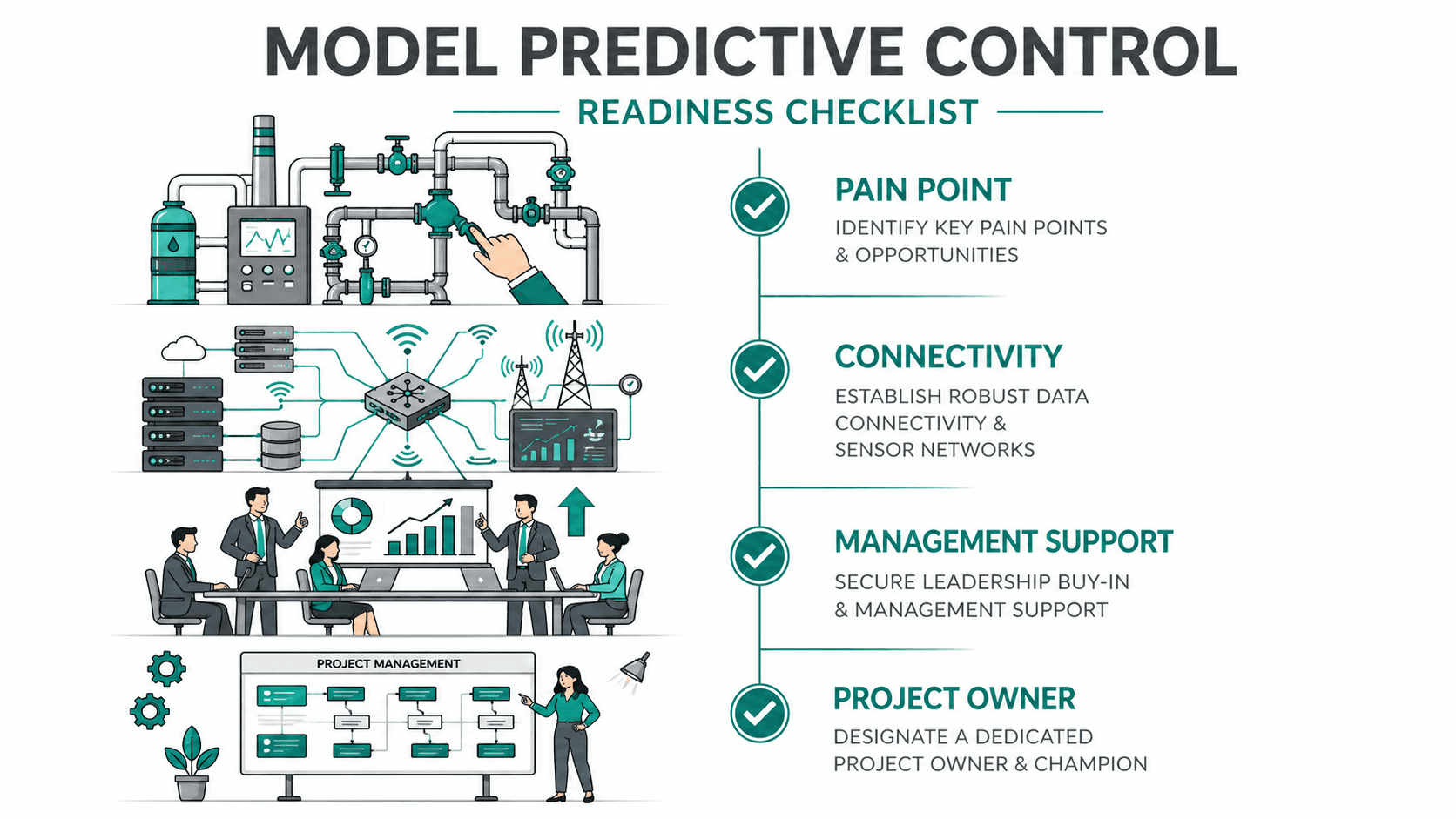
From automation to operational intelligence: why local optimisation does not create global performance, and what a different approach looks like.
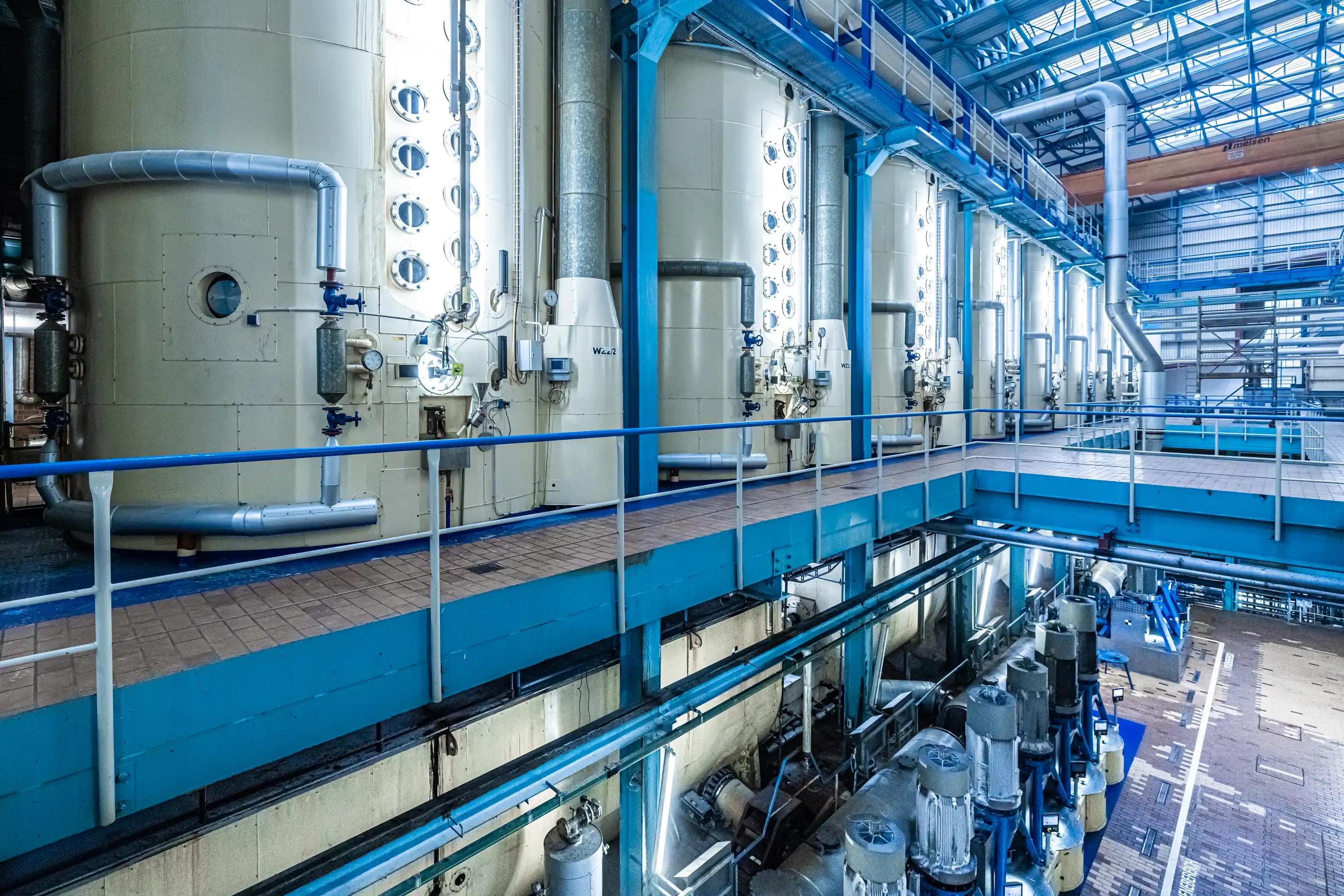
Modern sugar factories are already highly automated environments. Motors start automatically. Valves react in milliseconds. PID controllers stabilise pressures, temperatures, and flows. Large DCS systems visualise thousands of process values every second.
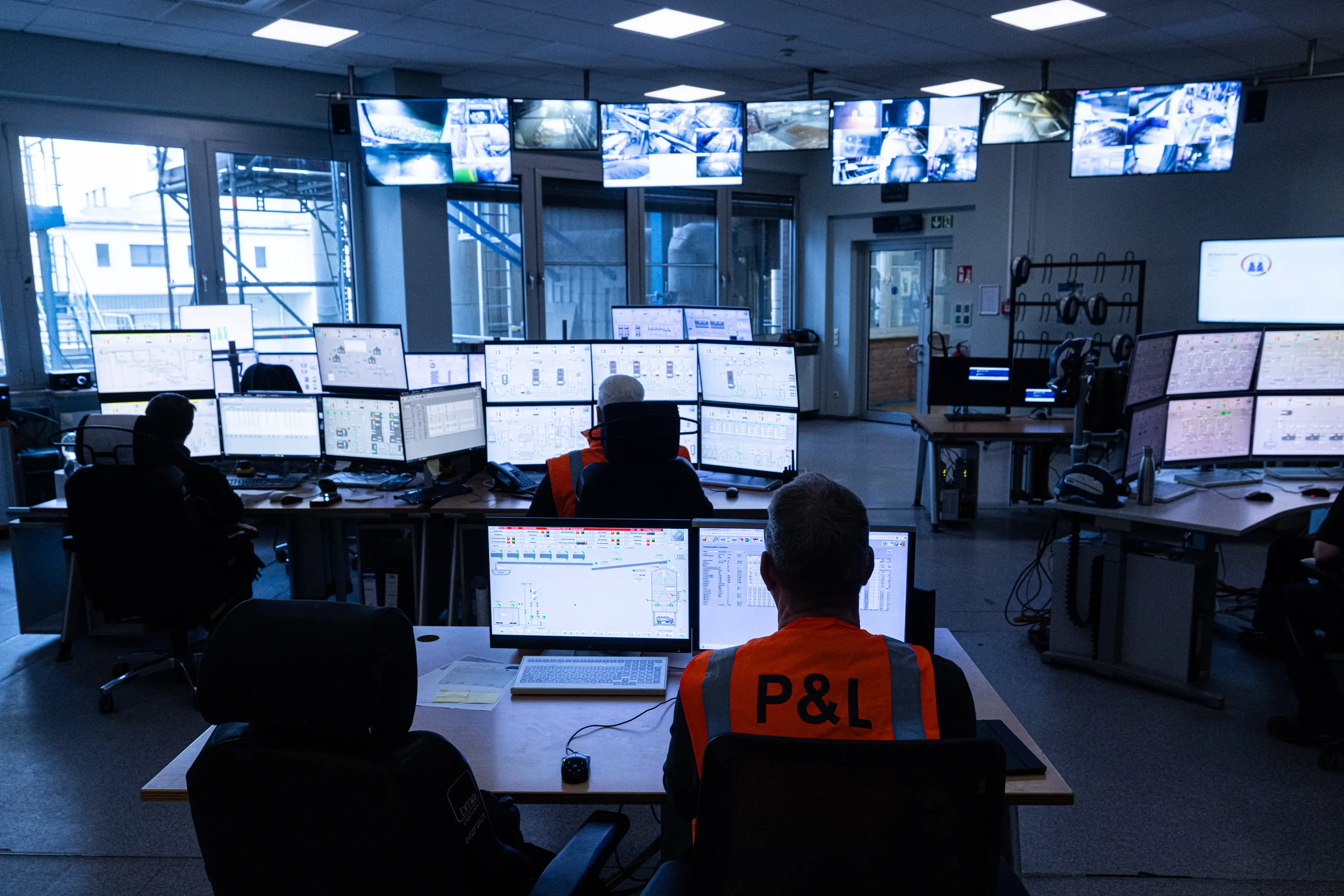
And yet, in many factories, experienced operators still spend their shifts constantly correcting process instability. Steam consumption fluctuates. Extraction performance changes with raw material quality. Crystallisation depends heavily on individual operator experience. Despite large amounts of available data, many critical decisions are still based on delayed laboratory information.
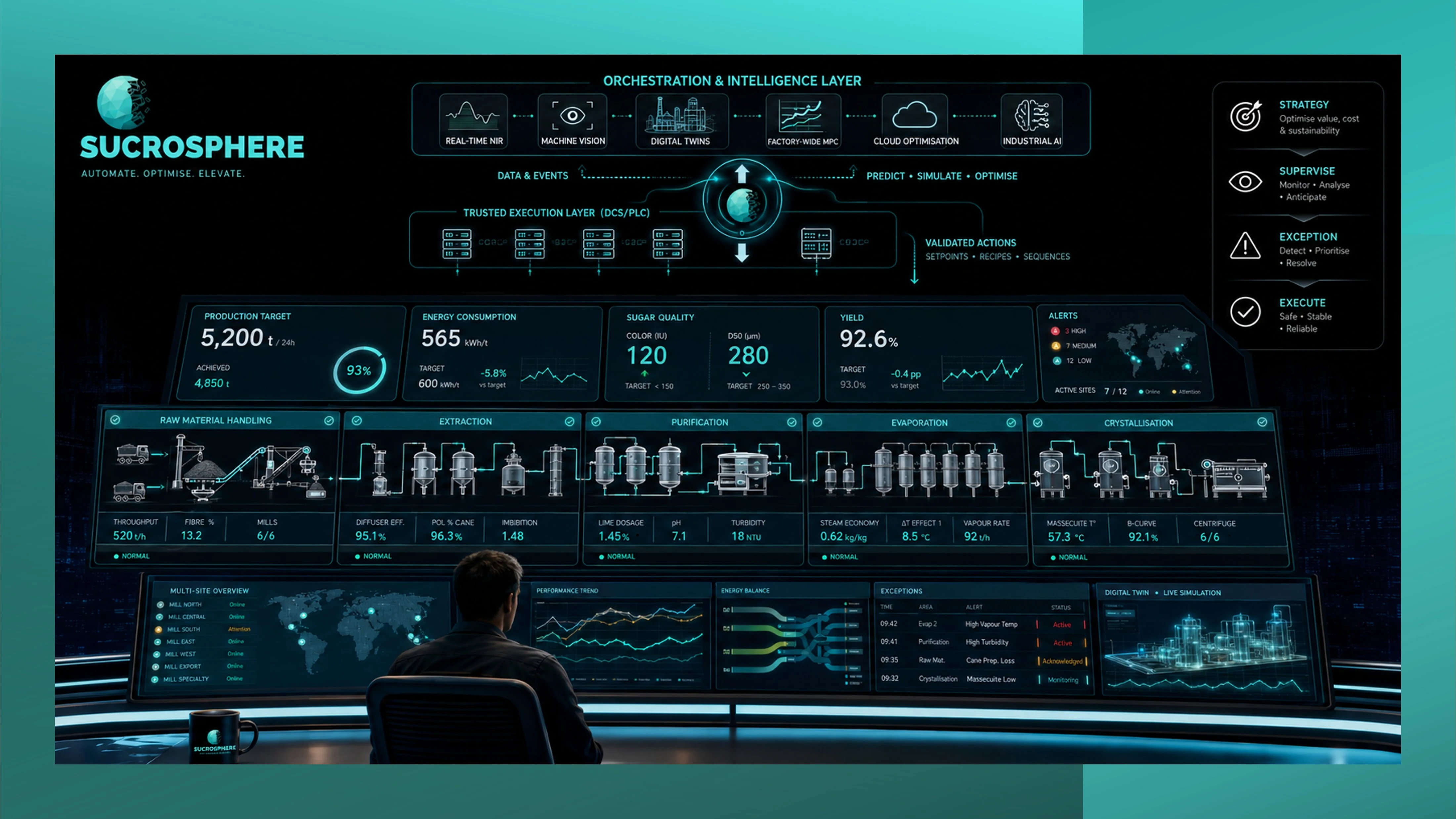
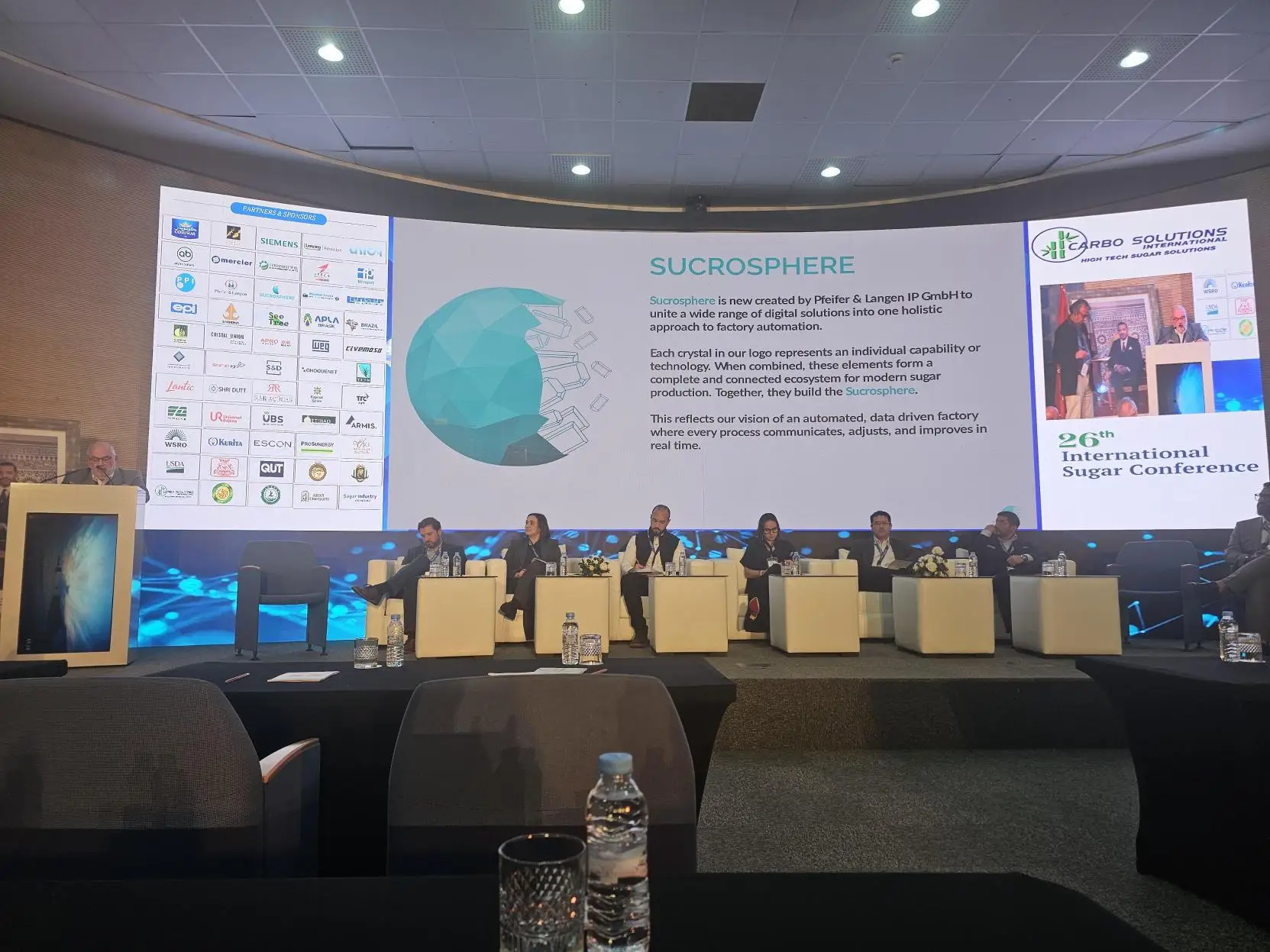
That difference is where Sucrosphere was created. Not as another standalone software package, another dashboard, or another isolated automation component, but as a platform that connects real-time process understanding, predictive intelligence, advanced control, and operational sugar expertise into one ecosystem designed specifically for sugar production.
Not Another Automation Tool, a Different Philosophy
Many automation projects in industry follow the same pattern: a problem appears and a specific tool is added. Unstable Brix triggers a sensor purchase. Energy inefficiency leads to monitoring software. Operator inconsistency prompts a visualisation upgrade. Process variability results in PID retuning.
These projects can improve individual areas. But they frequently create disconnected digital islands: a factory with many systems, many dashboards, many alarms, and no coordinated intelligence layer connecting them. Local optimisation does not automatically create global optimisation.
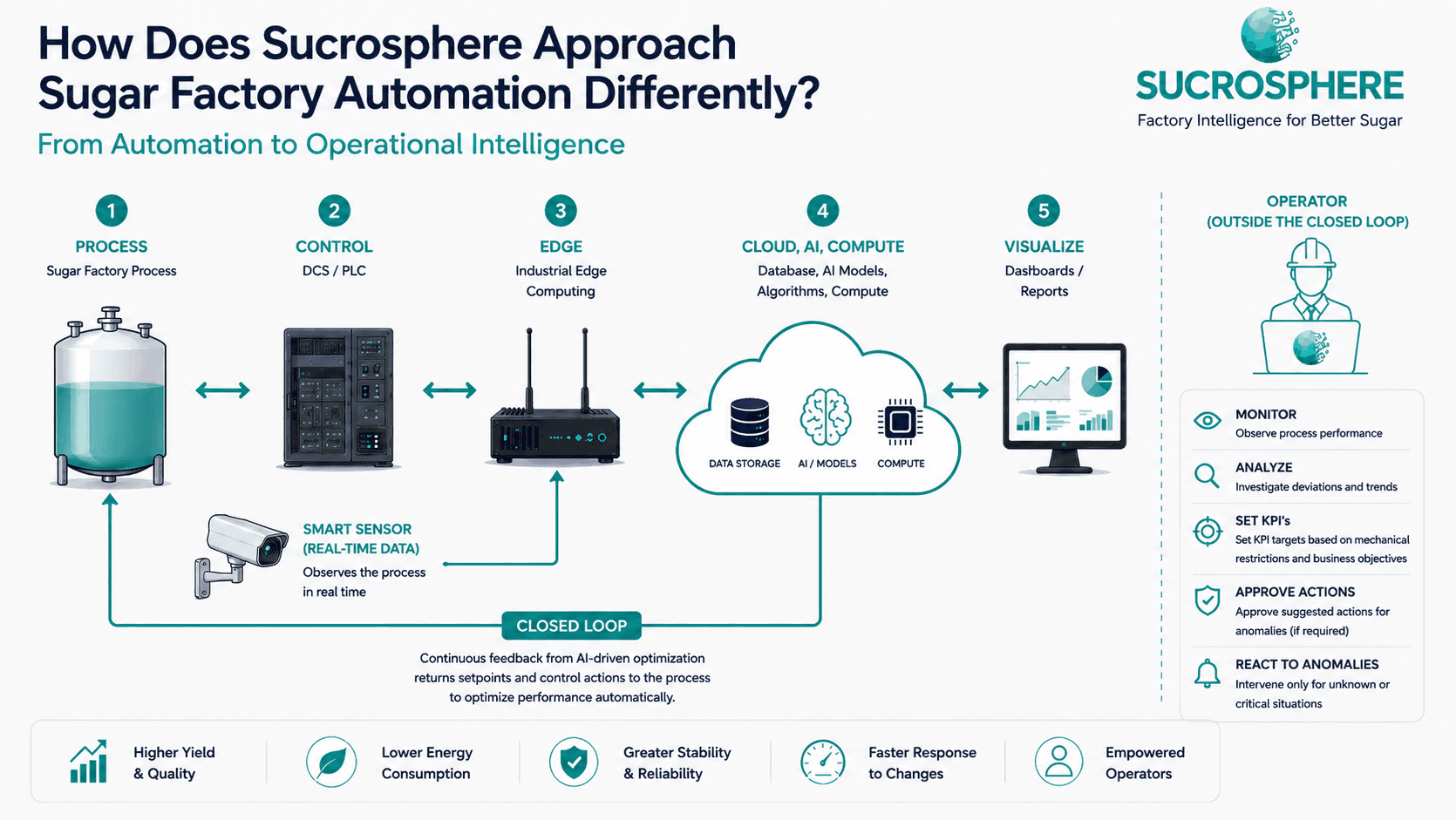
Sucrosphere approaches this differently. Instead of focusing on isolated control points, it treats the factory as one dynamic system, connecting process knowledge, online sensors, predictive models, automation infrastructure, operator expertise, and factory-wide optimisation logic into one coordinated platform.
| Traditional Automation | Sucrosphere Approach | |
|---|---|---|
| Focus | Individual control loops | Factory-wide interaction |
| Control style | Reactive | Predictive optimisation |
| Data use | Visualisation | Operational intelligence |
| Scope | Local process improvement | Holistic factory performance |
| Response to deviation | Operator reacts after it occurs | System predicts before it occurs |
| Architecture | Isolated systems | Connected ecosystem |
| Expertise | Automation engineering focus | Combined sugar and automation expertise |
| Logic | Static control parameters | Adaptive process models |
Built on Real Sugar Production Experience
Many technology providers understand software better than process reality. Sugar production is not a generic industrial environment. Factories operate under continuously changing conditions: varying beet or cane quality, fluctuating impurity loads, seasonal process instability, changing weather conditions, steam constraints, equipment limitations, and highly dynamic crystallisation behaviour.
Sucrosphere originates from the industrial environment of Pfeifer & Langen, a company with more than 150 years of practical sugar production experience. That heritage shapes the entire philosophy of the platform. The systems are designed together with sugar technologists, process engineers, automation specialists, crystallisation experts, production operators, and industrial optimisation professionals.
The objective is never to install technology because it sounds innovative. The objective is to create measurable operational value. That means focusing on questions that matter on the factory floor:
- Can steam consumption be reduced sustainably?
- Can operators respond faster to changing process conditions?
- Can instability be predicted earlier?
- Can production quality become more consistent between shifts?
- Can operational knowledge be preserved digitally?
- Can factories become less dependent on individual expert operators?
Why Digitalisation Projects Often Fall Short
Across industry, many digitalisation initiatives never reach their expected impact. The technology is rarely the issue. The problem is that factories are pushed toward quick wins without a coherent automation strategy behind them.
Operators naturally resist systems they do not yet understand, particularly when no one has explained the reasoning or the long-term direction. Production managers need demonstrated reliability before allowing software to influence critical process decisions. Factories cannot risk campaign stability for experimental projects.
Sucrosphere's response to these realities is a deployment model that is progressive, practical, and trust-based.
The Sucrosphere Deployment Approach
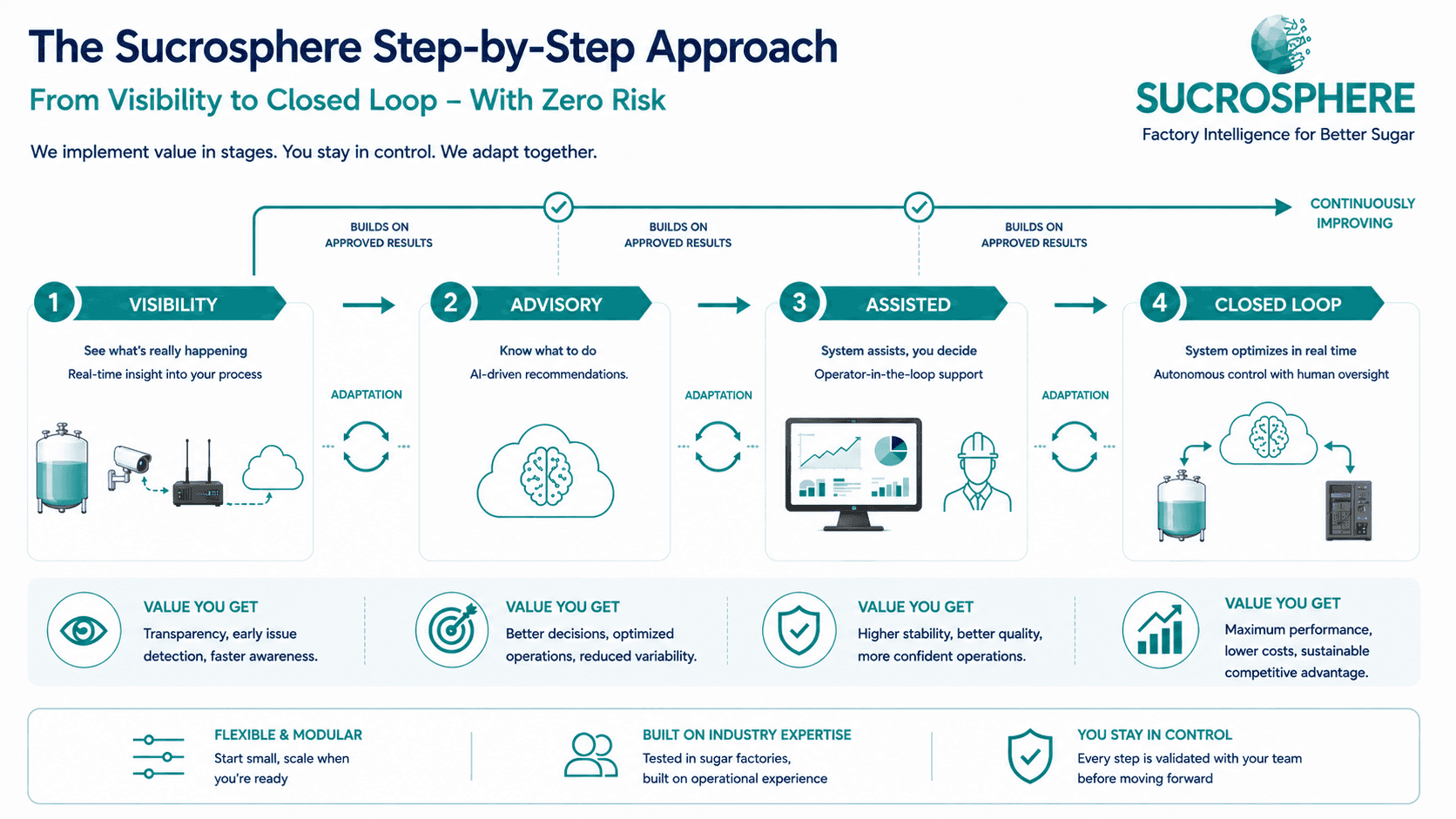
Visibility Before Automation
The first objective is always process transparency.
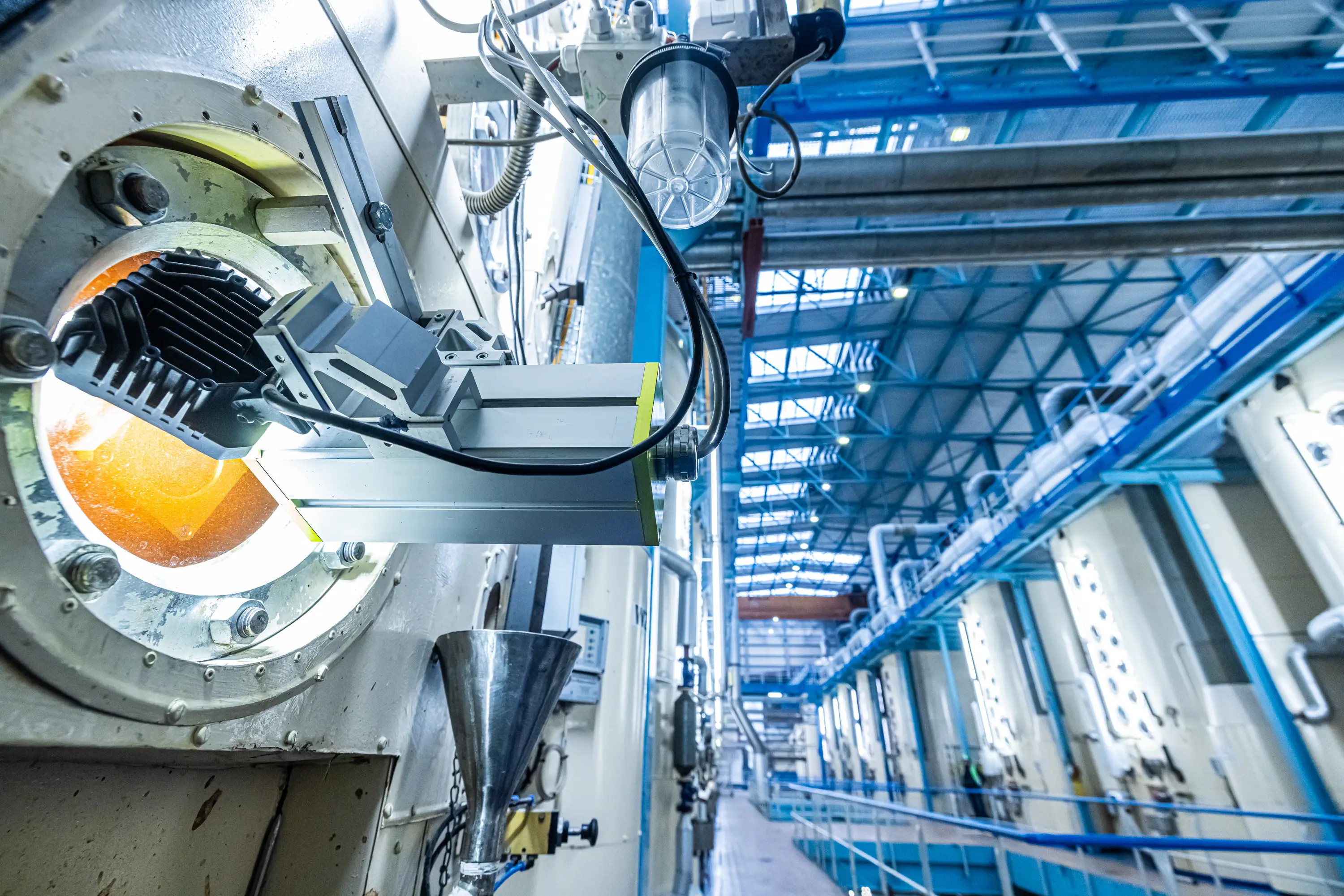
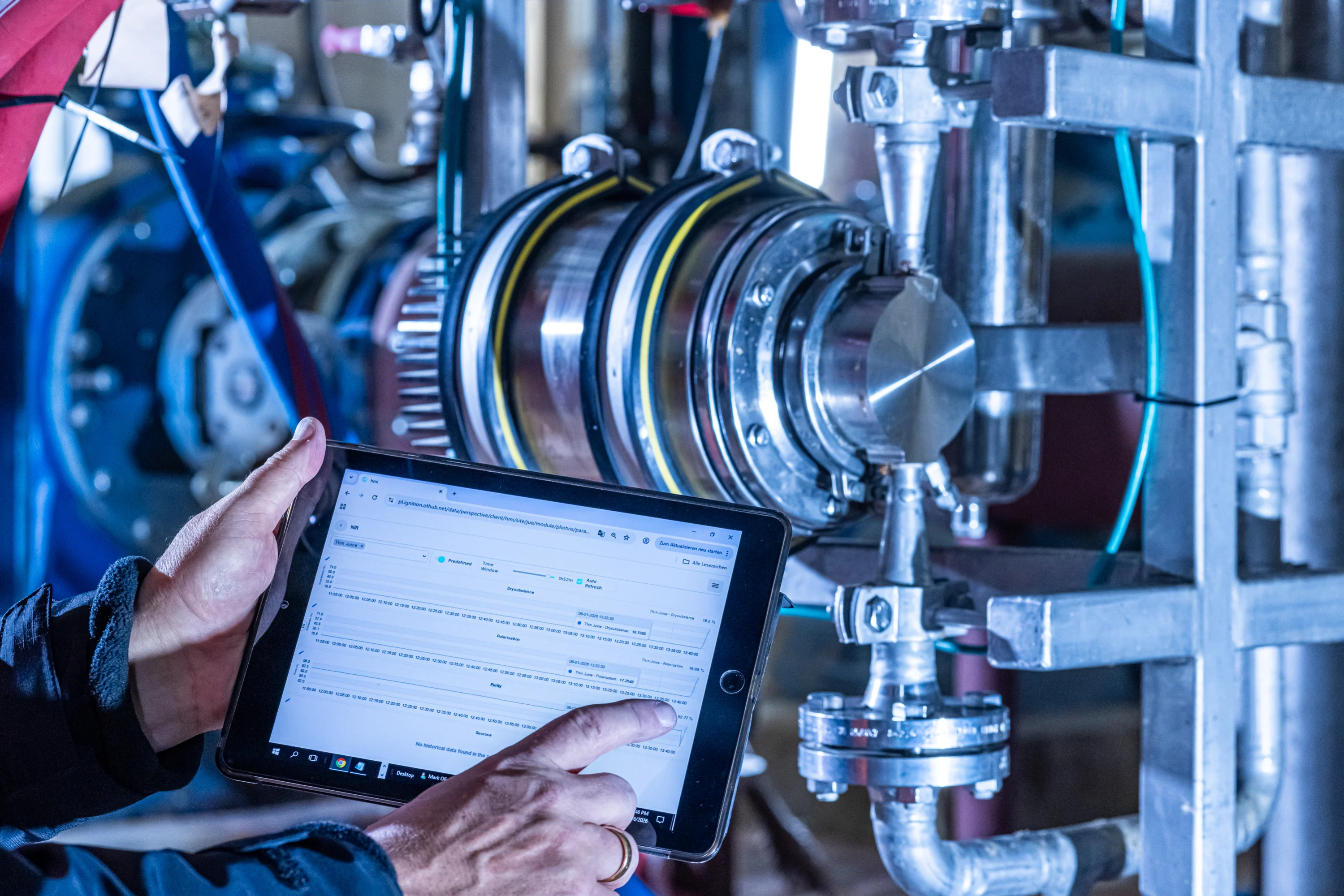
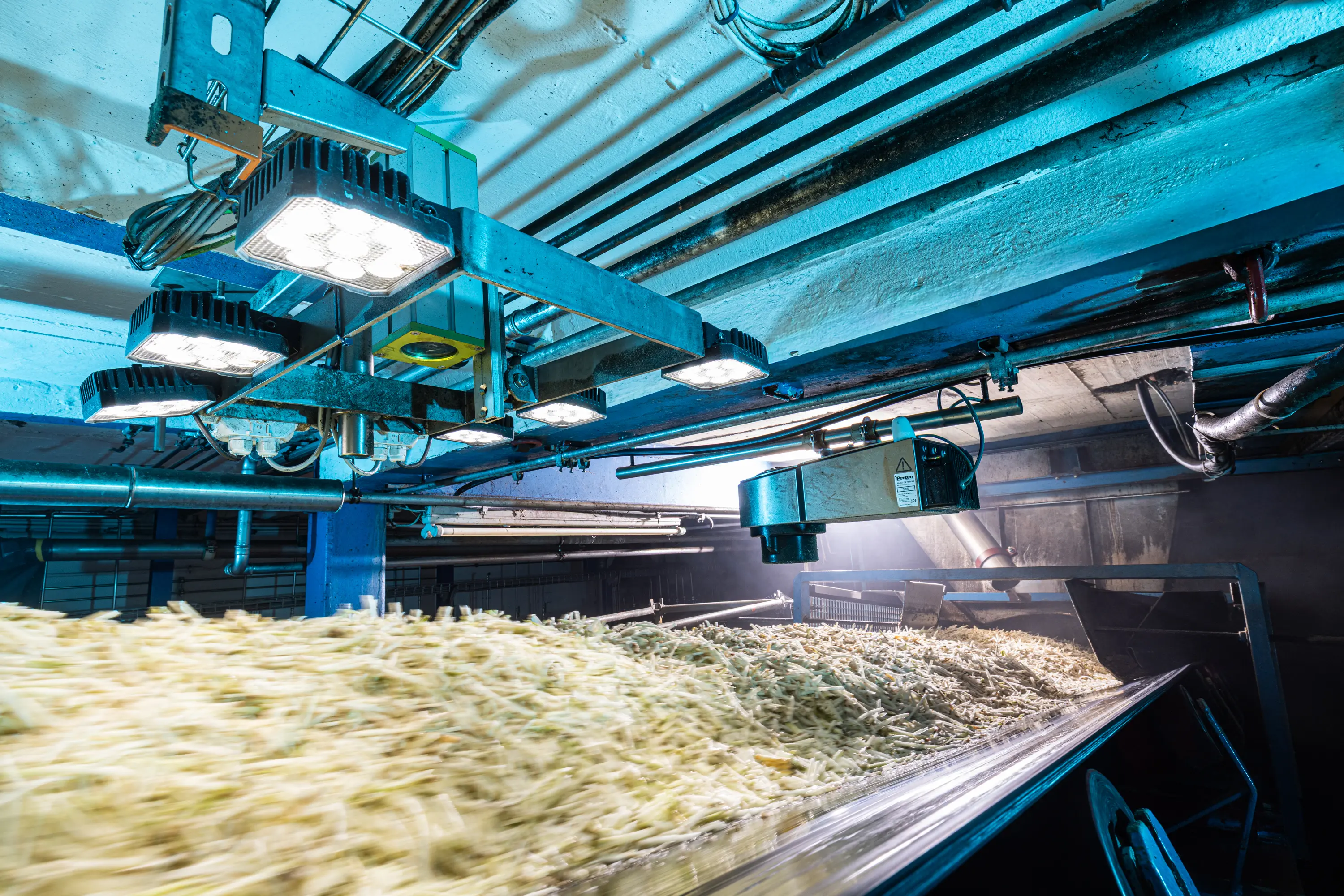
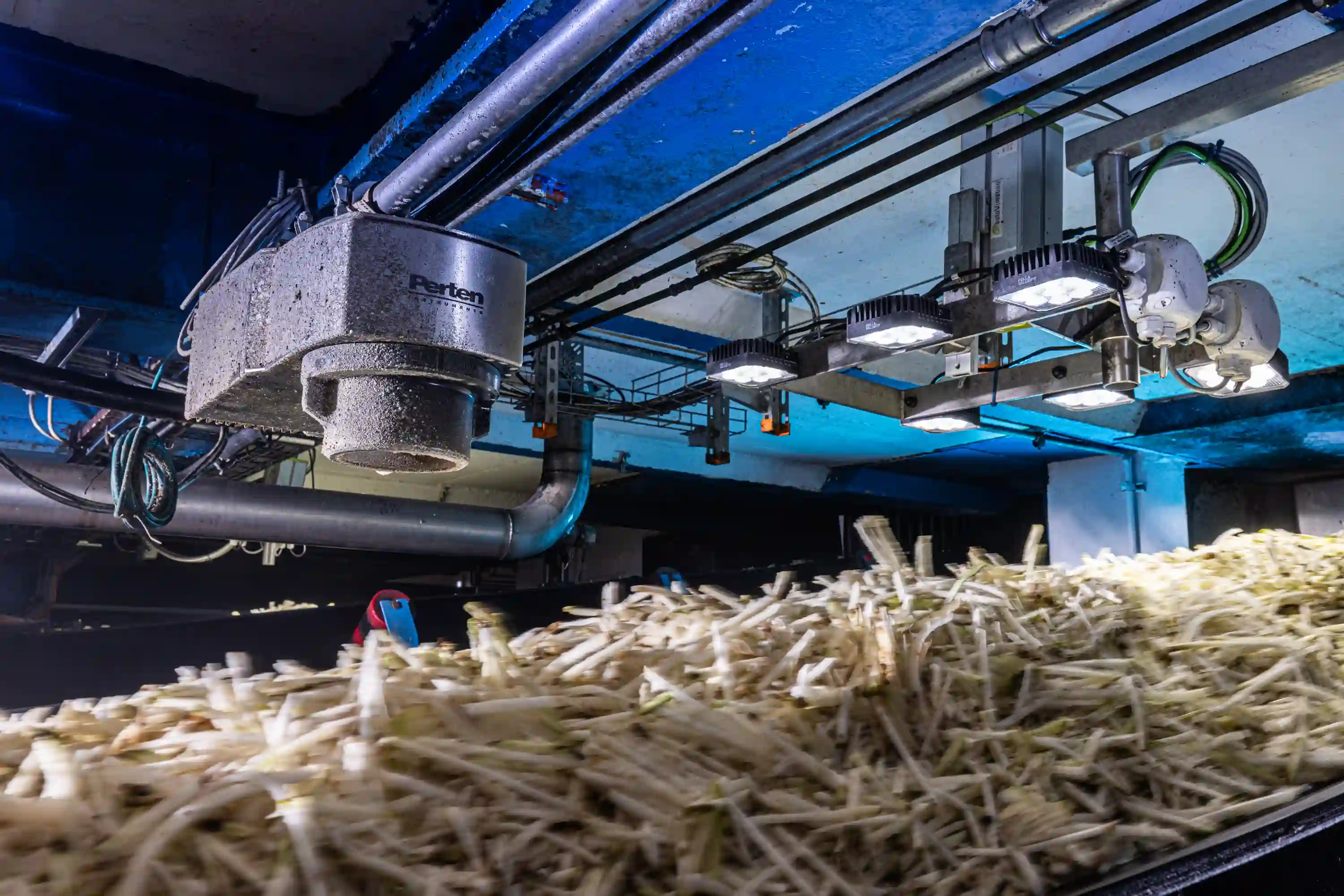
Many factories depend heavily on laboratory measurements with long sampling intervals. Process conditions can shift significantly between 2 lab results. Sucrosphere begins by creating real-time visibility through continuous sensor systems and high-resolution process analysis. Variability that was previously invisible becomes measurable, and measurable variability can be controlled.
Advisory Intelligence
The system begins generating predictive recommendations.
Real-time process behaviour is analysed and improvement suggestions are generated. The operator remains fully in control. This stage is designed to build confidence: teams compare their own decisions with recommendations from the predictive model. Trust develops through evidence, not explanation.
Assisted Optimisation
Certain optimisation tasks begin to be semi-automated.
Extraction becomes more stable, steam consumption is balanced, crystallisation reaches target distribution in optimised time, and the scheduling of end-of-process steps improves. The system actively supports production stability within clearly defined operational boundaries.
Closed-Loop Predictive Control
Only after demonstrated reliability does full MPC-based optimisation become relevant.
The factory no longer simply reacts to deviations: it predicts them before they happen. This is where operational behaviour changes. Shift-to-shift consistency improves. The dependency on individual operator expertise decreases. The process runs to plan.
Why Sucrosphere Does Not Replace Existing Automation
The most common concern about industrial digitalisation is the assumption that factories must replace their existing DCS infrastructure. For most factories, this would be economically unrealistic and operationally unnecessary.
Most sugar factories already have robust automation systems. The problem is not missing automation. The problem is missing coordination and intelligence above the automation layer. Sucrosphere integrates non-invasively into existing environments, acting as an intelligence layer above the DCS rather than replacing it.
| Classical Modernisation Projects | Sucrosphere Integration | |
|---|---|---|
| DCS | Replace existing DCS | Keep existing DCS |
| Investment type | Large CAPEX projects | Incremental modernisation |
| Disruption | Long shutdown requirements | Minimal operational disruption |
| Architecture | Full infrastructure replacement | Layered intelligence approach |
| Adoption | High organisational resistance | Progressive operator acceptance |
| Implementation style | Big-bang | Modular deployment |
| ROI timeline | Long horizon | Faster measurable improvements |
This integration strategy matters in sugar factories where campaign schedules leave limited windows for disruptive implementation projects.
From Process Control to Factory Intelligence
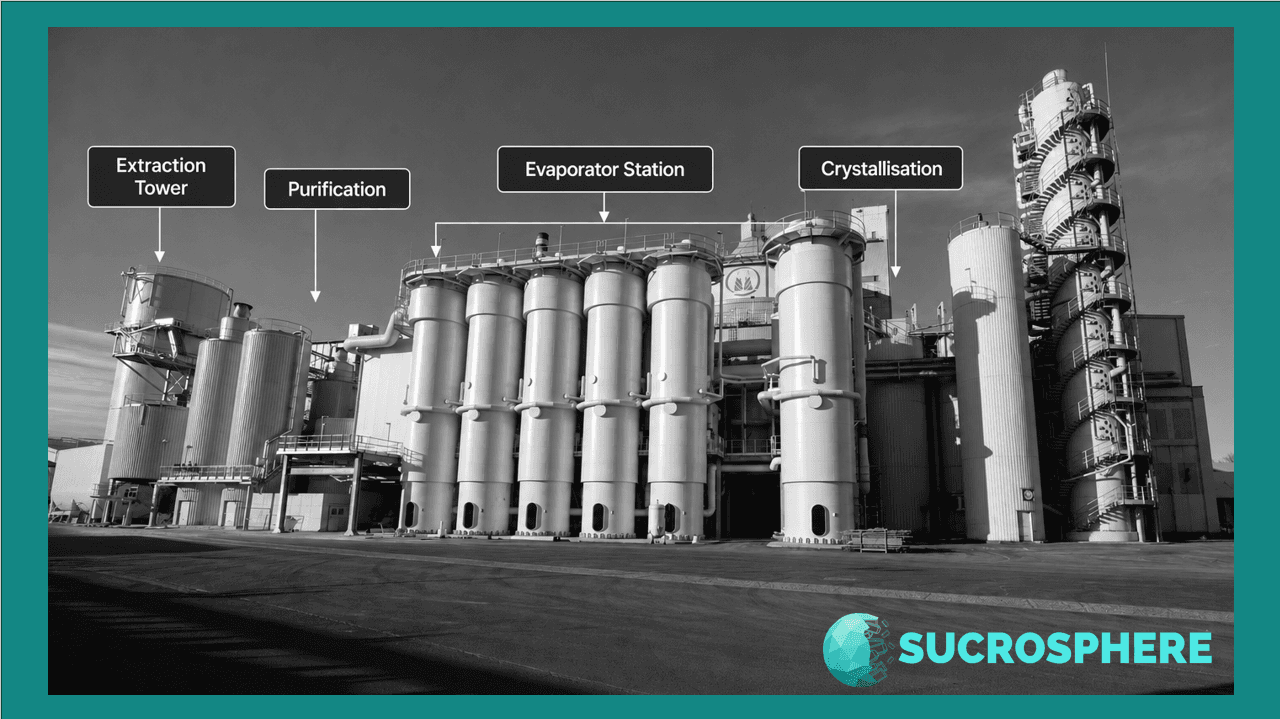
Traditional automation stabilises individual process variables. The next step requires coordination across the full production environment: understanding the interactions between extraction, purification, evaporation, and crystallisation, and balancing throughput, energy consumption, stability, quality, and equipment constraints in real time.
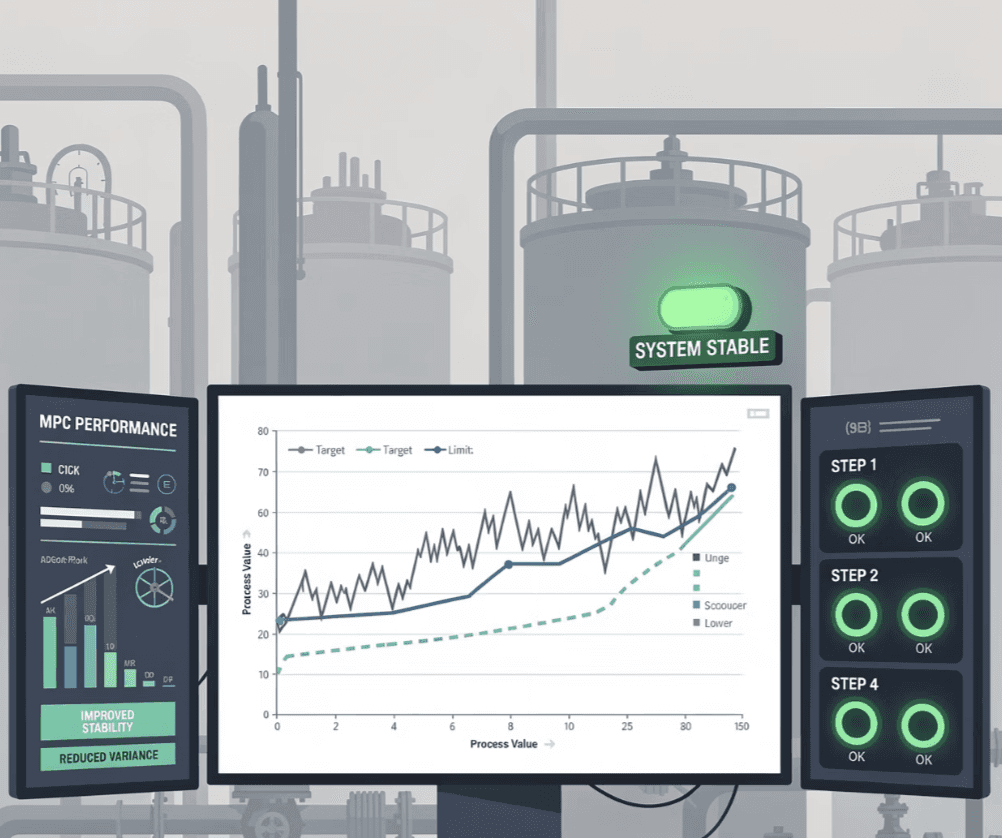
This is where Model Predictive Control becomes relevant. Unlike classical PID control, MPC continuously predicts future process behaviour and calculates optimised control actions ahead of time. Instead of reacting after a deviation, the system acts before it.
| PID-Based Automation | MPC-Based Optimisation | |
|---|---|---|
| Response | Reacts after deviation occurs | Predicts future deviation |
| Scope | Single variable at a time | Multi-variable coordination |
| Process understanding | Limited interaction awareness | Models process relationships |
| Logic | Static tuning parameters | Adaptive model-based decisions |
| Optimisation level | Local | Factory-wide potential |
| Shift consistency | High operator dependency | Reduced variability between shifts |
| Dynamic conditions | Difficult to handle | Designed for dynamic behaviour |
PID systems remain essential. MPC adds a higher decision-making layer capable of coordinating process behaviour more effectively across the full factory.
The Human Factor Remains Central
A common misconception about advanced automation is that it replaces operational expertise. In practice, successful automation amplifies it. Sugar factories carry operational knowledge built over generations.
Sucrosphere is designed to preserve and strengthen that knowledge. Operators remain central, not inside the automated control loop, but in charge of the factory itself. Their experience helps shape optimisation strategies. Their understanding improves the predictive models over time.
Technology adoption in industrial environments depends on trust. That trust is earned through evidence, built during the advisory phase, and reinforced every time the system proves its value in a real production situation.
The Team Behind the Platform
Sucrosphere combines expertise from sugar technologists, automation engineers, software developers, sensor systems specialists, advanced process control experts, industrial data scientists, and operational factory management.
This structure allows projects to bridge deep process understanding with advanced digital technology simultaneously. Successful digitalisation in sugar production requires both. Neither without the other produces lasting results.
The Future of Sugar Production
The factories that succeed in the next decade will not simply collect more data. They will use it differently: combining real-time measurements, predictive intelligence, operational experience, and advanced control into coordinated operational decisions.
Sucrosphere was built for this transition. Not as another isolated automation product, but as a long-term operational intelligence platform designed for the realities of modern sugar production.
Want to See the Approach in Practice?
The deployment methodology and results from our extraction and crystallisation projects are in the Sucrosphere white papers.
Frequently Asked Questions
What makes Sucrosphere different from other sugar factory automation vendors?
Sucrosphere combines real-time sensing, predictive models, MPC, and operational sugar expertise into one connected factory intelligence platform rather than offering isolated automation tools. The platform is built on the production experience of Pfeifer & Langen, a company with more than 150 years in the sugar industry.
Does Sucrosphere replace existing factory automation systems?
No. Sucrosphere integrates non-invasively with existing DCS and PLC infrastructure and acts as an intelligence layer above the existing automation environment. No changes to DCS or PLC logic are required.
Why does Sucrosphere use a phased deployment model?
Phased deployment reduces operational risk, improves operator acceptance, and allows factories to gain measurable value before moving toward autonomous optimisation. Trust is built through evidence during the monitoring and advisory phases, not through persuasion.
Is Sucrosphere suitable for cane and beet sugar factories?
The platform architecture and optimisation philosophy are designed for both cane and beet sugar production environments. Documented deployments to date are in European beet sugar factories.
What technologies are included in the Sucrosphere platform?
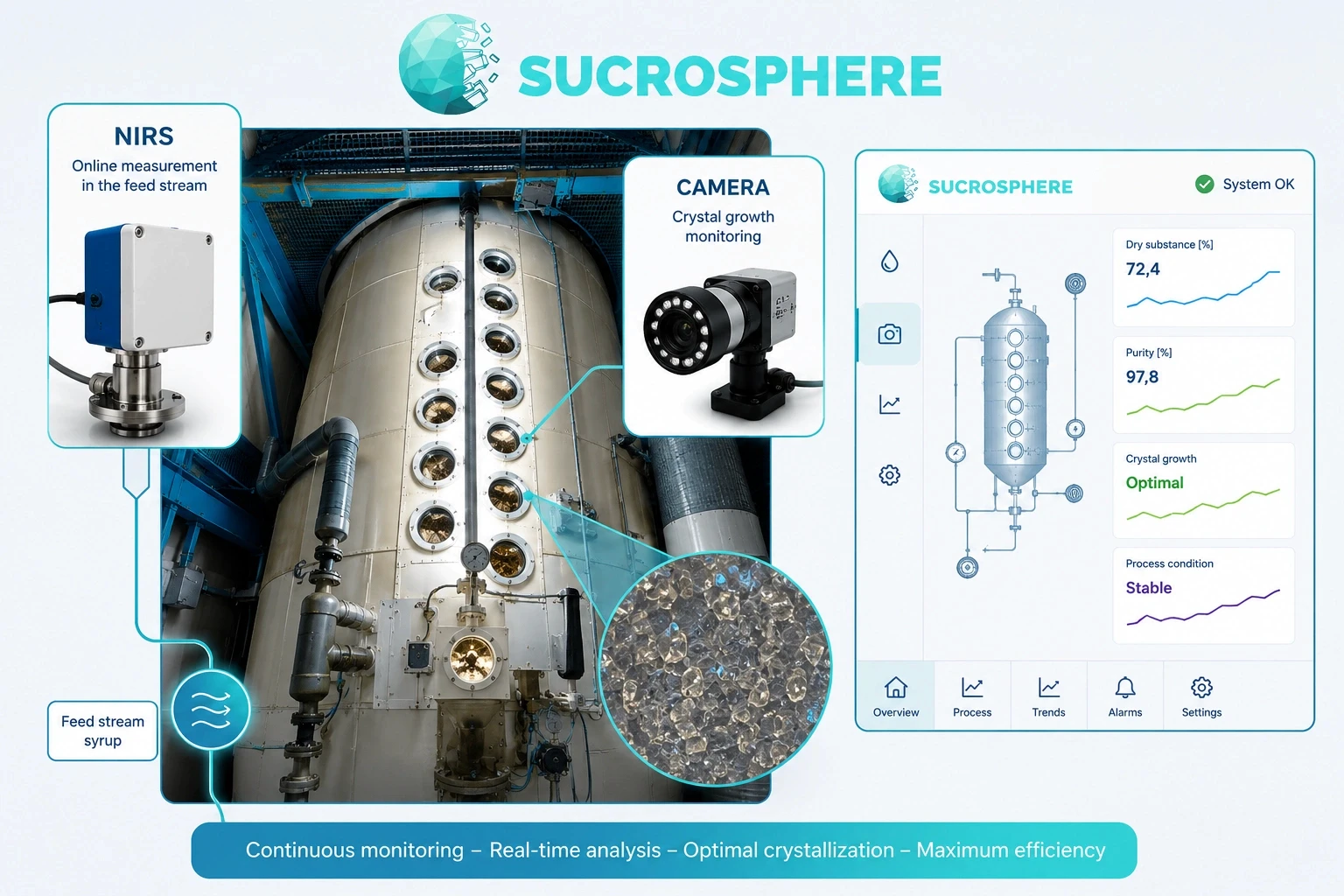
Depending on the application, Sucrosphere includes NIR spectroscopy, Visual Smart Sensors (VSS), MPC algorithms, sequential function control, predictive analytics, process optimisation modules, factory-level coordination systems, and a central HMI.
How does Sucrosphere support operators?
Sucrosphere provides real-time visibility, predictive recommendations, process stabilisation support and operational guidance to operators. In auto mode operator is observing if the applications follows the set KPI's and can take care on other tasks.