Which technologies are already working, where MPC adoption stands, and why the industry needs a factory coordination layer.
Part 1 showed why the sugar industry can no longer judge automation only by the strength of the DCS. The DCS is essential, but the next value layer comes from real-time sugar process intelligence. Part 2 goes one level deeper: which technologies are already working, where MPC adoption stands, and why the industry needs a factory coordination layer rather than another isolated dashboard.
Where MPC Adoption Stands in Beet Sugar vs. Cane
The honest assessment: MPC in sugar exists, but adoption is still selective.
In beet sugar, the strongest published work covers crystallisation, evaporation, crystallisation coordination, and plantwide control. Research has addressed MPC for industrial sugar house crystallisation, hybrid continuous-batch systems, and coordinated economic MPC between evaporation and crystallisation.
In cane sugar, MPC examples are more often linked to evaporation, juice handling, extraction or milling stability, boiler energy, and factory balancing. The technology is present, but its use is more fragmented and often tied to specific unit operations or energy systems.
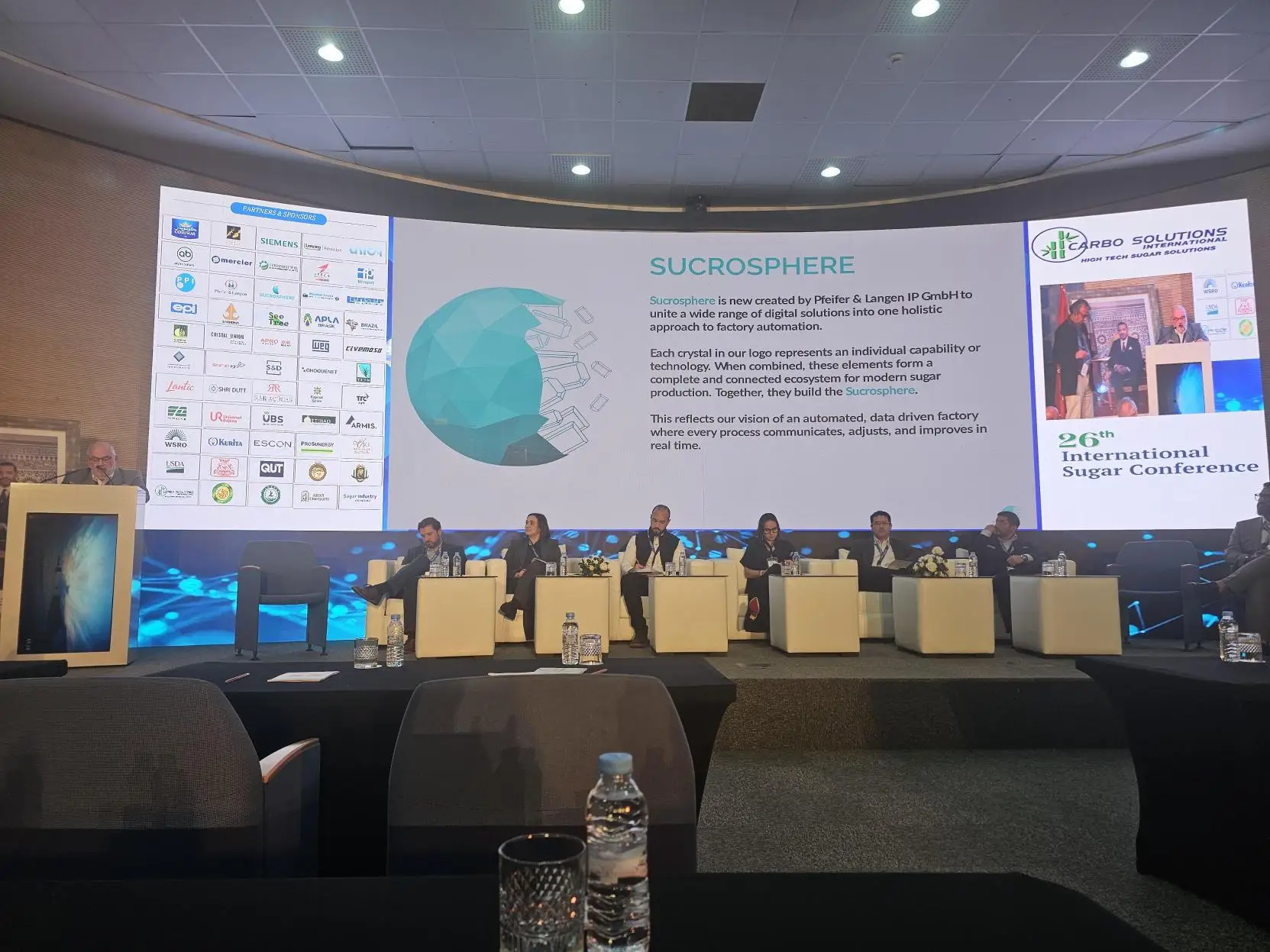
Commercially, adoption is no longer only academic. Sucrosphere reports MPC running across multiple European beet factories, including 6 towers across 4 factories and 1 controller running 65 consecutive days without manual intervention. That matters because sugar needs proof during campaign, not only in simulation.
| Area | Beet sugar | Cane sugar |
|---|---|---|
| Public MPC literature | Stronger in crystallisation and evaporation/crystallisation coordination | Present in evaporation, juice handling, and mill/boiler balancing |
| Industrial deployment visibility | Emerging real deployments in European beet factories | More fragmented, often tied to mill automation and energy systems |
| Main challenge | Campaign variability, crystallisation scheduling, and steam economy | Cane variability, extraction stability, and bagasse/steam balance |
| Best MPC entry point | Extraction, evaporation, crystallisation, and sugar house scheduling | Milling/extraction, evaporation, and boiler/energy balancing |
| Adoption status | Early commercial scale-up | Selective and site-specific |
What Is Working: Technologies Proven in Real Campaigns
The technologies that are clearly working are practical layers on top of existing automation.
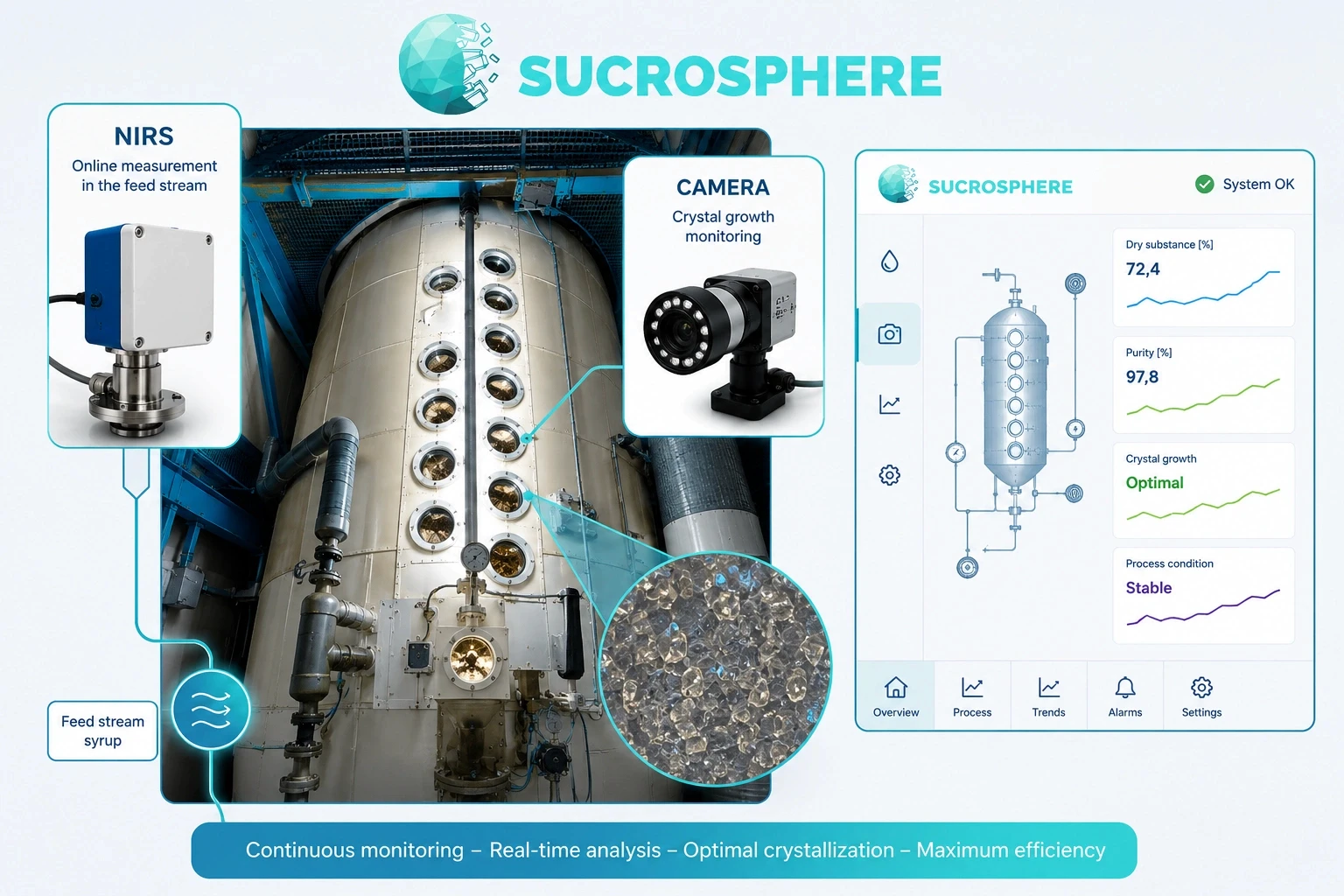
- Real-time NIR measurement: NIR reduces dependency on delayed lab feedback and gives operators continuous process visibility.
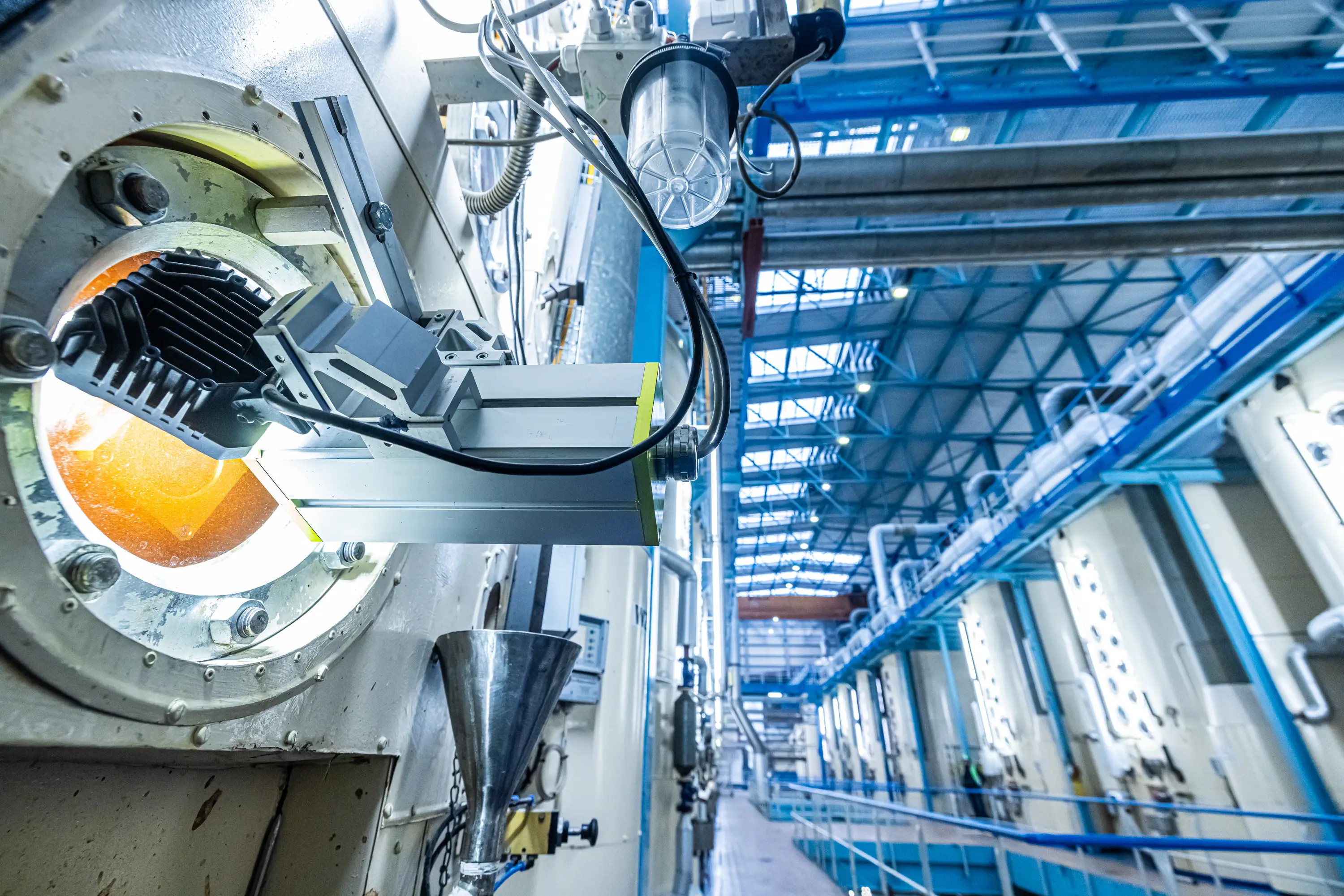
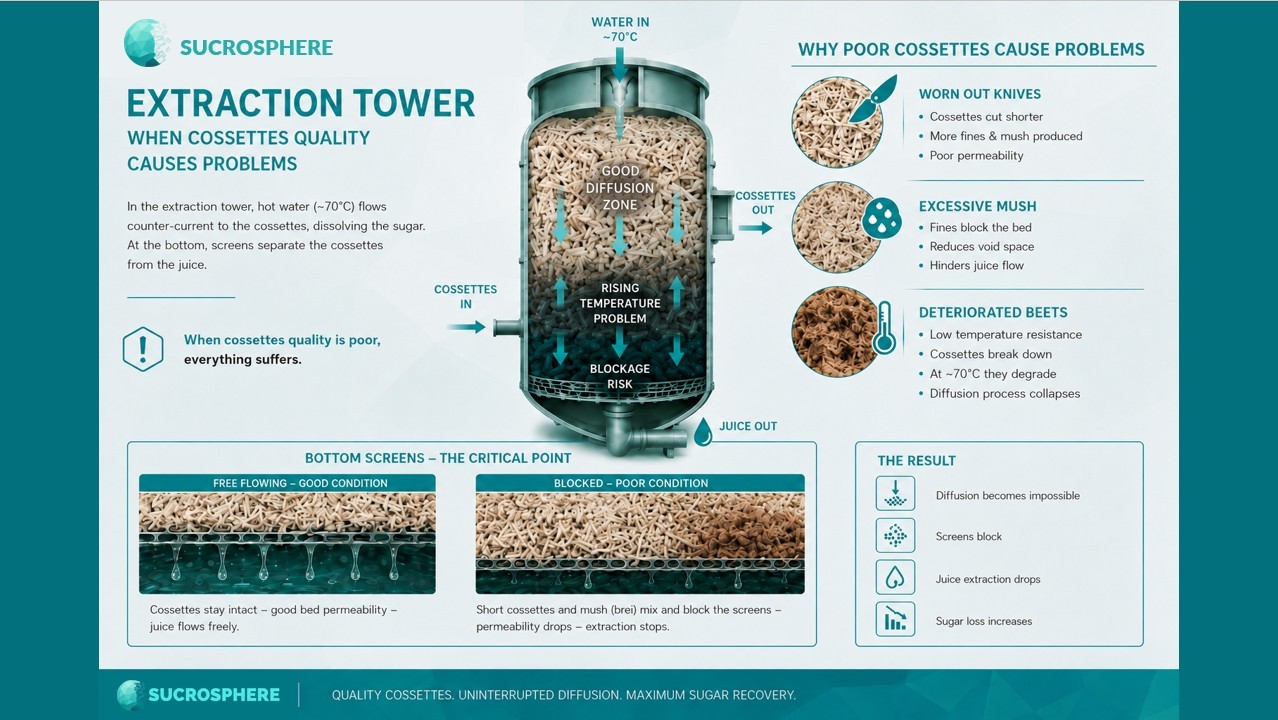
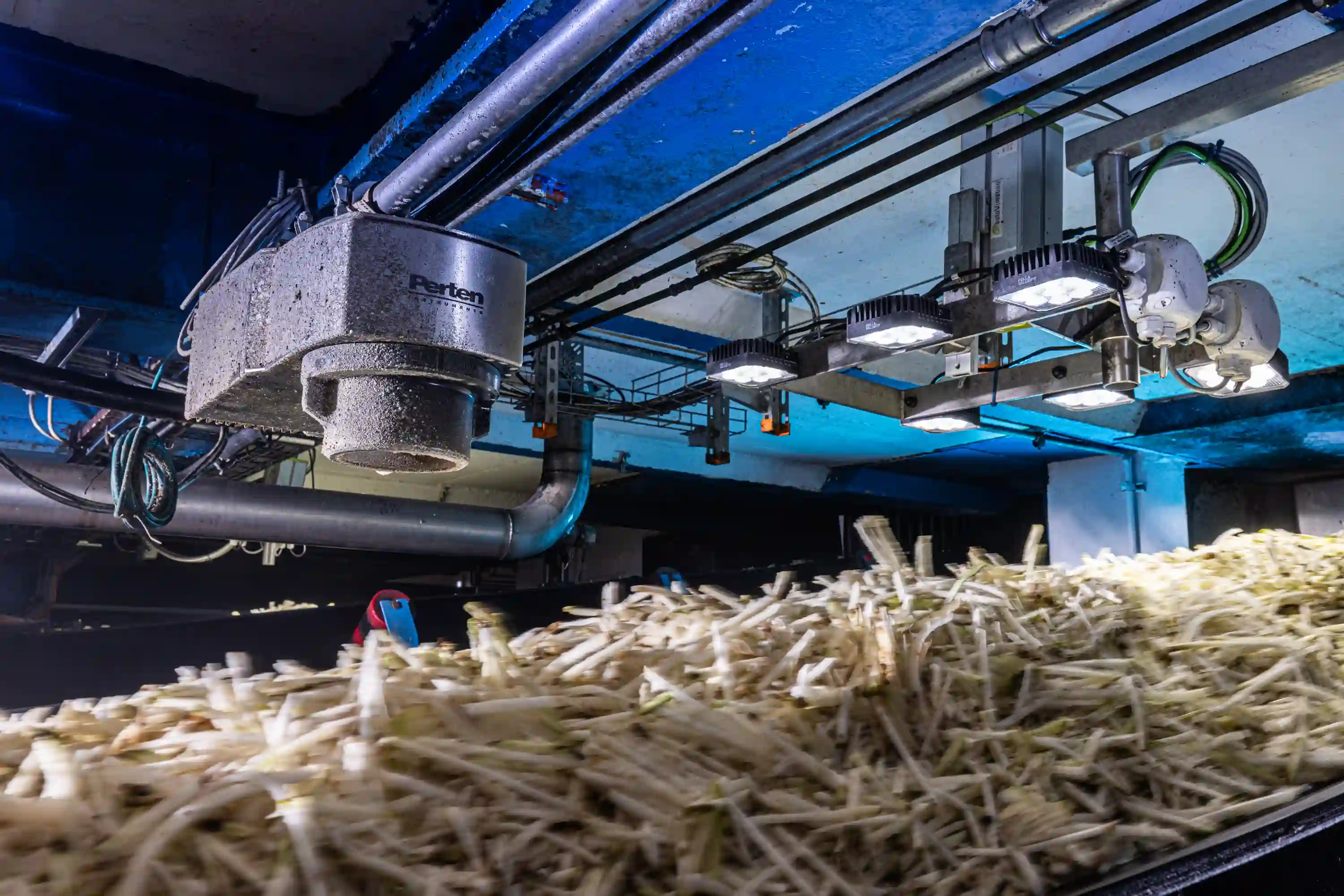
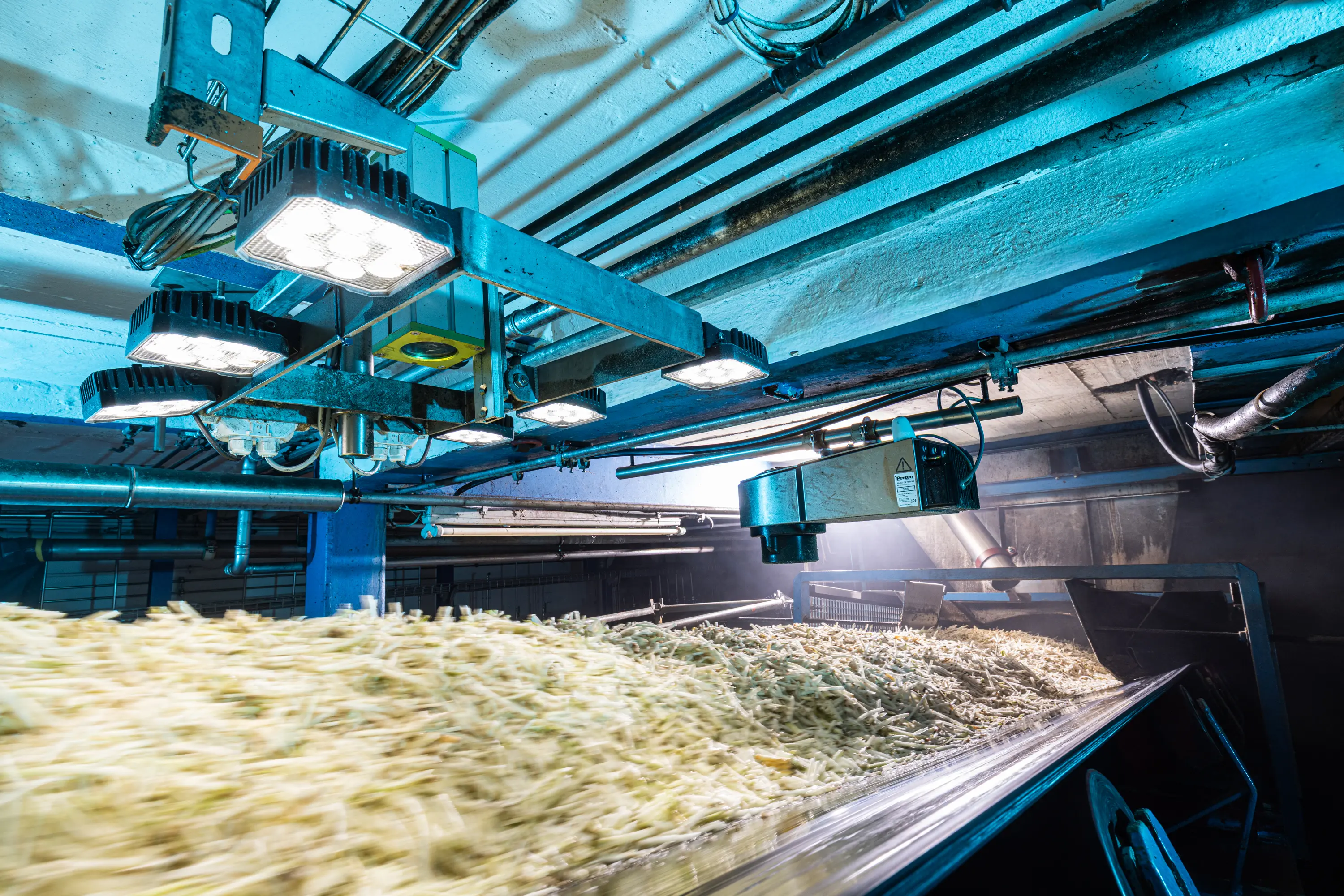
- Visual smart sensors: visual systems can monitor cossette quality, crystal behaviour, or process conditions that were previously judged manually.
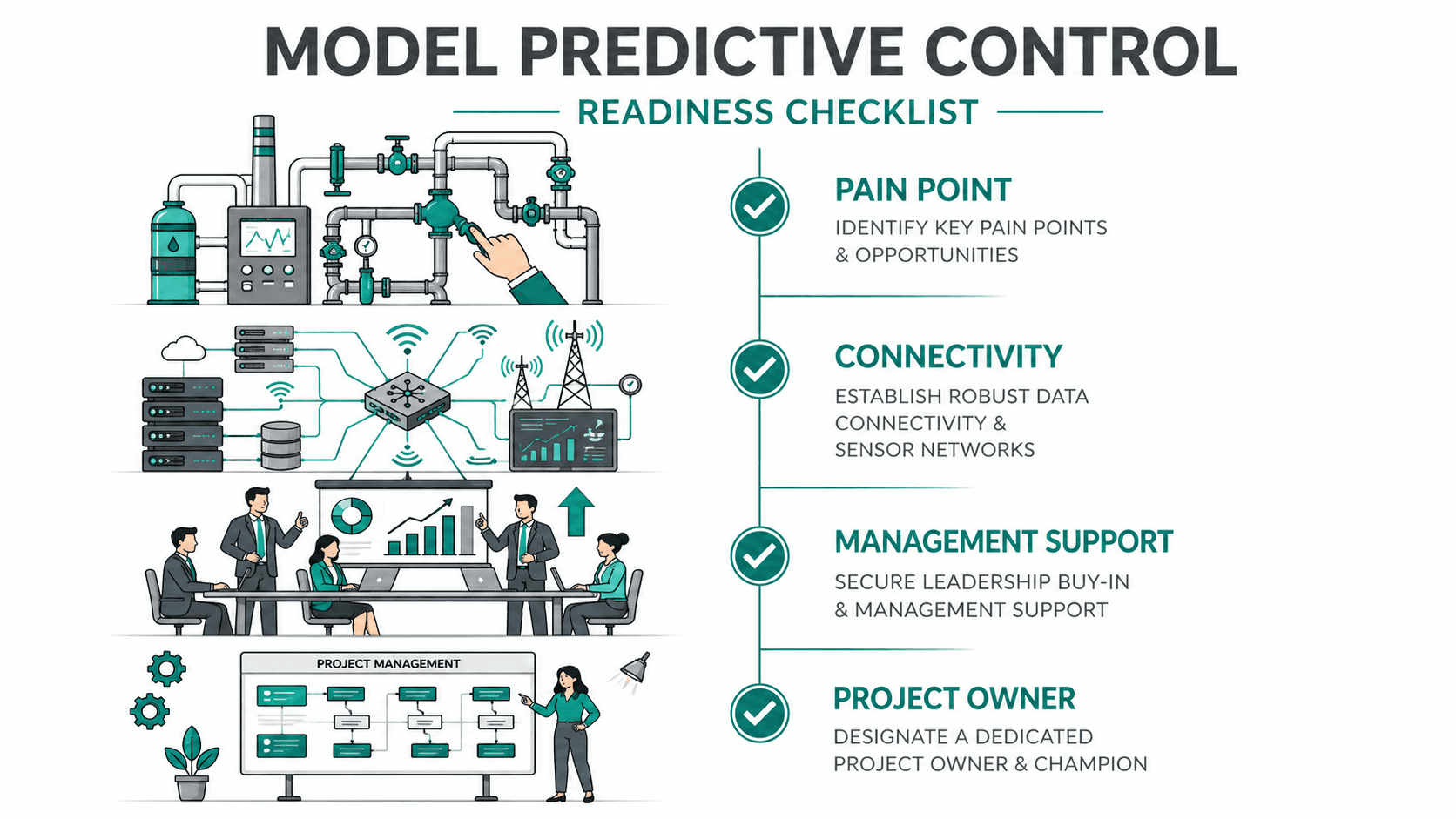
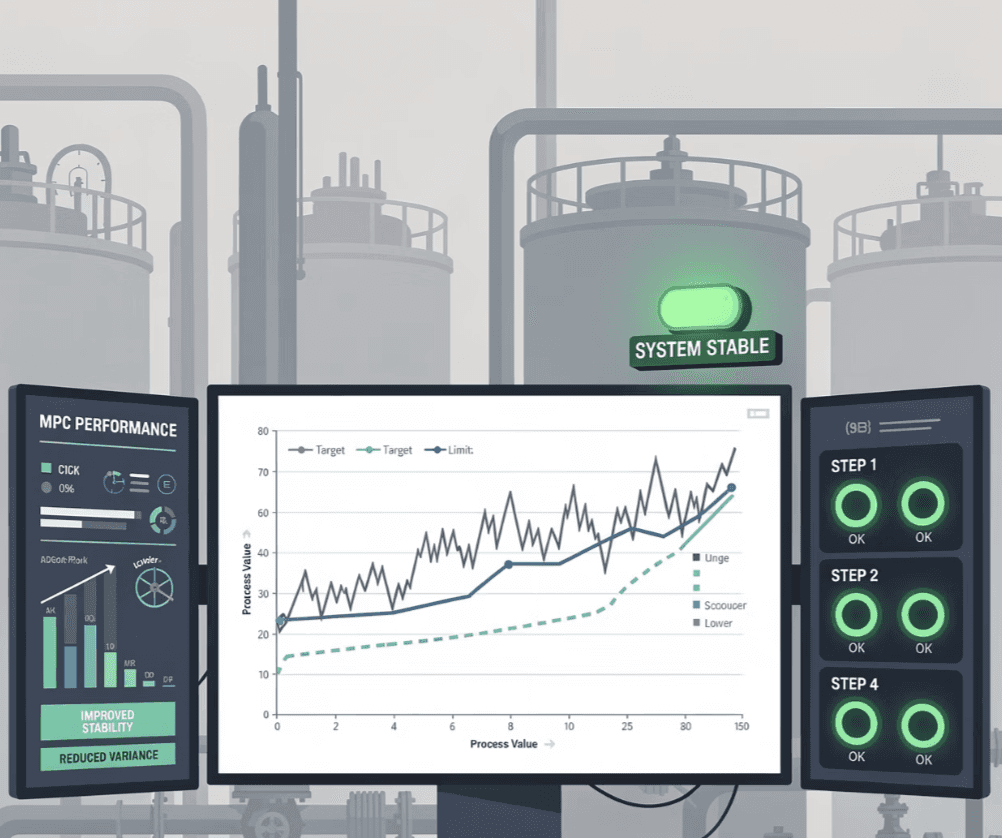
- MPC for constrained process control: MPC is especially useful where several manipulated variables affect several controlled variables, and where the system has delays, constraints, and nonlinear behaviour.
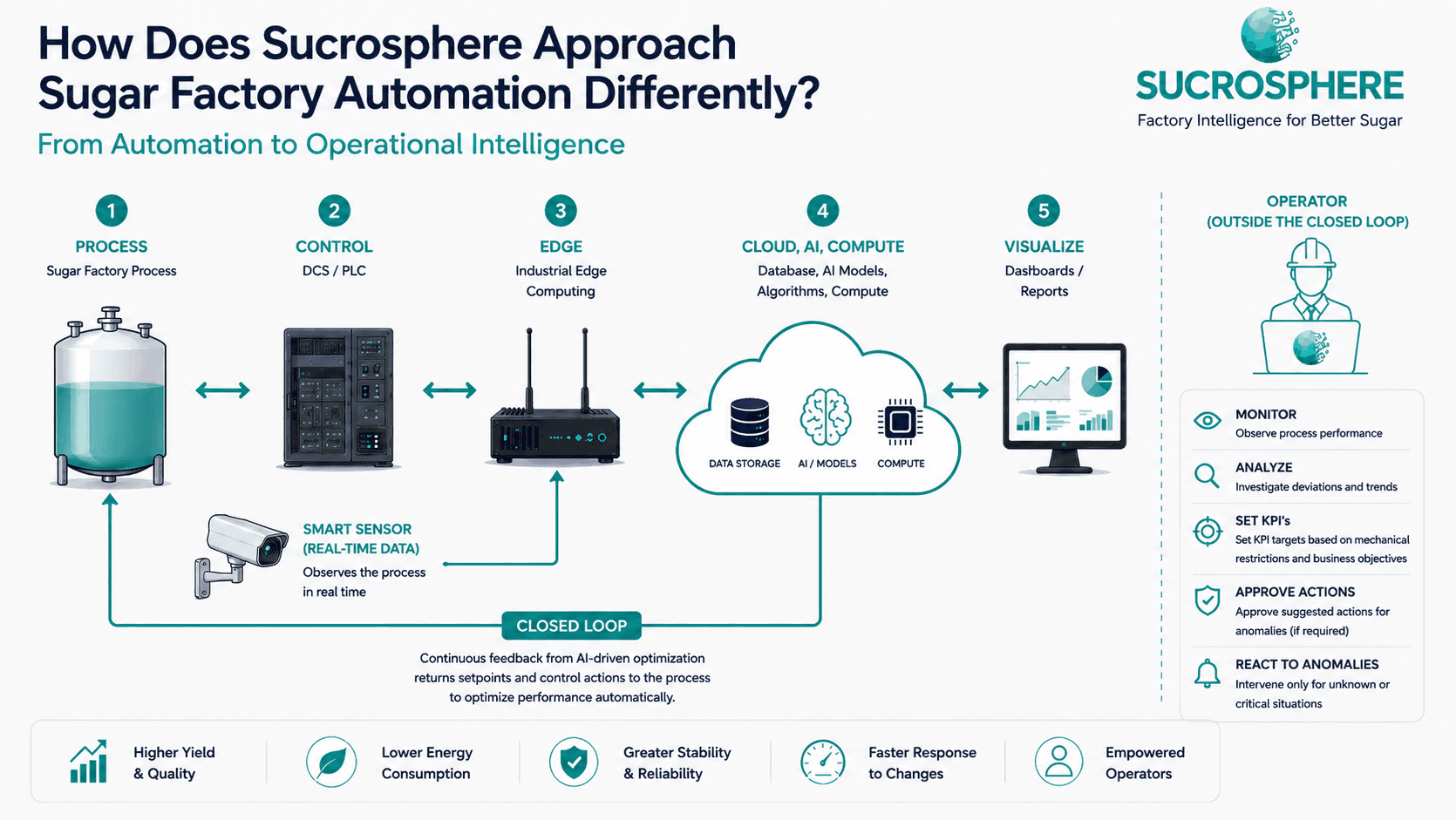
- Advisory-to-closed-loop deployment: the safest adoption path is visibility first, then advisory mode, then assisted control, then closed loop.
- Digital twin validation: digital twins are valuable when they help test strategies before campaign risk is taken. They make optimisation discussable before it becomes operational.
Successful deployments do not ask operators to blindly trust a black box. They create visibility, prove recommendations, compare outcomes, and then shift selected decisions into closed-loop control.
What Is Still Being Built: The Factory Coordination Layer
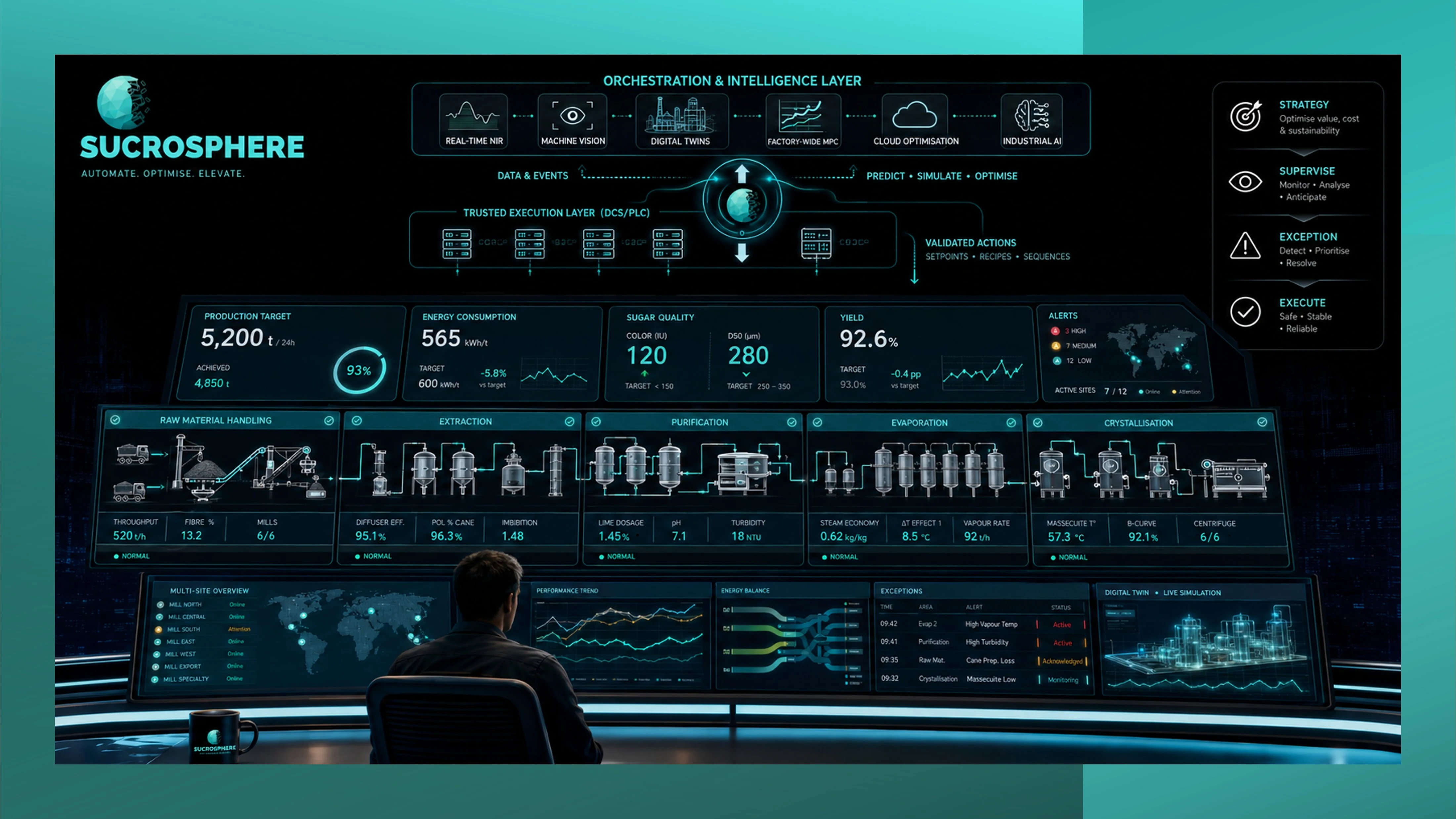
The next missing layer is not another HMI. It is the factory coordination layer.
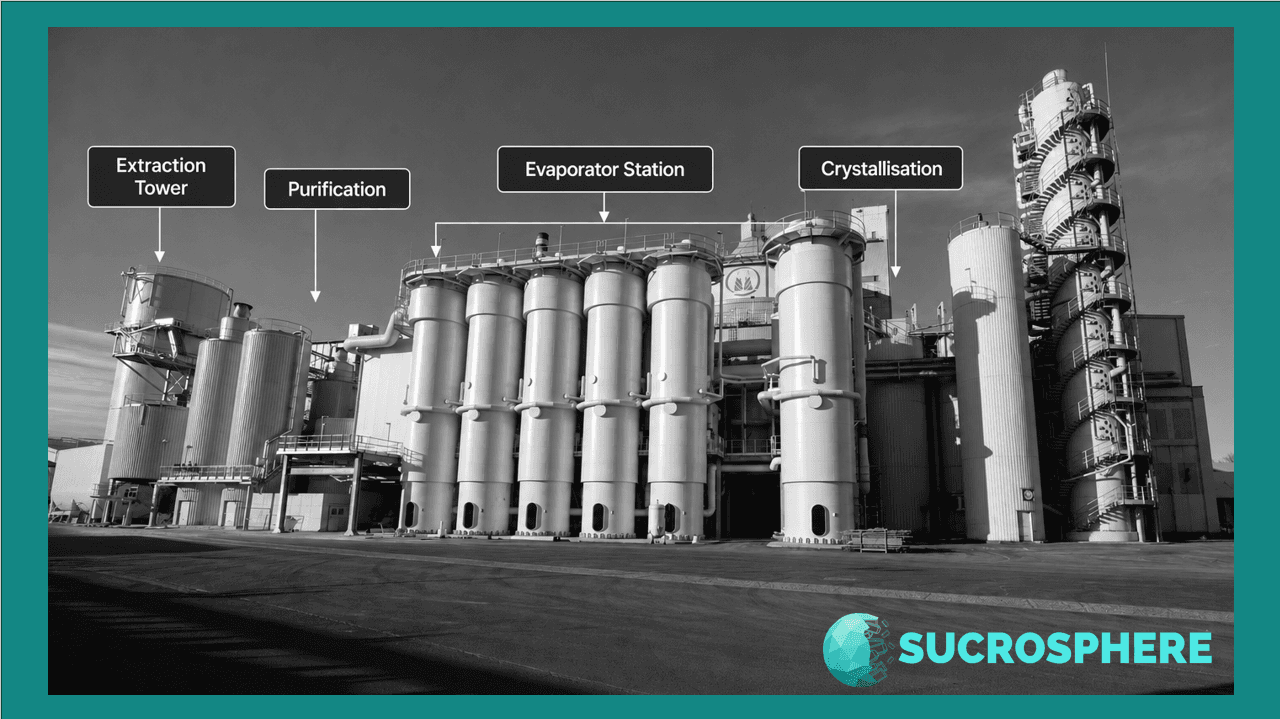
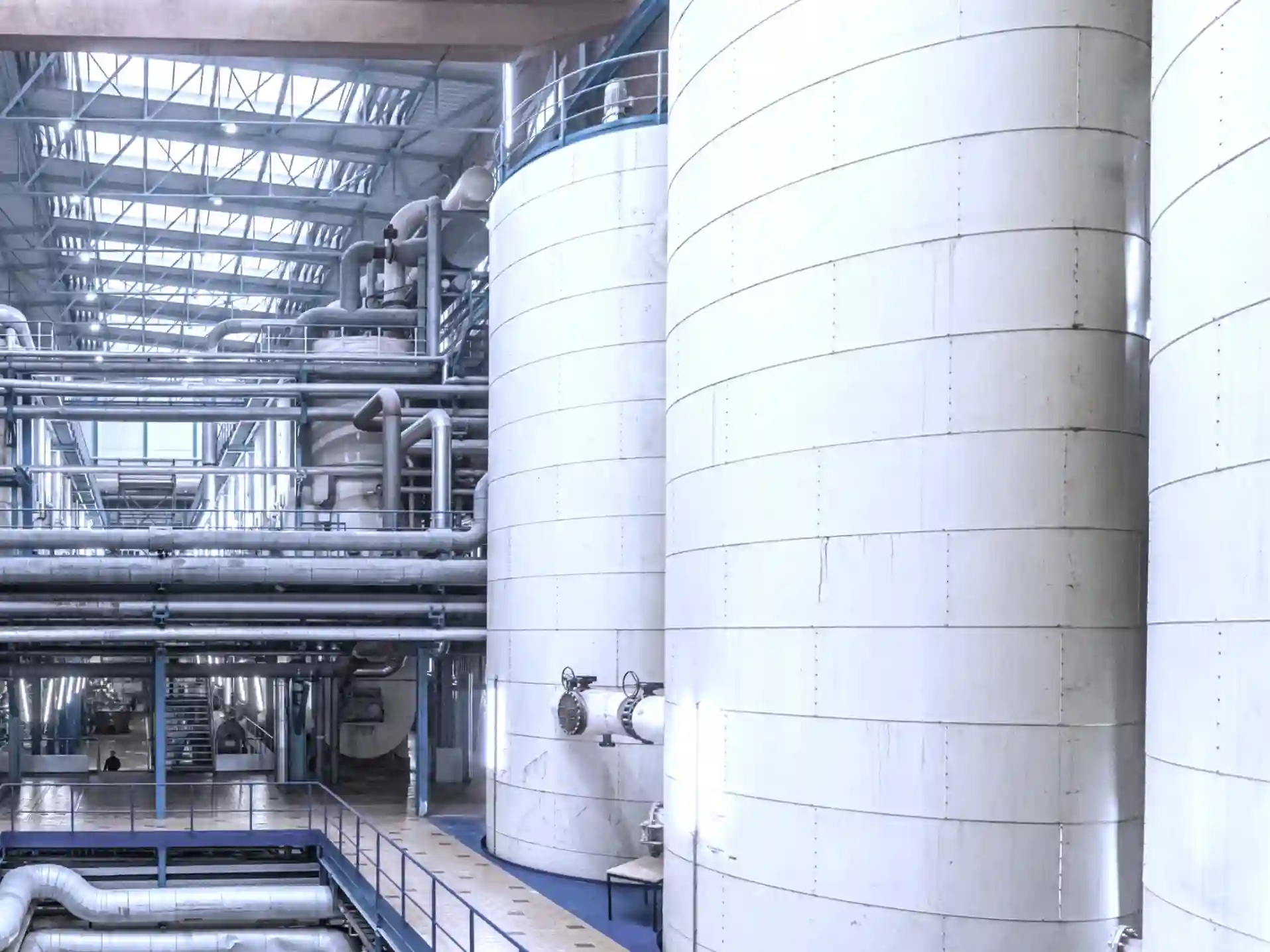
Most factories still optimise unit operations separately: extraction, purification, evaporation, crystallisation, centrifugals, drying, and the boiler house. But the real losses often happen between these units. A good extraction decision can overload evaporation. A crystallisation decision can disturb steam balance. A production schedule can create bottlenecks downstream.
Full-plant optimisation needs:
- real-time sensors across all stages
- process models for each unit
- constraints from each station
- production planning integration
- energy optimisation logic
- operator acceptance
- secure integration with DCS/PLC systems
This is where Sucrosphere fits: as the sugar factory coordination and optimisation layer, not another DCS. The next breakthrough is not more automation per unit operation. It is a layer that connects extraction, evaporation, crystallisation, energy, and scheduling into one operational logic.
Want to Learn More?
The deployment methodology and results from our sugar factory projects are in the Sucrosphere white papers.