Day 1 recap from the 9th VDZ/ESST Conference in Lubeck: 450 participants, 2 technical presentations, and one clear message from the industry.
9th VDZ/ESST Conference 2026
Musik- und Kongresshalle Lubeck (MuK), Lubeck, Germany | 11 to 13 May 2026
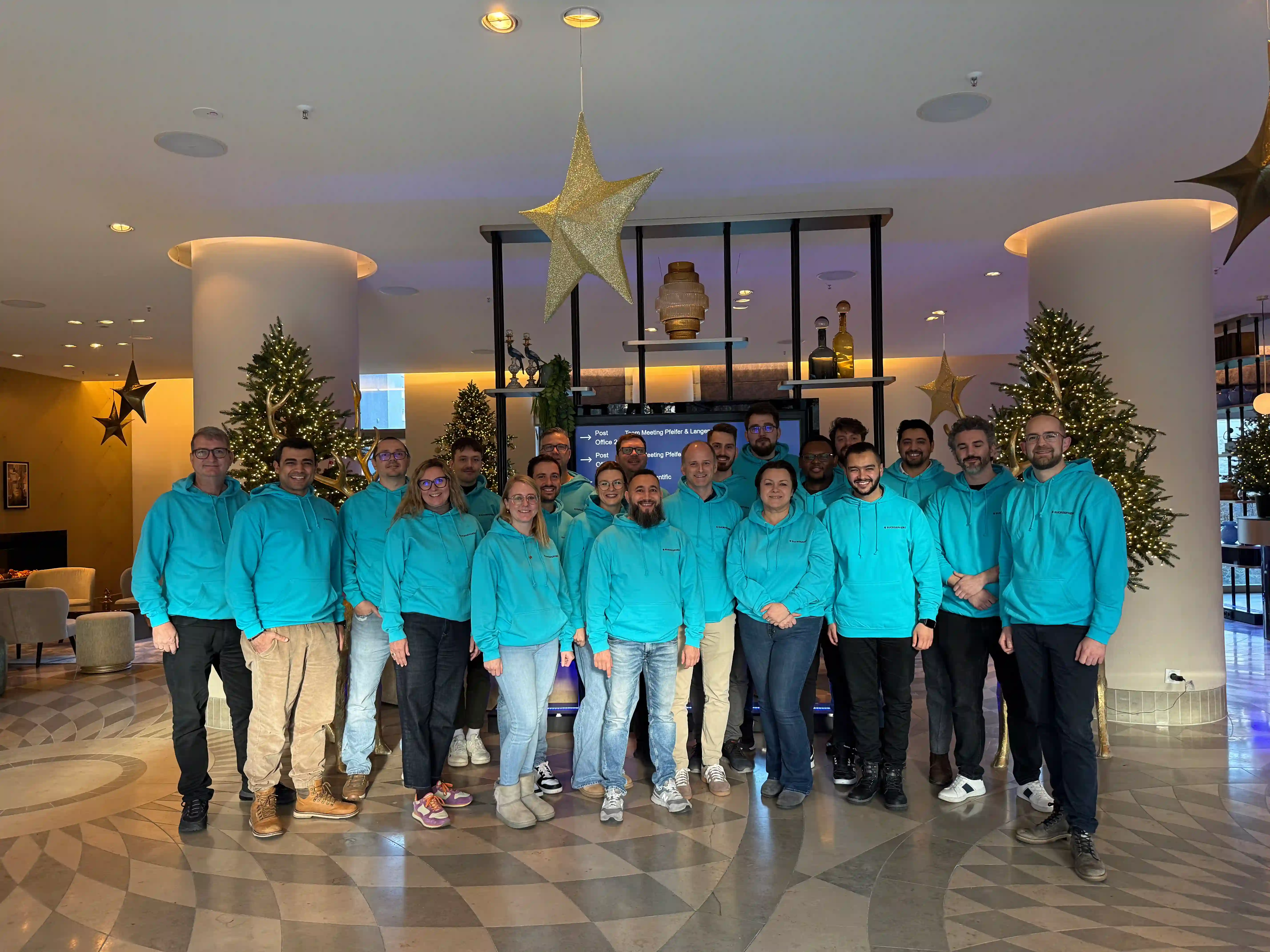
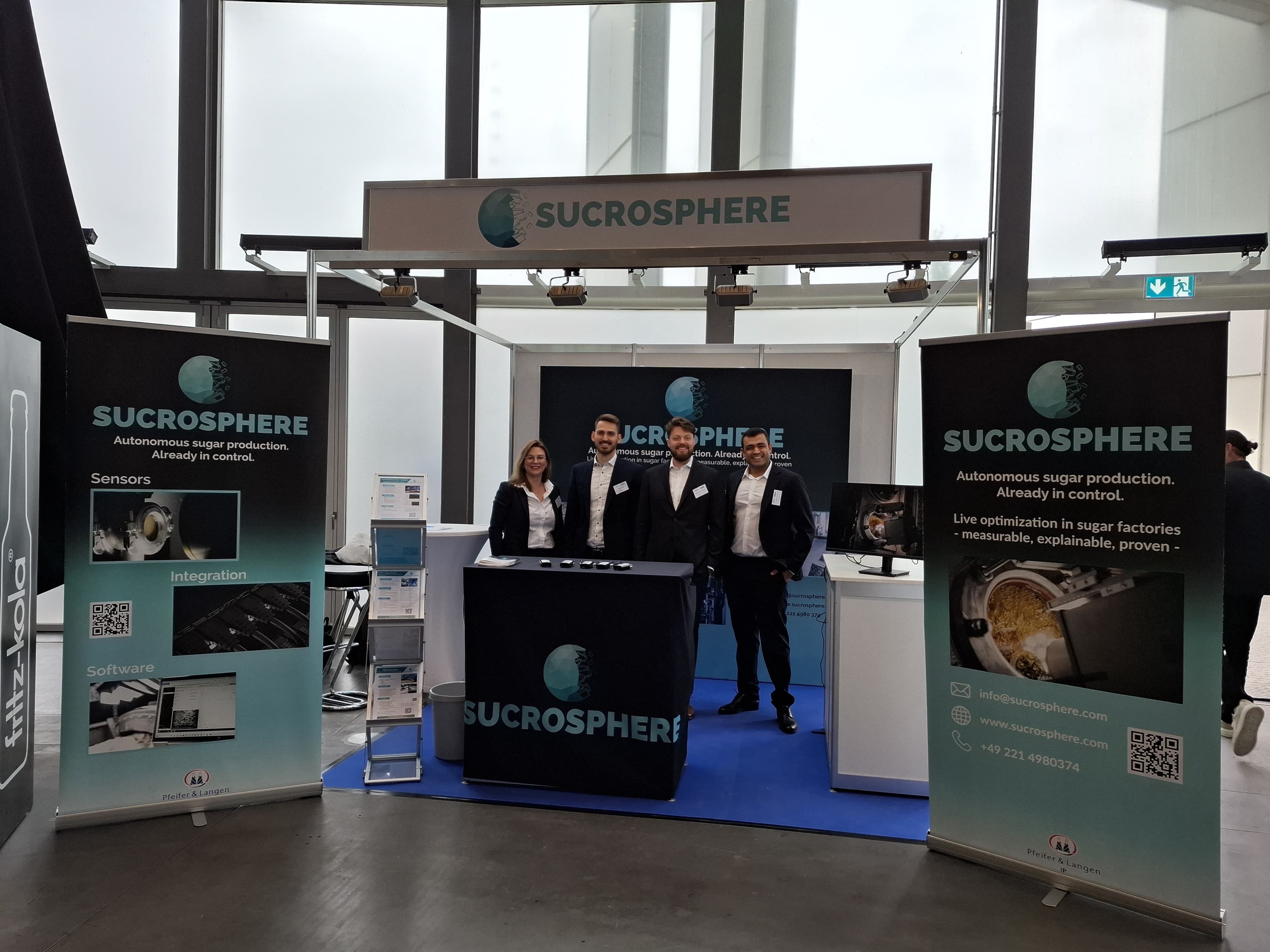
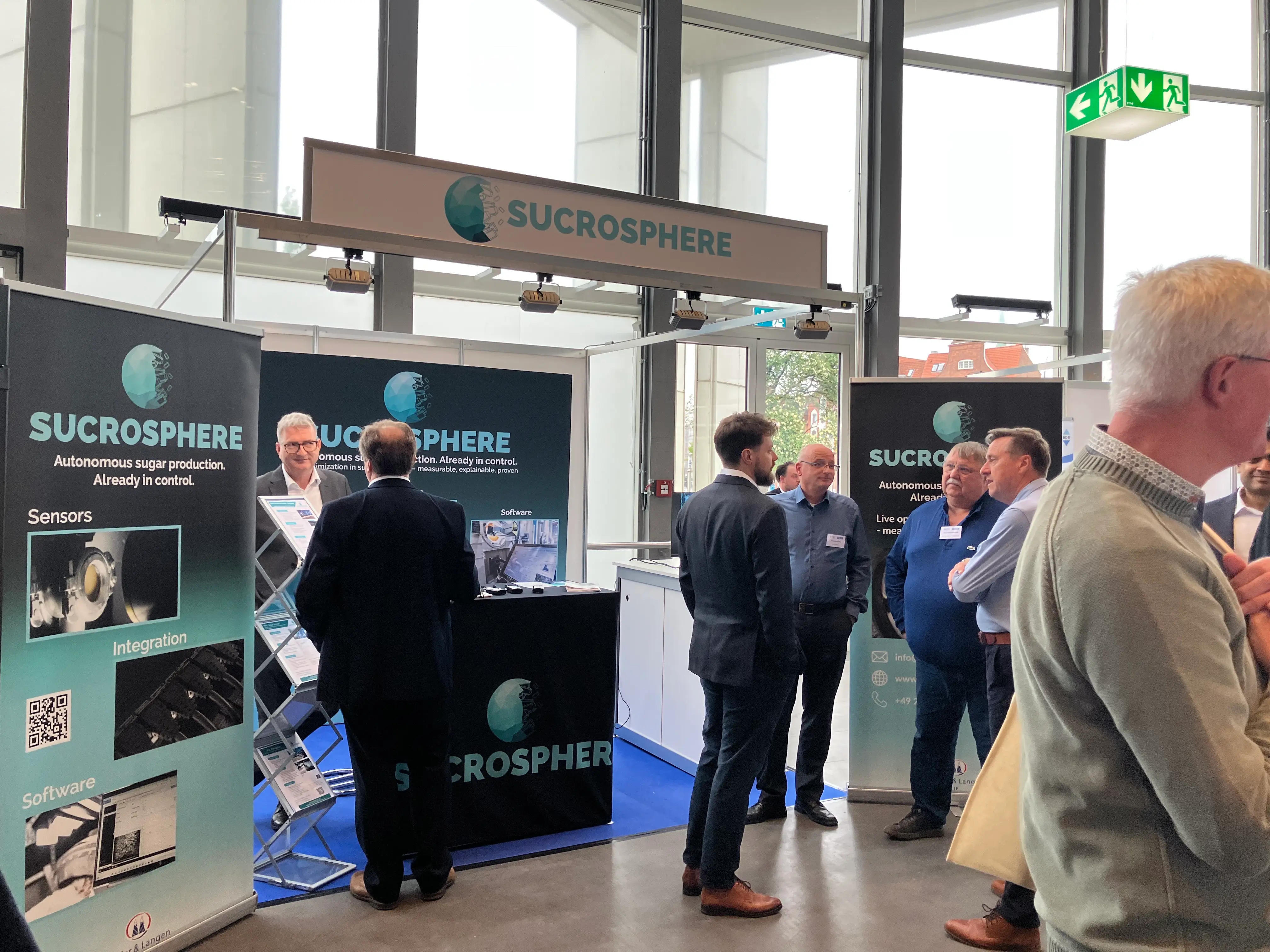
450+ participants from across the global sugar industry. Sucrosphere at Booth 50.
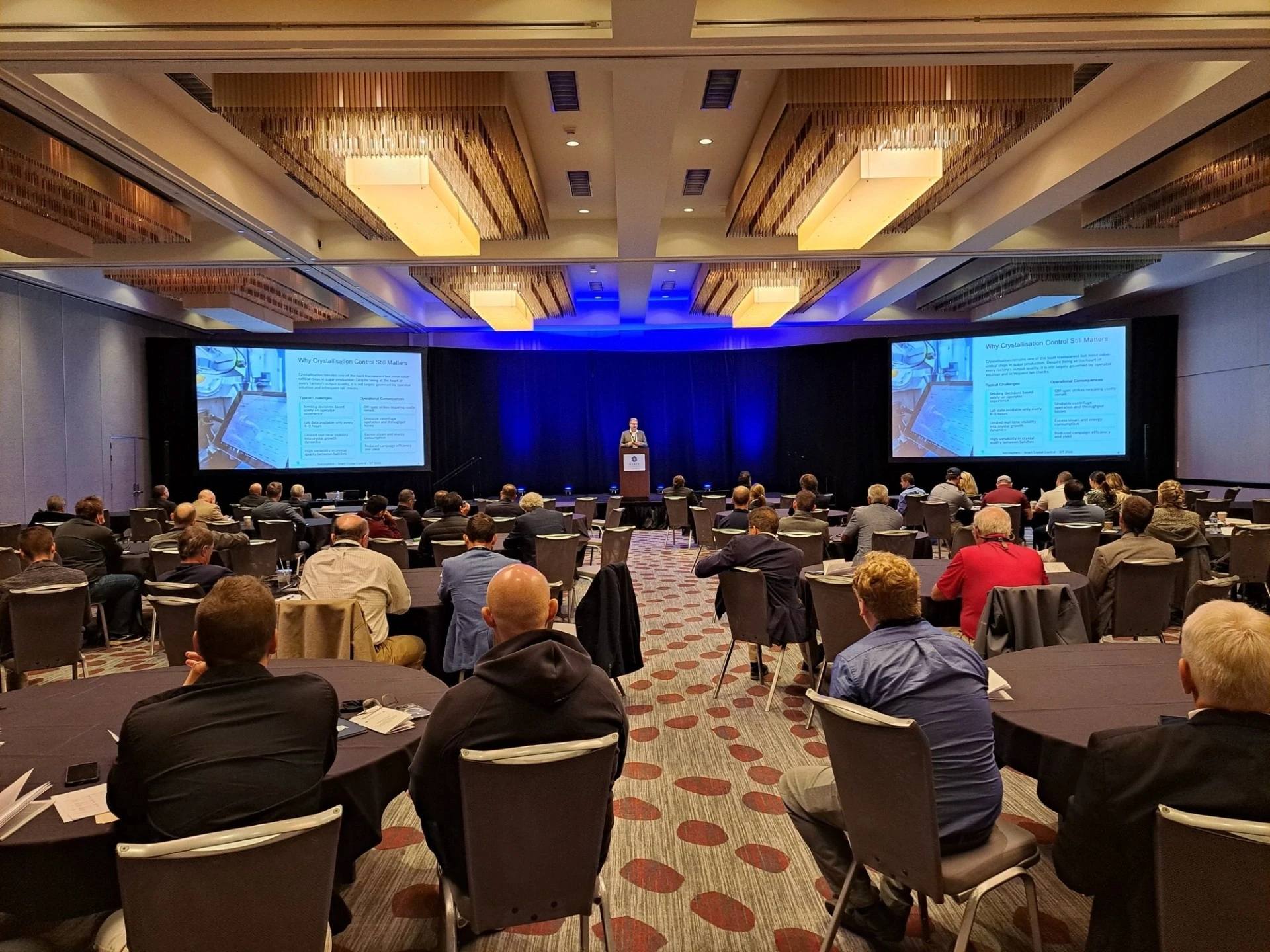
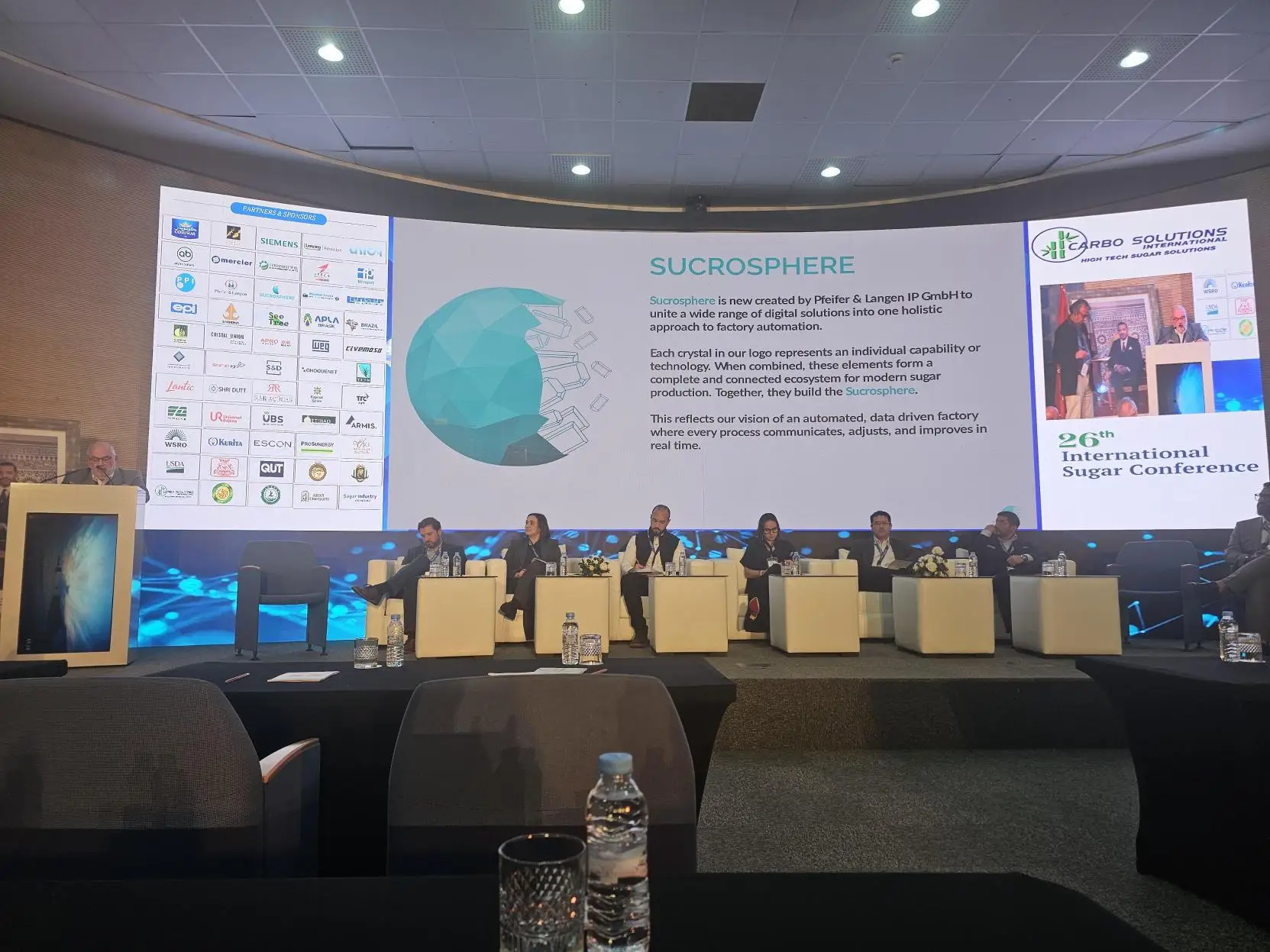
The 9th VDZ/ESST Conference opened on 11 May 2026 in Lubeck, bringing together more than 450 participants from across the global sugar industry at the Musik- und Kongresshalle on the city waterfront. For Sucrosphere, Day 1 was a strong confirmation of where the industry is heading.
At Booth 50, the conversations throughout the day and the evening reception reflected a shift in how sugar producers are thinking about automation. The question is no longer whether to digitalise, but how to do it without disrupting operations, replacing existing infrastructure, or taking on excessive risk.
2 technical presentations from the Sucrosphere team gave the audience concrete answers to exactly those questions.
What Visitors at Booth 50 Wanted to Talk About
The topics generating the most discussion at the Sucrosphere stand reflected the industry's current priorities:
- Real-time NIRS process analytics
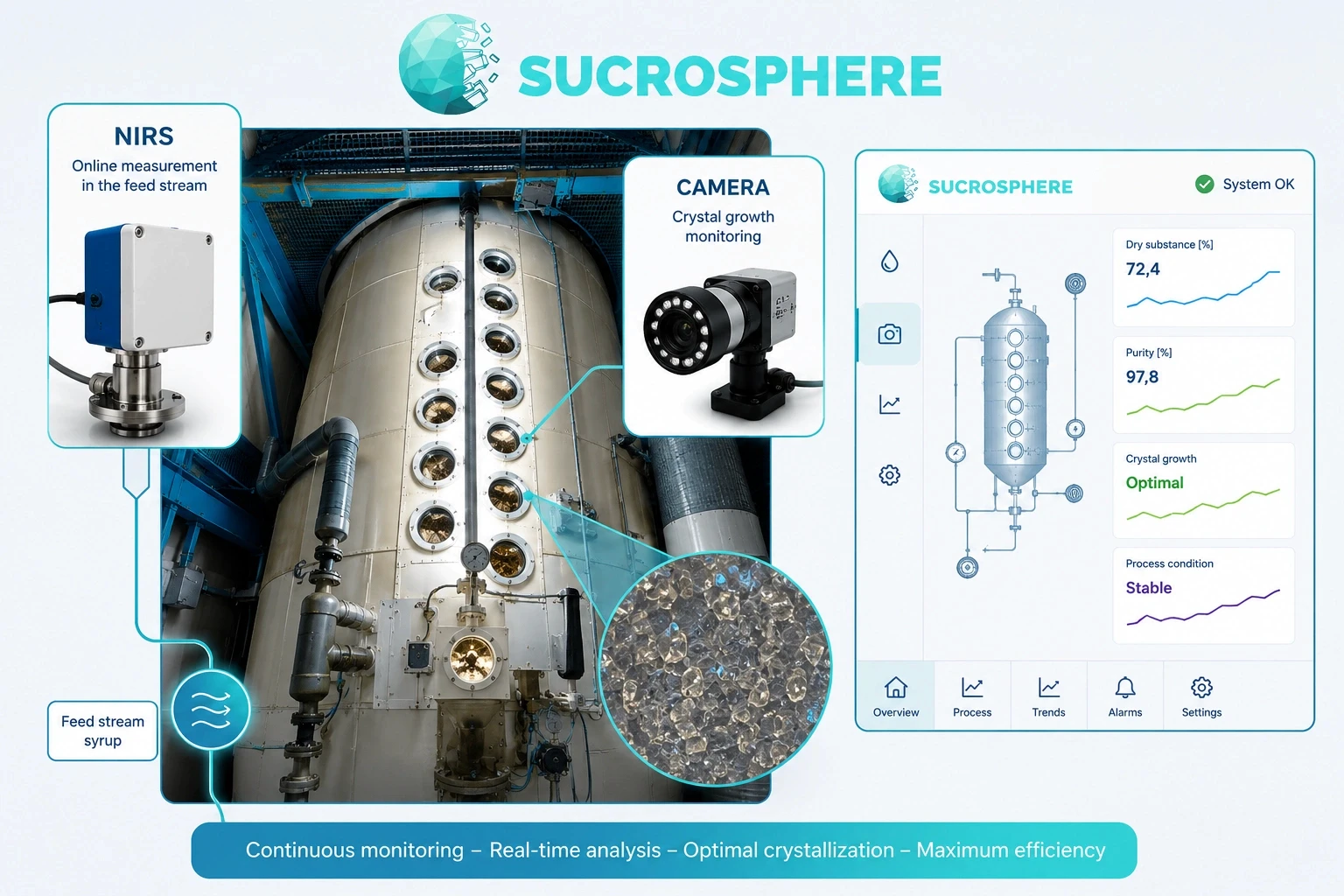
- Visual Smart Sensor (VSS) technology for continuous process observation
- Model Predictive Control (MPC) for extraction and crystallisation
- Cloud-based supervision and optimisation
- Closed-loop crystallisation control
Andrew Youssef: MPC Extraction Control That Already Works
Presentation: "Model Predictive Control Concepts for the Sugar Industry: Extraction as a Use Case"
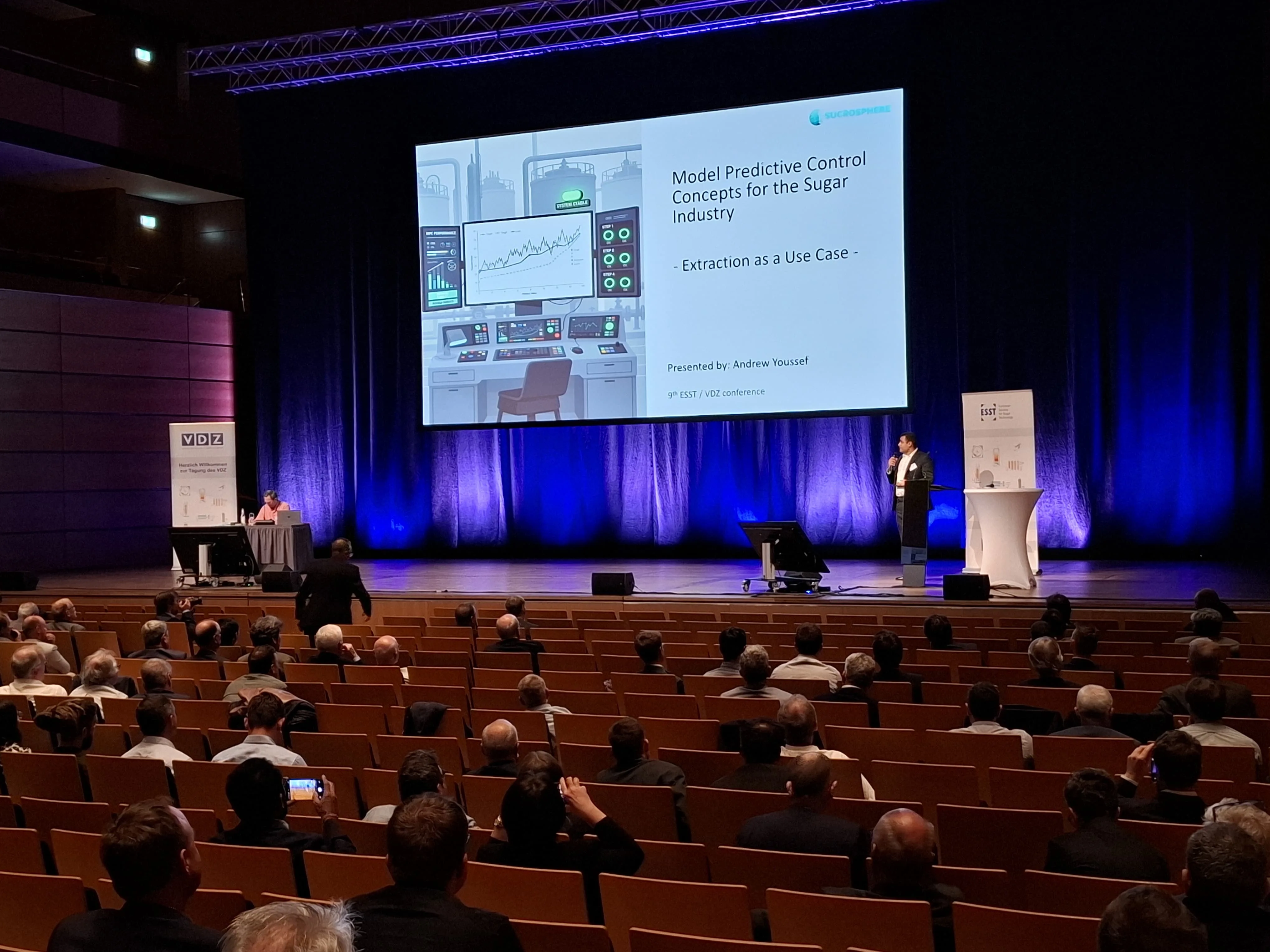
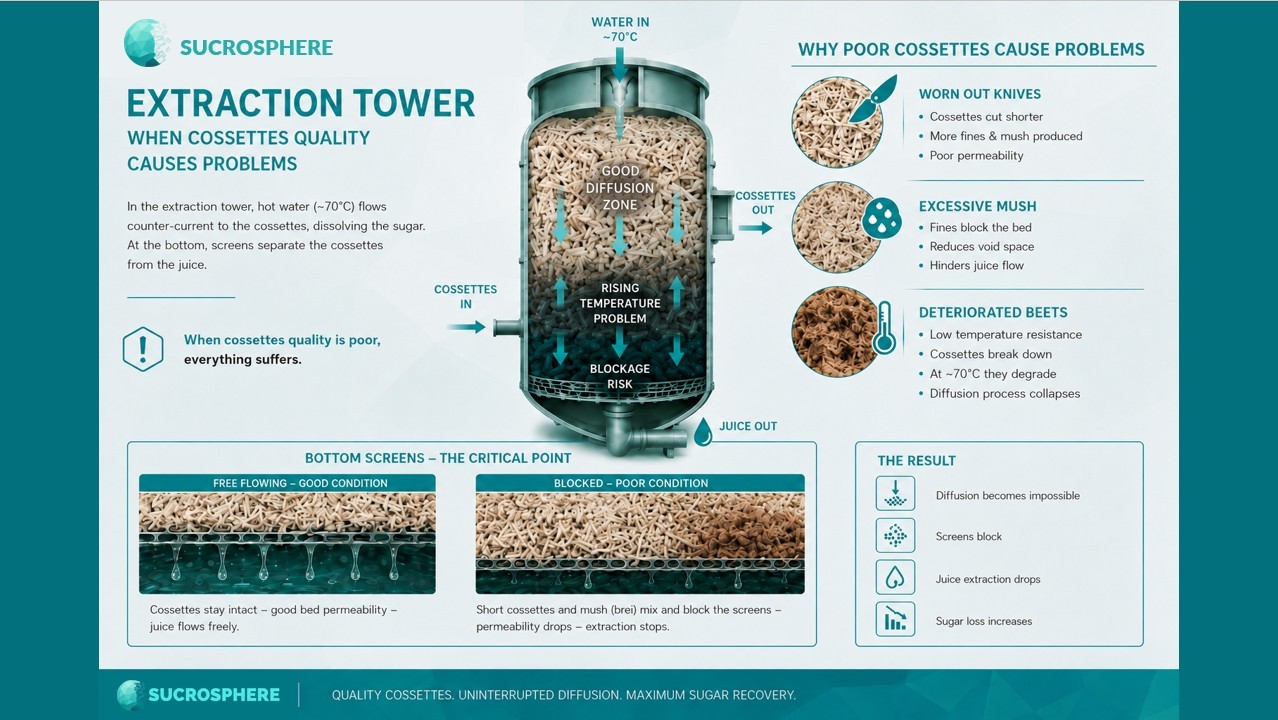
Andrew Youssef opened by making the core problem concrete. Traditional extraction control still relies on operator experience and reactive single-loop PID controllers that cannot manage the complex interactions between tower pressure, temperatures, retention times, cossette quality, energy consumption, yield, and purity targets simultaneously. Something always gives.
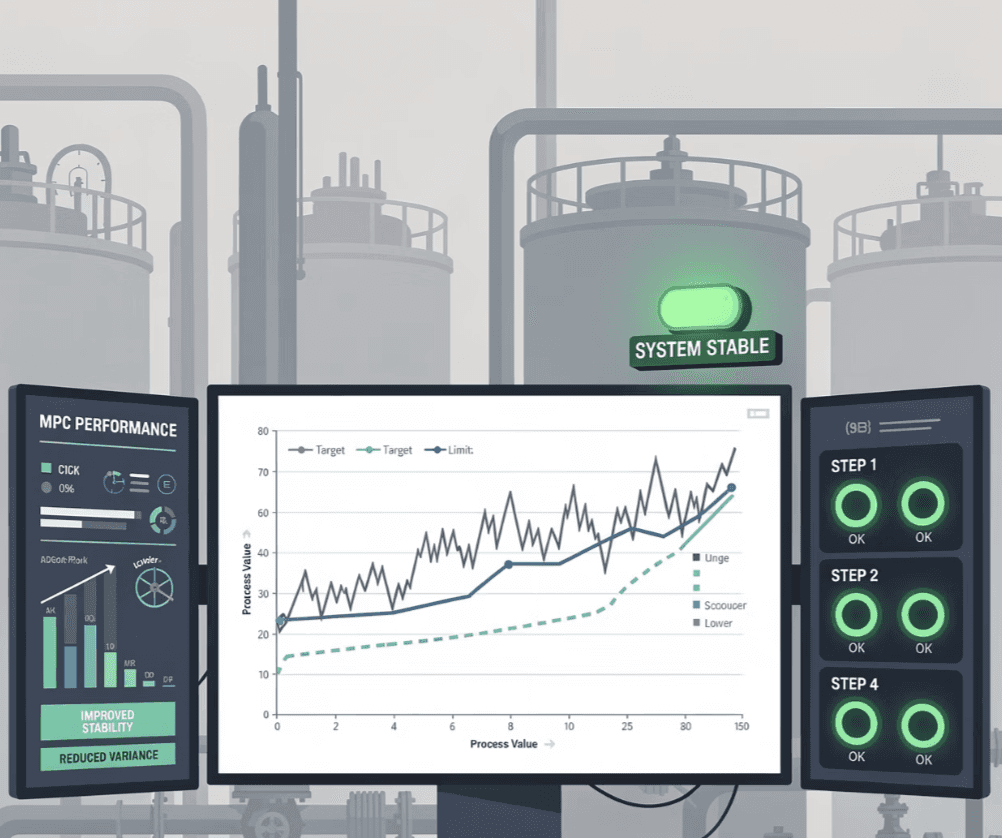
MPC changes the equation. Using real-time process data and dynamic process models, the system predicts future process behaviour and optimises control actions continuously, not in response to deviations that have already occurred.
2 enabling technologies make this possible at the level of accuracy required:
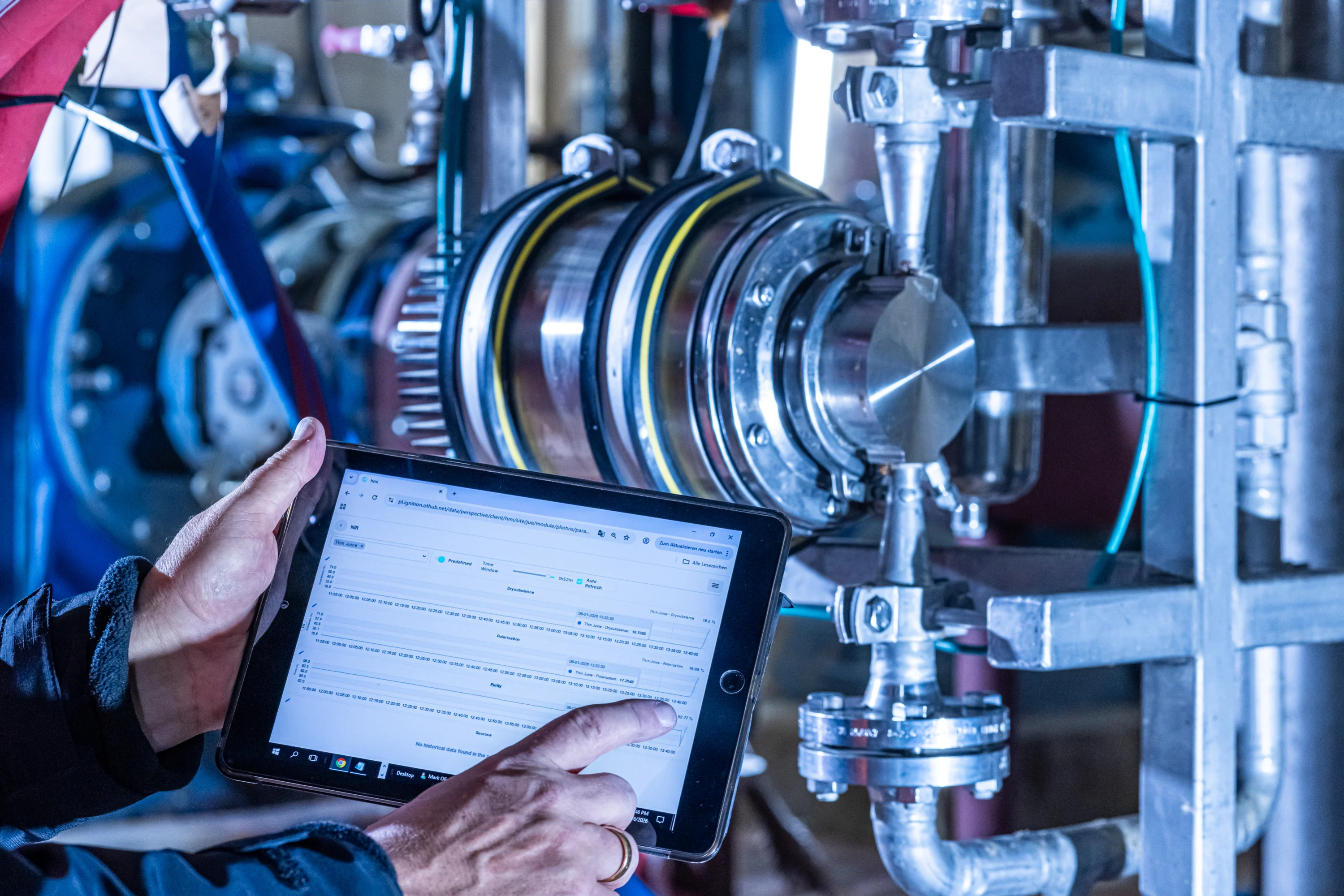
- Real-time NIRS measurements across multiple process streams, eliminating the 4 to 8 hour lab feedback gap that has historically made real-time extraction optimisation impractical.
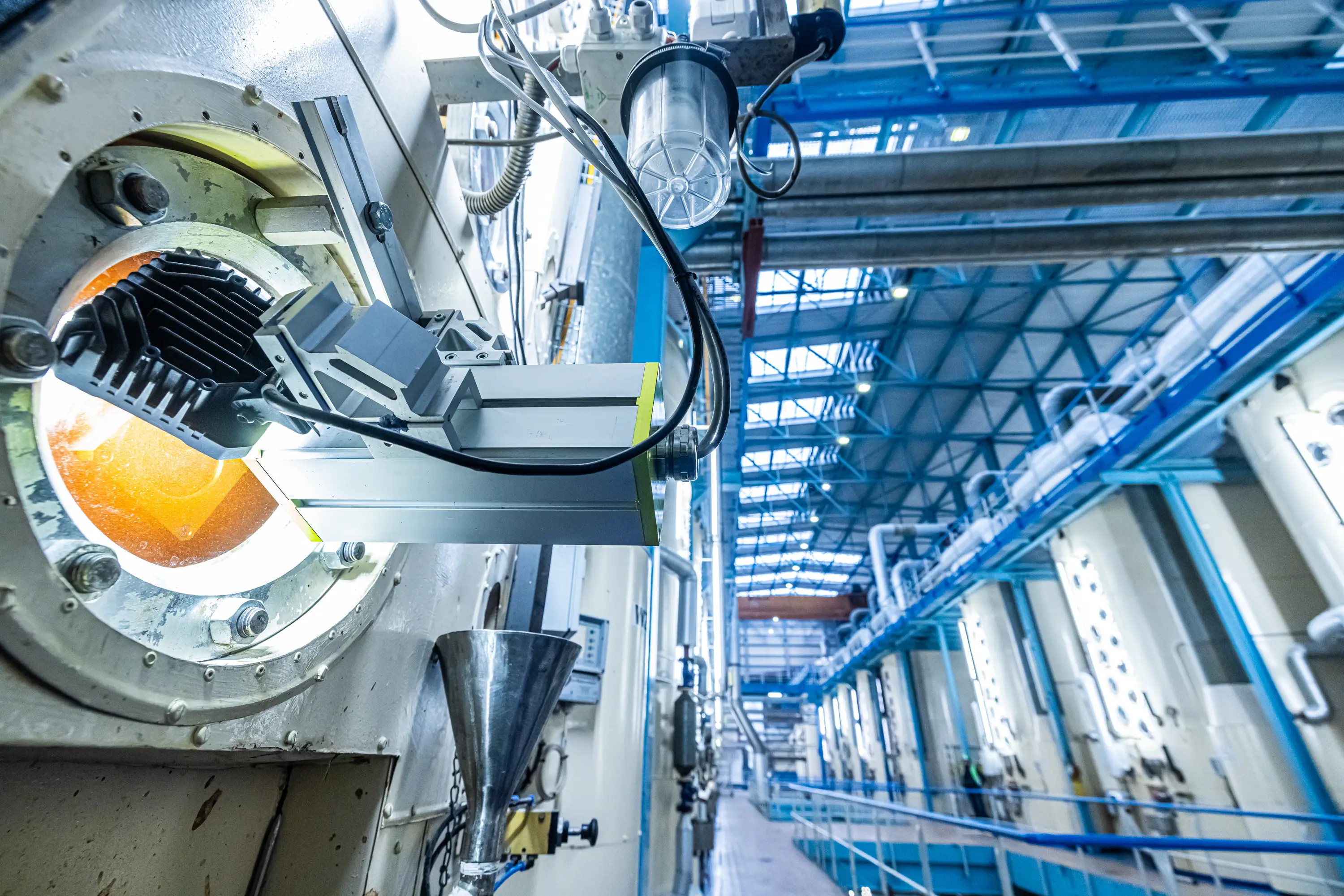
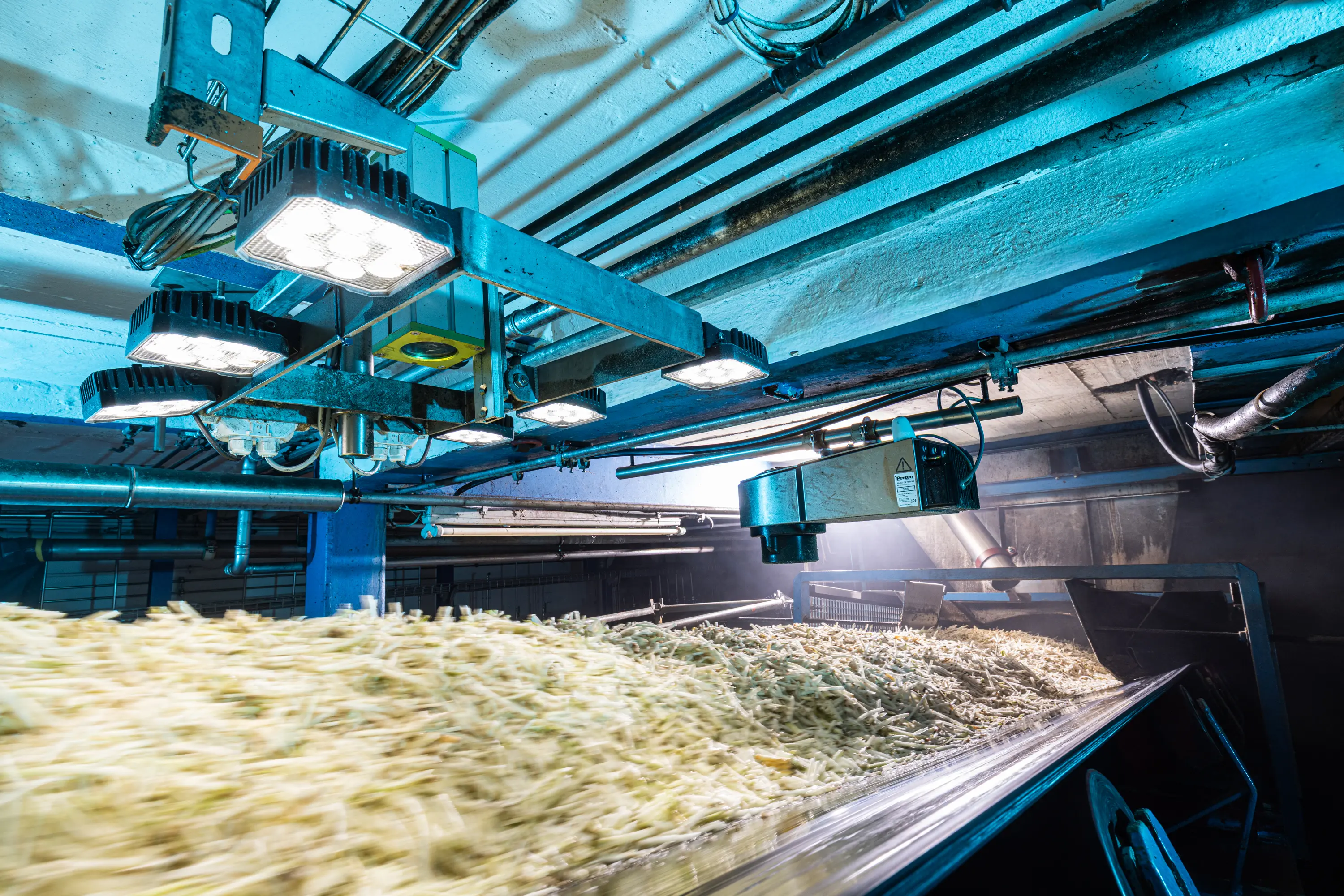
- Visual Smart Sensors (VSS) for continuous cossette quality monitoring, feeding cossette characteristics directly into the MPC model before they affect downstream performance.
Results from Live Deployment
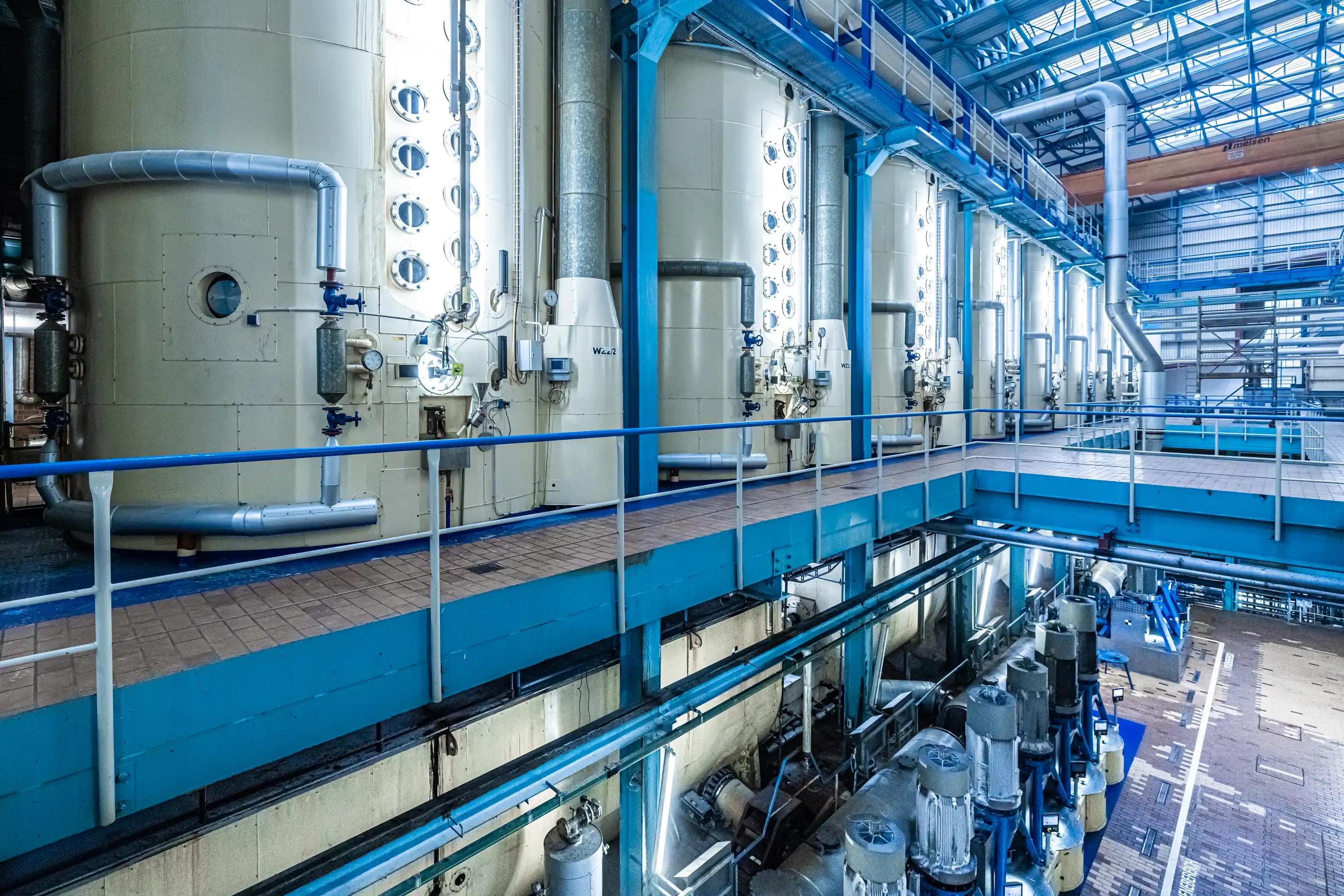
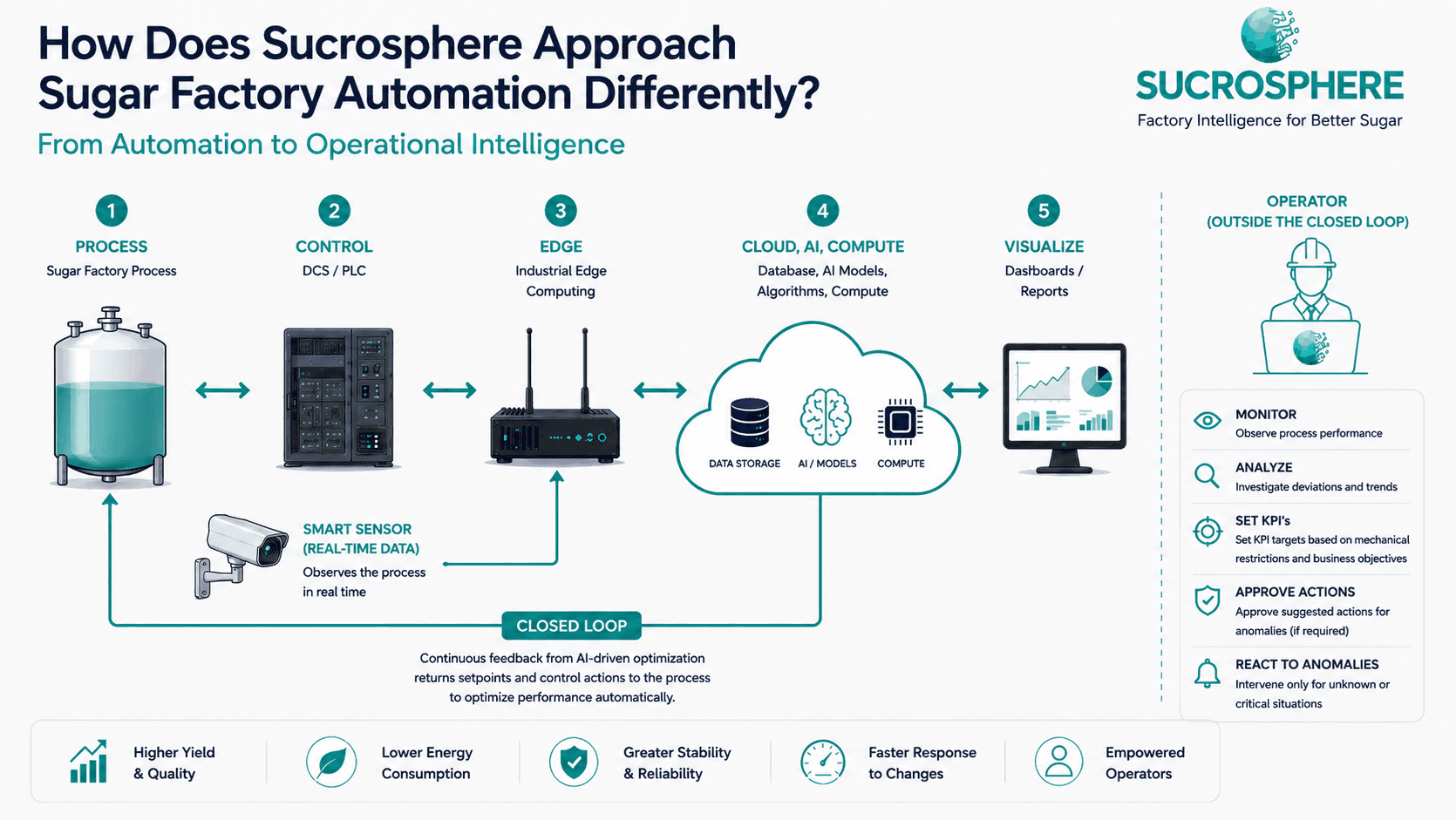
The scalability of the Sucrosphere platform, running as a supervisory layer on top of existing DCS infrastructure, was a particular point of interest for factory representatives evaluating low-risk digitalisation paths. No replacement of existing automation required.
Andreas Soika: Autonomous Batch Crystallisation Control
Presentation: "SFC Crystallisation: Smart Crystal Control"
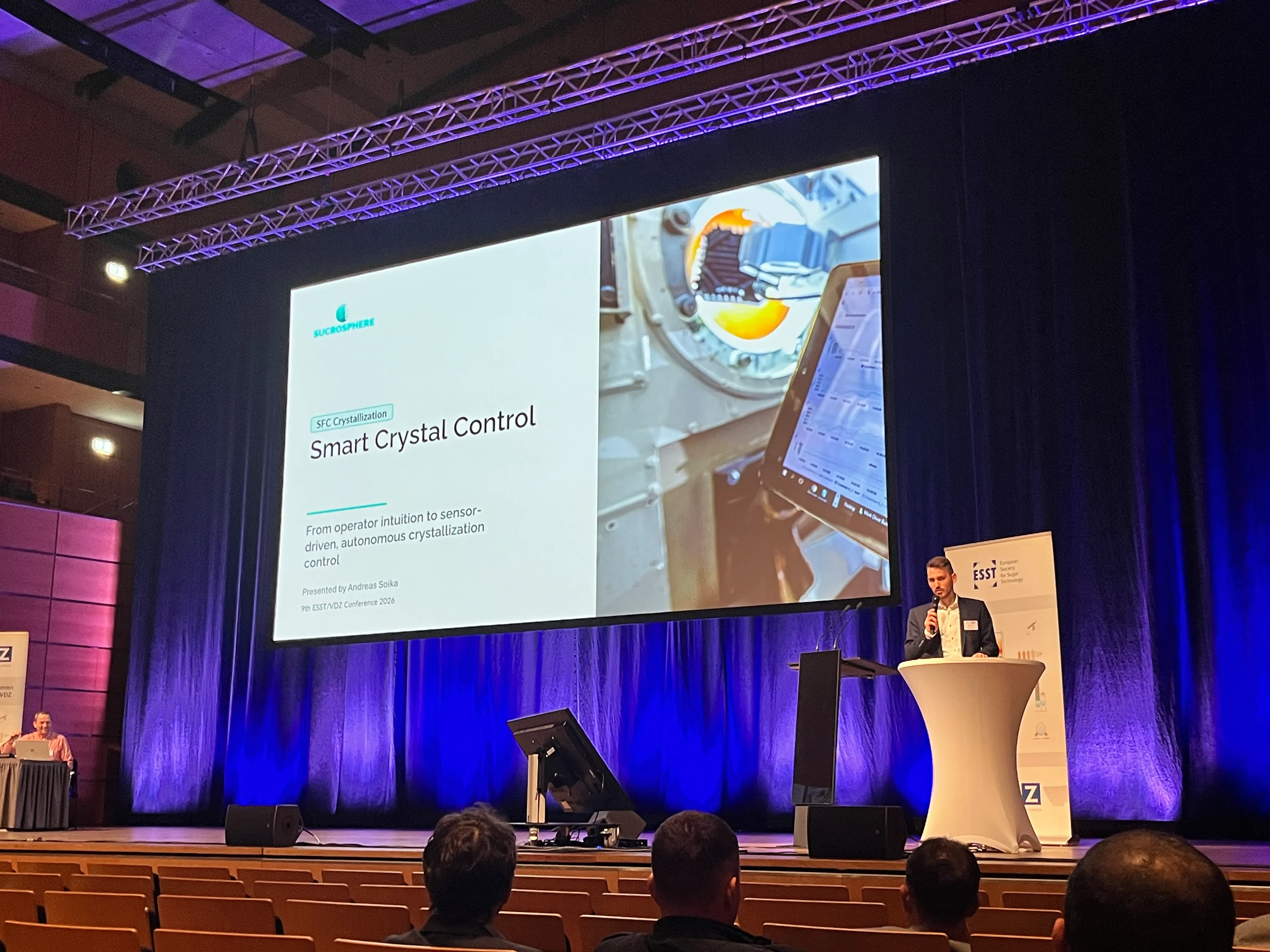
Crystallisation is the most operator-dependent step in the sugar factory. Andreas Soika showed how Sucrosphere is changing that.
The Smart Crystal Control system integrates Visual Smart Sensor cameras for real-time crystal observation, NIRS spectroscopy for syrup purity and dry substance, DCS/PLC process data, cloud supervision, and predictive control logic into a single closed-loop system.
Predictive Anomaly Handling
The most discussed element of the presentation was the predictive anomaly handling approach. Rather than reacting to sensor alarms in isolation, the system evaluates the full process context before deciding how to respond:
- Current batch phase and crystal behaviour
- Historical events and syrup conditions
- Previous batch performance
Based on that contextual intelligence, the system can react immediately, defer corrections to the next batch, adapt vacuum profiles, change steam-out strategies, modify seeding conditions, or automatically adjust crystallisation curves. Each decision is specific to the actual state of that batch.
The roadmap presented was clear: real-time transparency, then predictive support, then autonomous closed-loop operation. Each phase delivers value independently, and each builds the trust required for the next.
Day 3: Dr. Andreas Degenhardt on Beet Chemistry and NIRS
Presentation: "The Components of the Sugar Beet and Their Influence on the Sugar Manufacturing Process"
The technical programme continues on Day 3 with a presentation by Dr. Andreas Georg Degenhardt covering the chemistry and behaviour of sugar beet constituents and their direct influence on process performance.
The session covers sucrose and non-sugar compounds, amino acids, betaine, organic acids, pectins, minerals, dextran formation, crystallisation disturbances, and process-related reactions across the full manufacturing chain.
Of particular relevance to the Sucrosphere platform: the outlook on NIRS for real-time beet quality analysis and process control. Understanding raw material composition in real time is the data foundation on which autonomous process optimisation is built. Dr. Degenhardt's presentation provides the scientific grounding for what the Sucrosphere sensors measure and why it matters.
One Platform Across the Full Factory
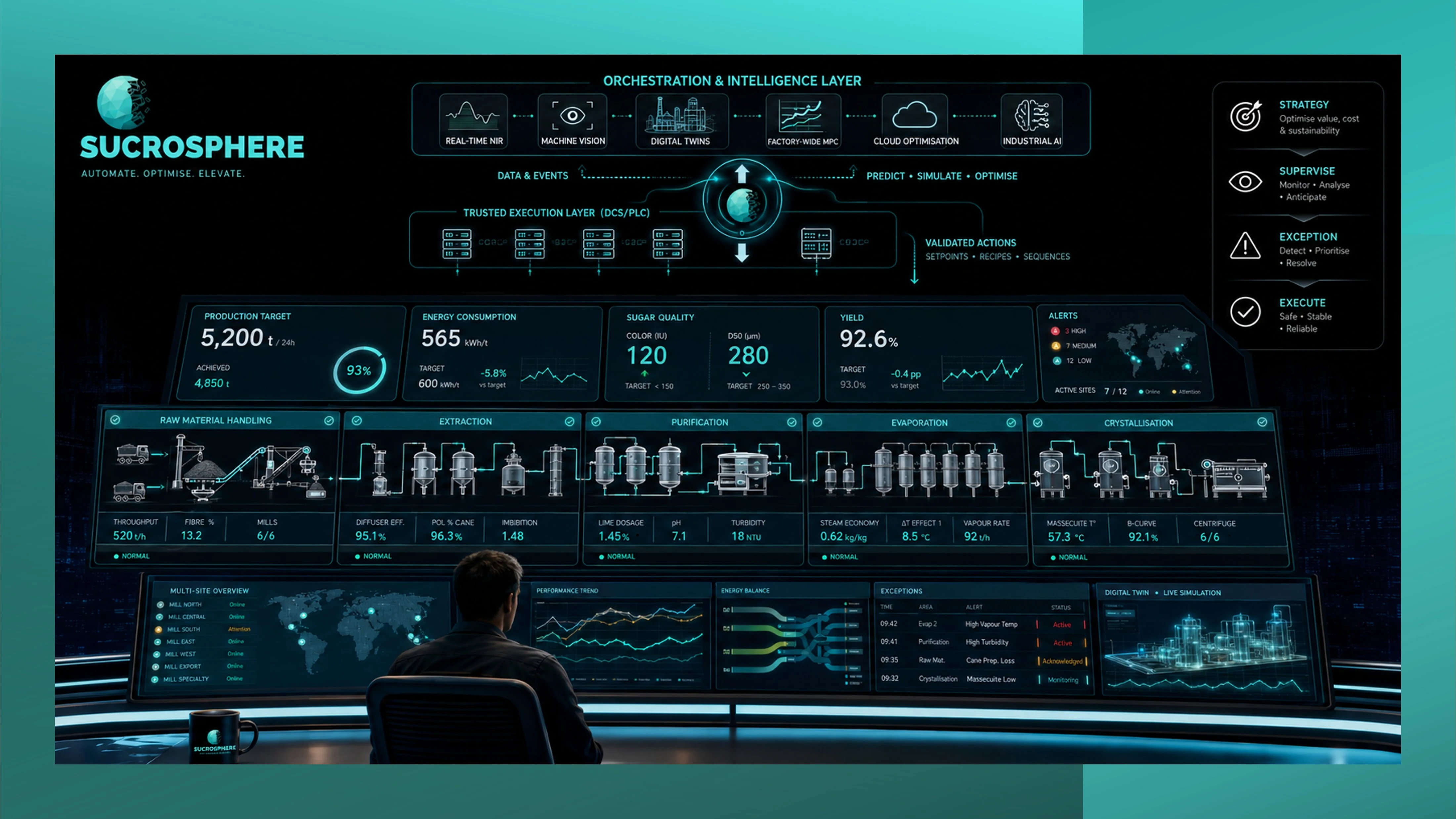
The 2 presentations on Day 1 together made the broader Sucrosphere positioning clear. This is not a sensor supplier or a single-loop automation tool. It is a complete automation platform covering:
- Advanced process sensors (NIRS, VSS)
- Real-time analytics and process state estimation
- Predictive models and MPC
- Cloud supervision and remote monitoring
- Operator guidance and advisory systems
- Autonomous closed-loop optimisation
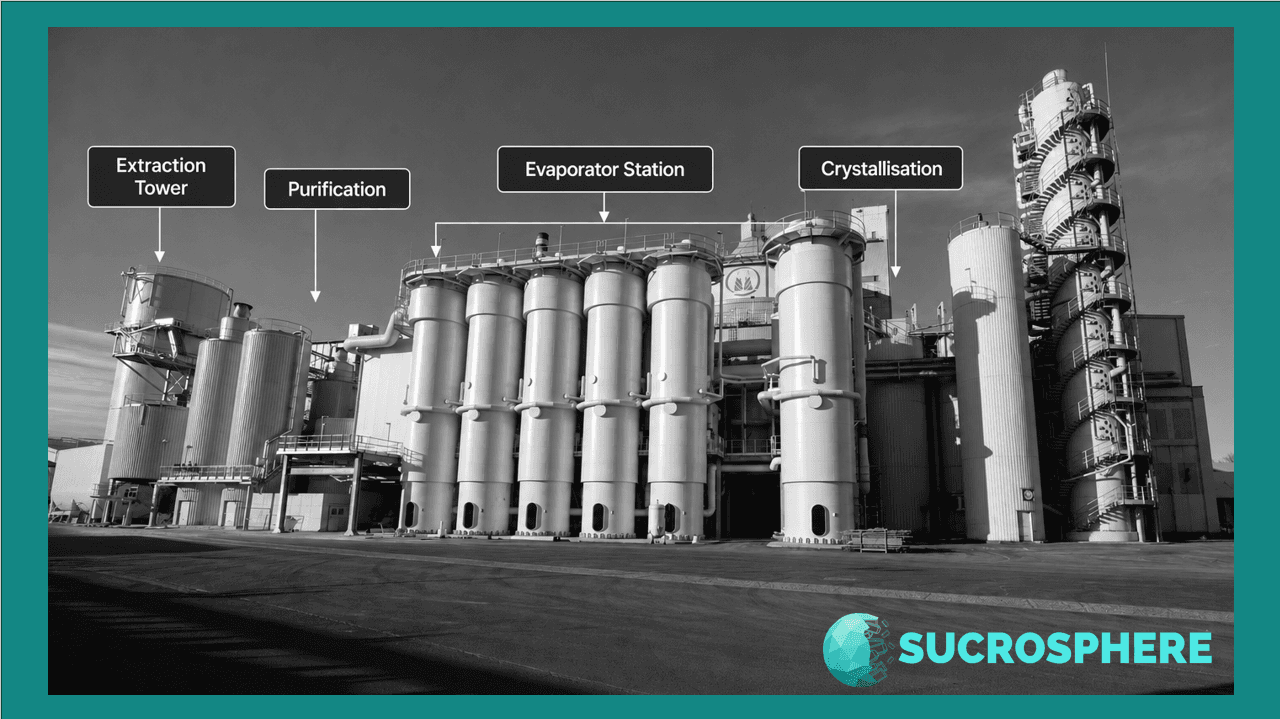
From extraction to crystallisation, and toward fully integrated factory-wide optimisation: the architecture is the same, the deployment is phased, and the integration is non-invasive.
Come Find Us in Lubeck
The conference runs through 13 May. Sucrosphere is at Booth 50.
If a conversation at the booth turns into a project discussion, the next step is a focused review of 1 specific process area at your factory, no generic pitch.
Frequently Asked Questions
What is the VDZ/ESST Conference?
The VDZ/ESST Conference is the joint annual meeting of the Verein der Zuckerindustrie (VDZ) and the European Society of Sugar Technology (ESST). The 9th edition in 2026 brought together more than 450 sugar industry professionals in Lubeck for technical presentations and industry networking.
What did Sucrosphere present at ESST 2026?
Sucrosphere presented 2 technical sessions on Day 1: Andrew Youssef on MPC-based extraction control (with live deployment results), and Andreas Soika on Smart Crystal Control for autonomous batch crystallisation. Dr. Andreas Degenhardt presents on beet chemistry and NIRS on Day 3.
What results has the Sucrosphere MPC extraction system delivered?
In live deployment across multiple beet sugar factories: approximately 90% reduction in operator interventions, 0.3% increase in sugar yield, around 3% reduction in energy usage, and 95% uptime over more than 60 days of continuous operation.
Does the system require replacing the existing DCS?
No. Sucrosphere runs as a supervisory layer on top of existing DCS infrastructure. Safety interlocks and base-level controls remain unchanged. The system sends optimised setpoints to the DCS via OPC-UA or MQTT. No changes to existing automation logic are required.
How do you get the presentation materials?
Materials from both presentations will be published on the Sucrosphere website after the conference. Contact the team directly for early access or to discuss specific topics from the sessions.