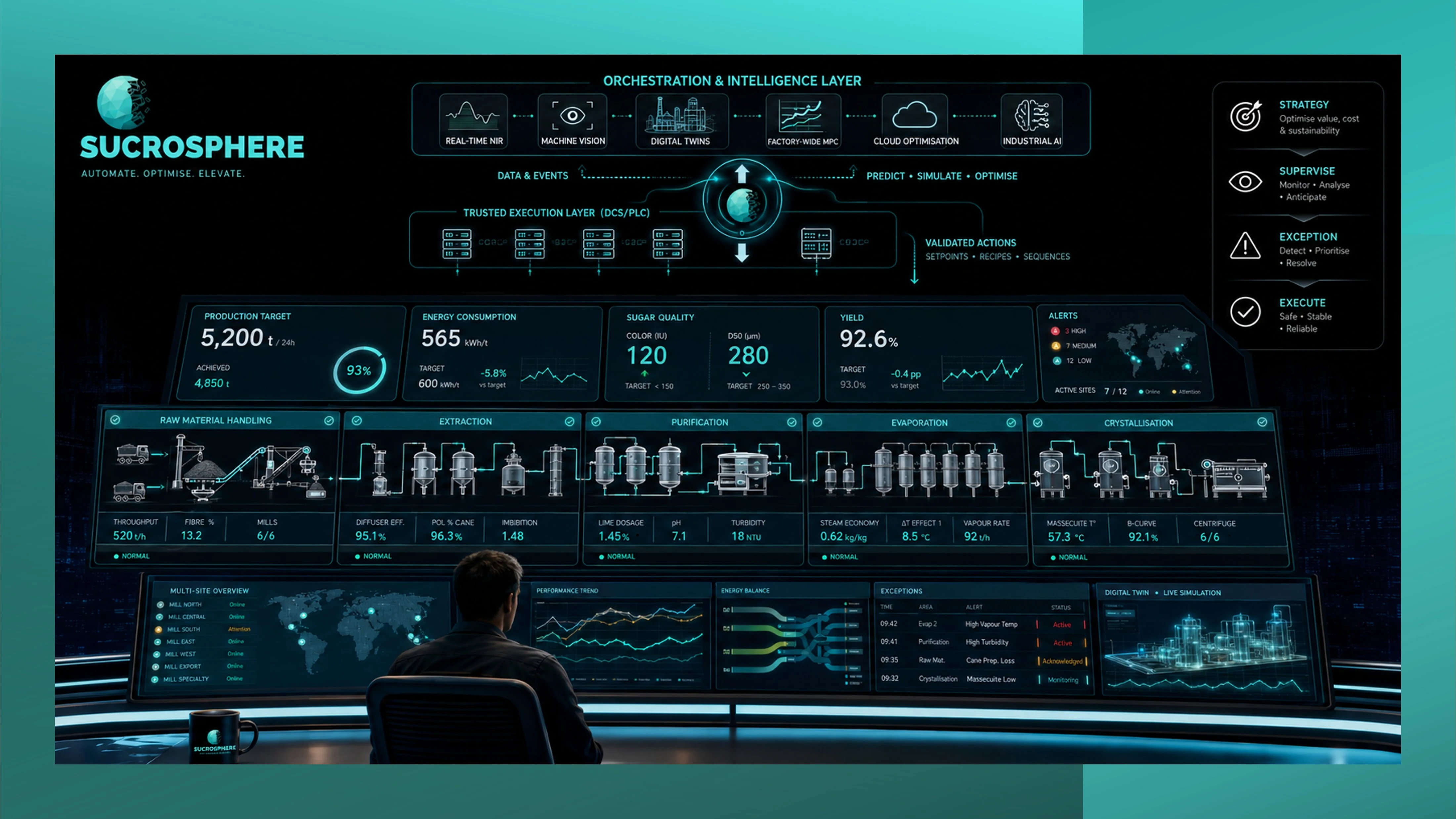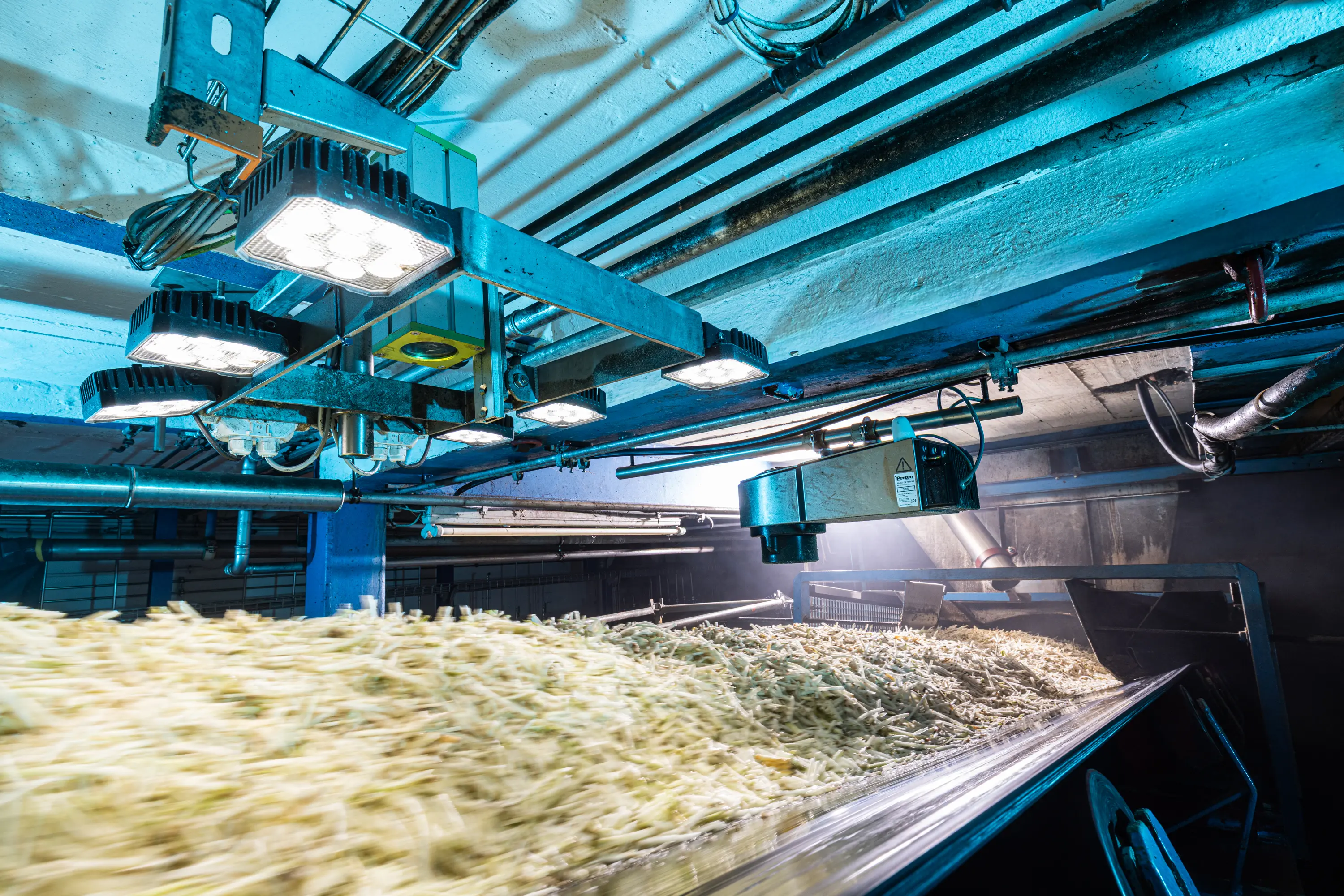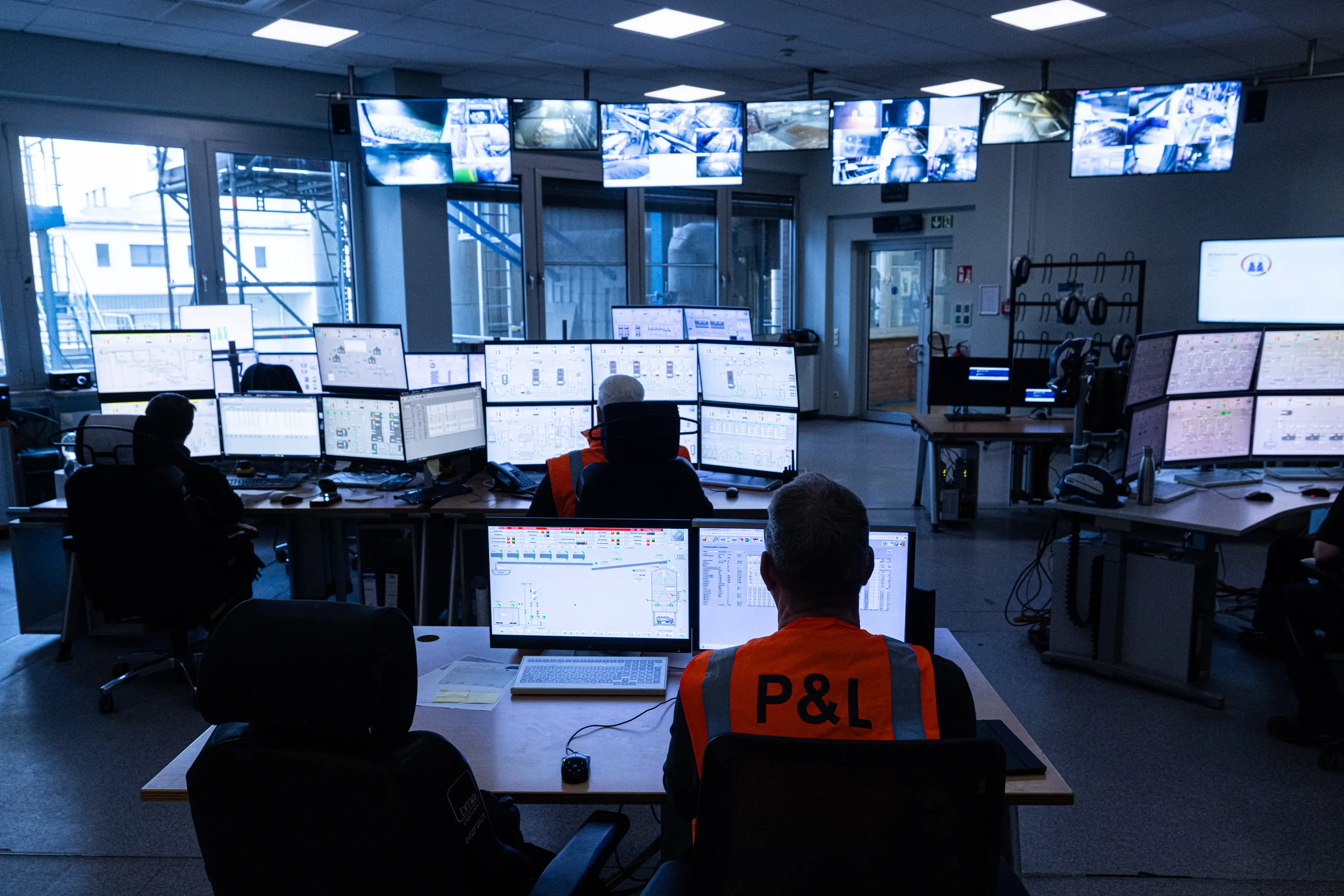
The tool that got sugar factories here is not the tool that takes them further. Here is what changed, why it took this long, and what the shift to MPC actually looks like.
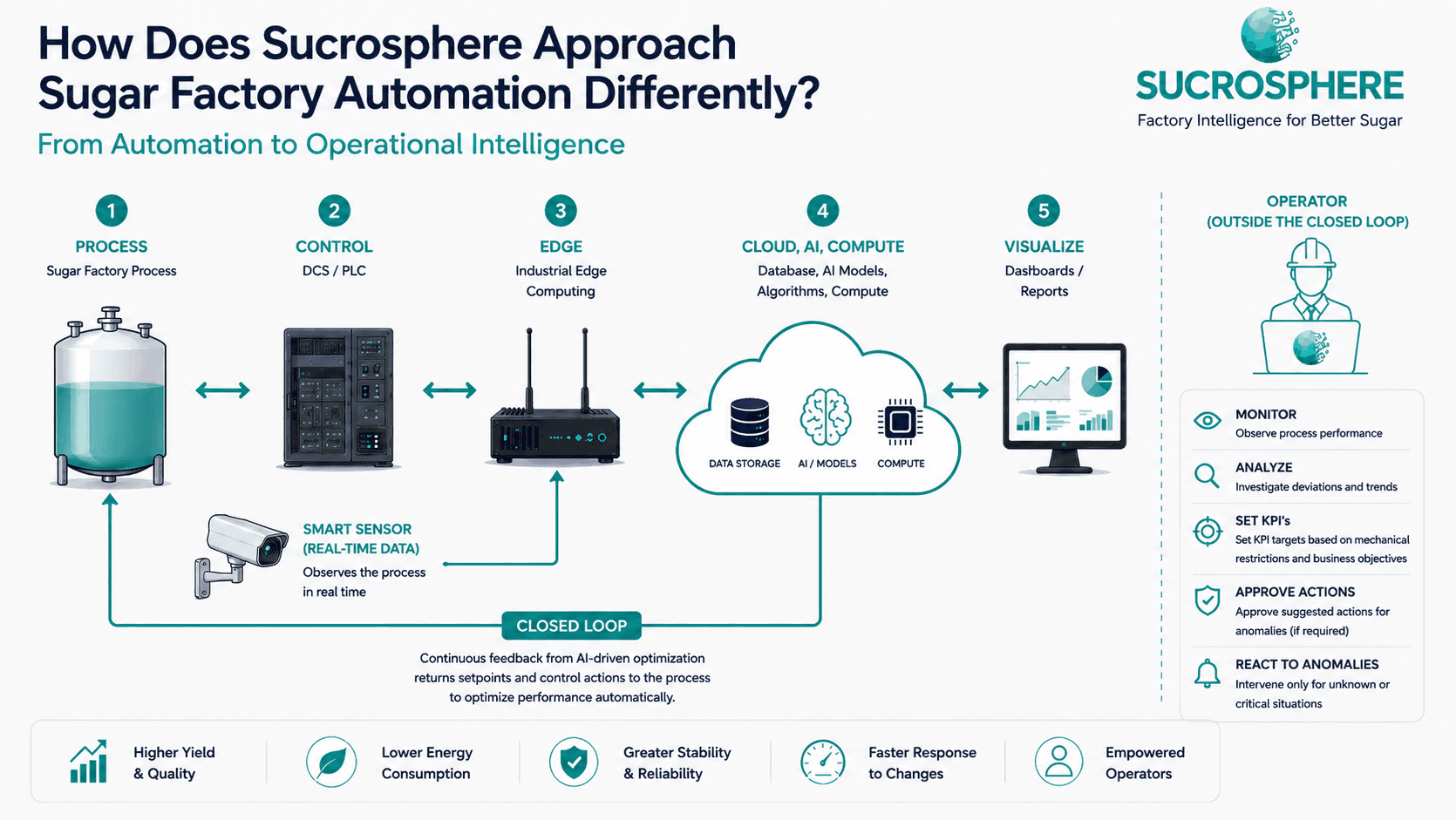
Walk into almost any modern sugar factory and you will find it is already automated. Motors start on their own. Valves move in milliseconds. PID loops hold pressures, temperatures, and flows steady, and a DCS paints thousands of process values across the control room screens every second.
And yet, somewhere on the night shift, an experienced operator is still nudging a setpoint by hand, because the lab value that would tell him what to do is 40 minutes old.
That gap, between a factory that is automated and a factory that is actually optimised, is where the whole industry is now moving. The tool that got us here is not the tool that takes us the next step.
What Does PID Control Do Well, and Where Does It Stop?
PID earned its place, so start there. A PID loop takes 1 measurement, compares it to a setpoint, and corrects the error. It is cheap, it is well understood, and it has held sugar factories together for decades. For a single valve on a single flow, it is still the right answer.
The problem is not that PID is bad. The problem is that PID is blind. Each loop solves its own small problem and knows nothing about the rest of the plant. It reacts after the deviation has already happened. It handles 1, maybe 2 variables. It has no idea that the setpoint it is chasing right now will create a bottleneck 2 process steps downstream in 20 minutes.
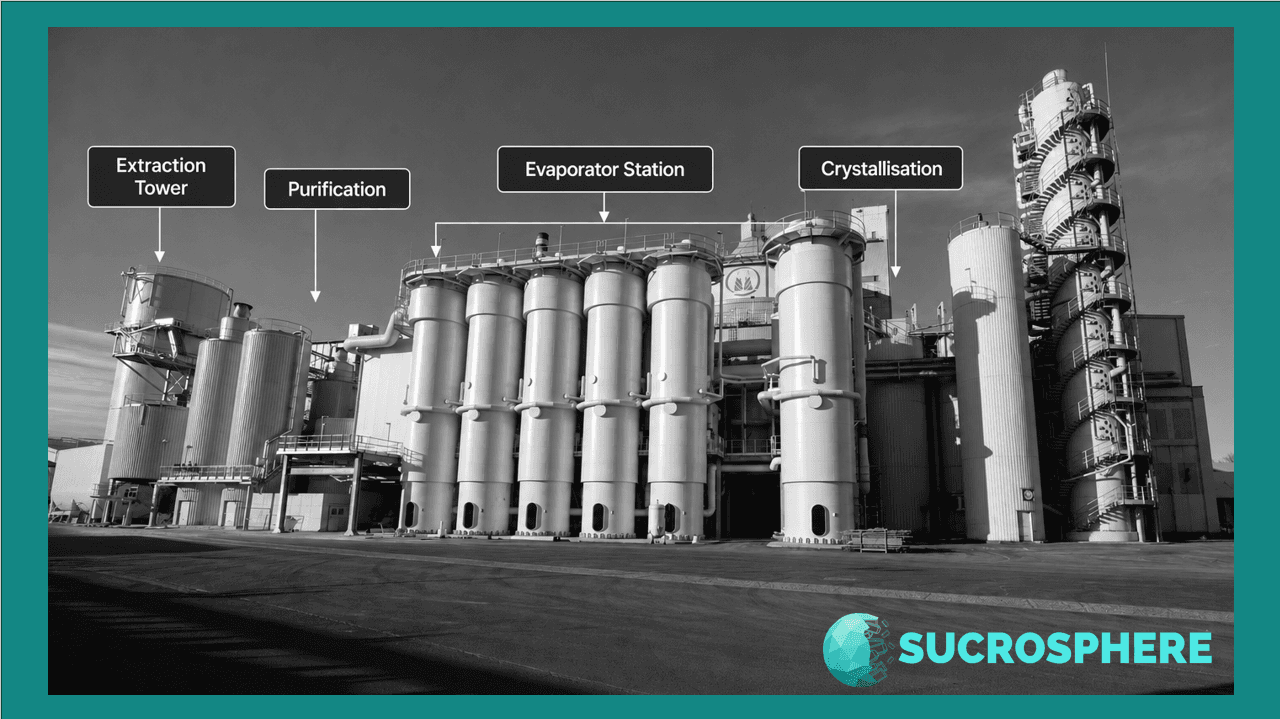
A sugar factory is not a collection of independent loops. It is one connected process, from extraction through evaporation and crystallisation to the centrifuges. PID treats it as a hundred separate machines. That is where it stops.
| PID Control | Model Predictive Control | |
|---|---|---|
| Variables handled | 1 per loop | Hundreds simultaneously |
| Response timing | Reacts after deviation | Predicts before it happens |
| Process view | Each loop is isolated | Whole factory modelled together |
| Setpoint basis | Fixed target | Optimised against KPIs |
| Constraint handling | No | Yes, hard limits built in |
| Downstream awareness | None | Accounts for future bottlenecks |
| Operator dependency | High for cross-stage decisions | Handles multi-variable decisions automatically |
Why Did Sugar Hold on to PID Longer Than Other Industries?
Refineries and petrochemical plants moved to advanced control decades ago. Sugar held back, and not out of stubbornness. There were good reasons.
Sugar is a campaign business. You run hard for roughly 100 days, then you stop. Nobody wants to experiment with the control strategy in the middle of a campaign, when every stopped hour is lost beet. The raw material fights you too: beet quality changes day to day, sometimes load to load, so a model that worked last week can drift this week. And for a long time the knowledge that actually ran the plant lived in the heads of a few senior operators, not in any model.
So the industry did the rational thing. It kept the PID loops, leaned on operator experience, and lived with the variability. 'If it runs, do not touch it' is a sensible rule when touching it is expensive and the person who understands it best is about to go home for the night.
That equilibrium is now breaking.
What Are the 3 Pressures Forcing the Shift to MPC?
3 of them, arriving together.
Margins. Sugar prices swing, and the cost side is the only part you control. At factory scale, half a percent of recovery is real money, every day of the campaign.
Energy. Steam is the largest cost lever in the plant, and now it is also the number management reports upward for sustainability. Cut steam 5% per tonne and you save money and cut carbon at the same time. A PID loop tuned for stability will never go looking for either.
Operators. The experienced crews are retiring, and they are not being replaced one for one. The knowledge that used to paper over a blind control system is walking out the door, one of the quieter hidden costs of sugar production. A 30-year veteran cannot be put on every night shift anymore.
None of this is new on its own. What is new is the combination, landing on an industry whose control room still runs on PID.
What Does MPC Do Differently, and Why Did It Take This Long in Sugar?
Model Predictive Control starts from a different question. Instead of 'what is the error right now', it asks 'where is this process going, and what should I do before it gets there'.
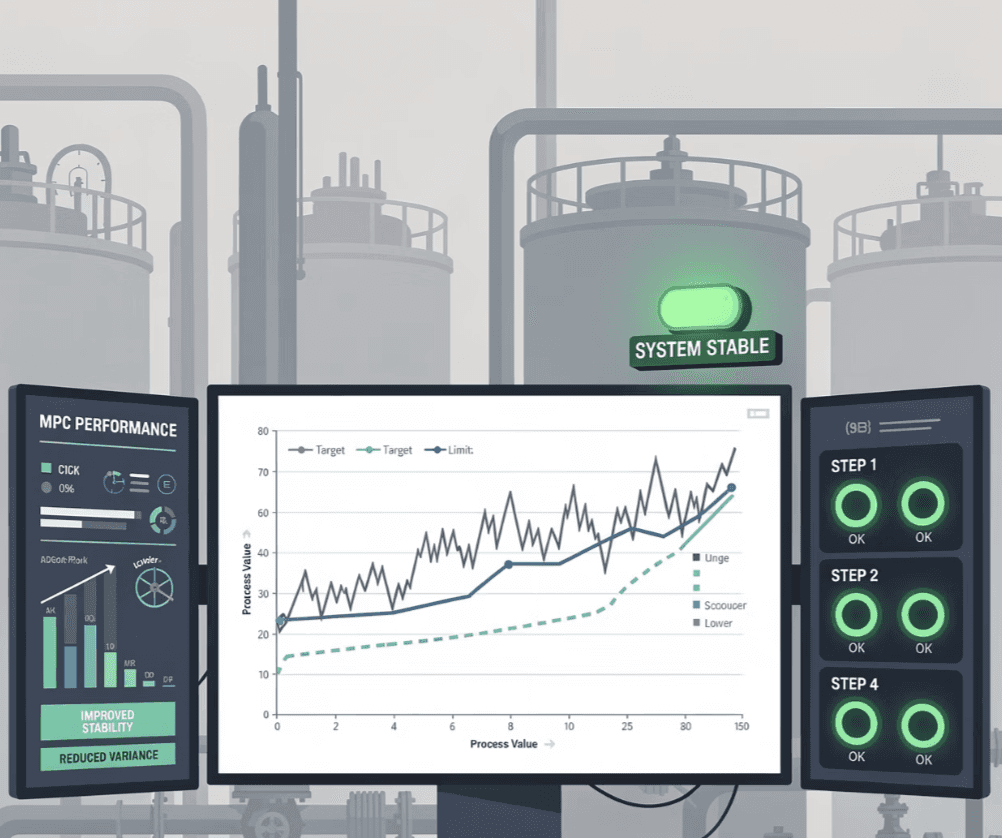
MPC uses a mathematical model of the process to predict how it will behave, then continuously works out the best control moves to hit the targets you set, more recovery, less steam, while staying inside the limits you cannot cross on equipment and quality. It updates that decision in real time as new data arrives. A PID loop handles 1 or 2 variables. MPC handles hundreds at once, and it sees how they pull against each other.
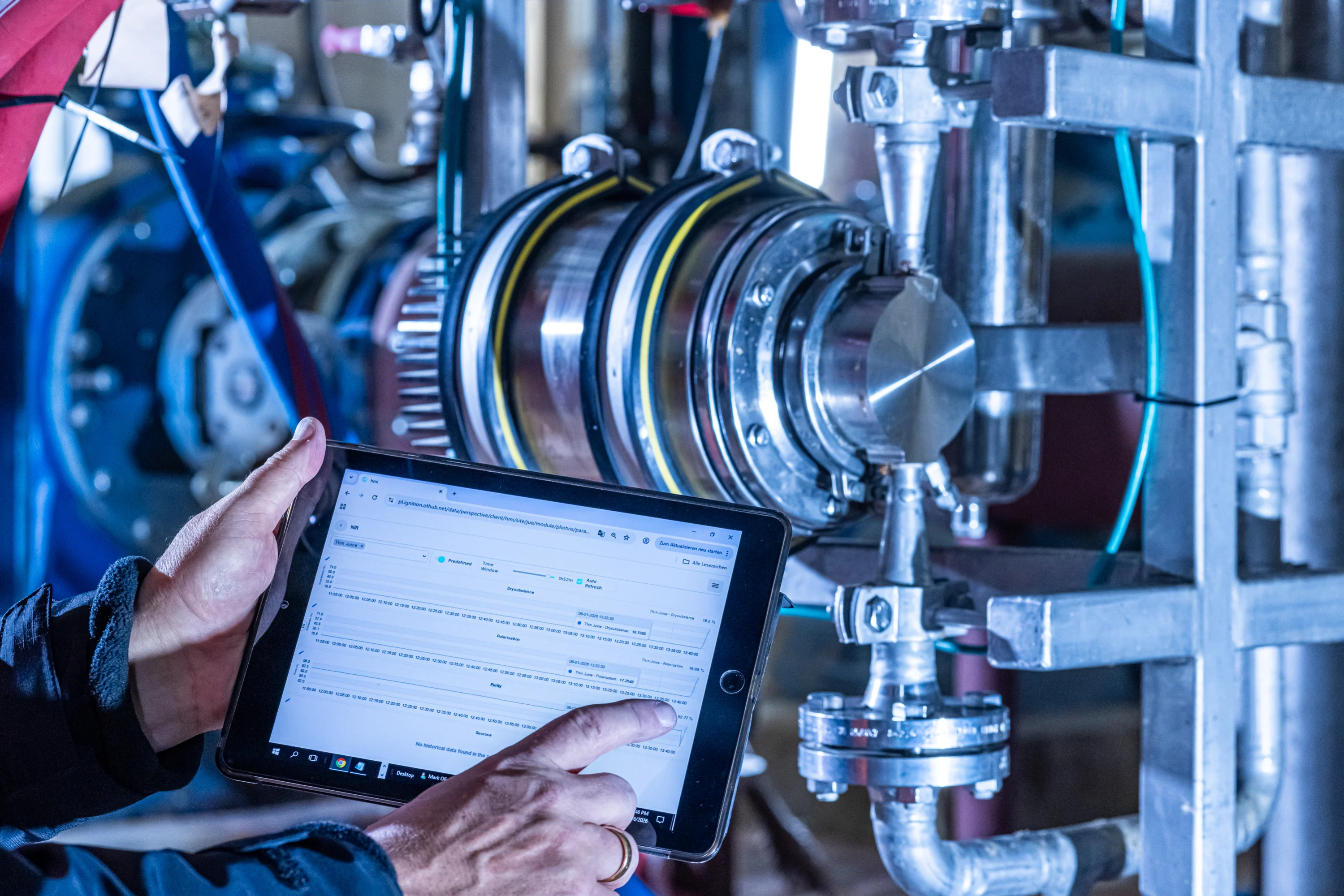
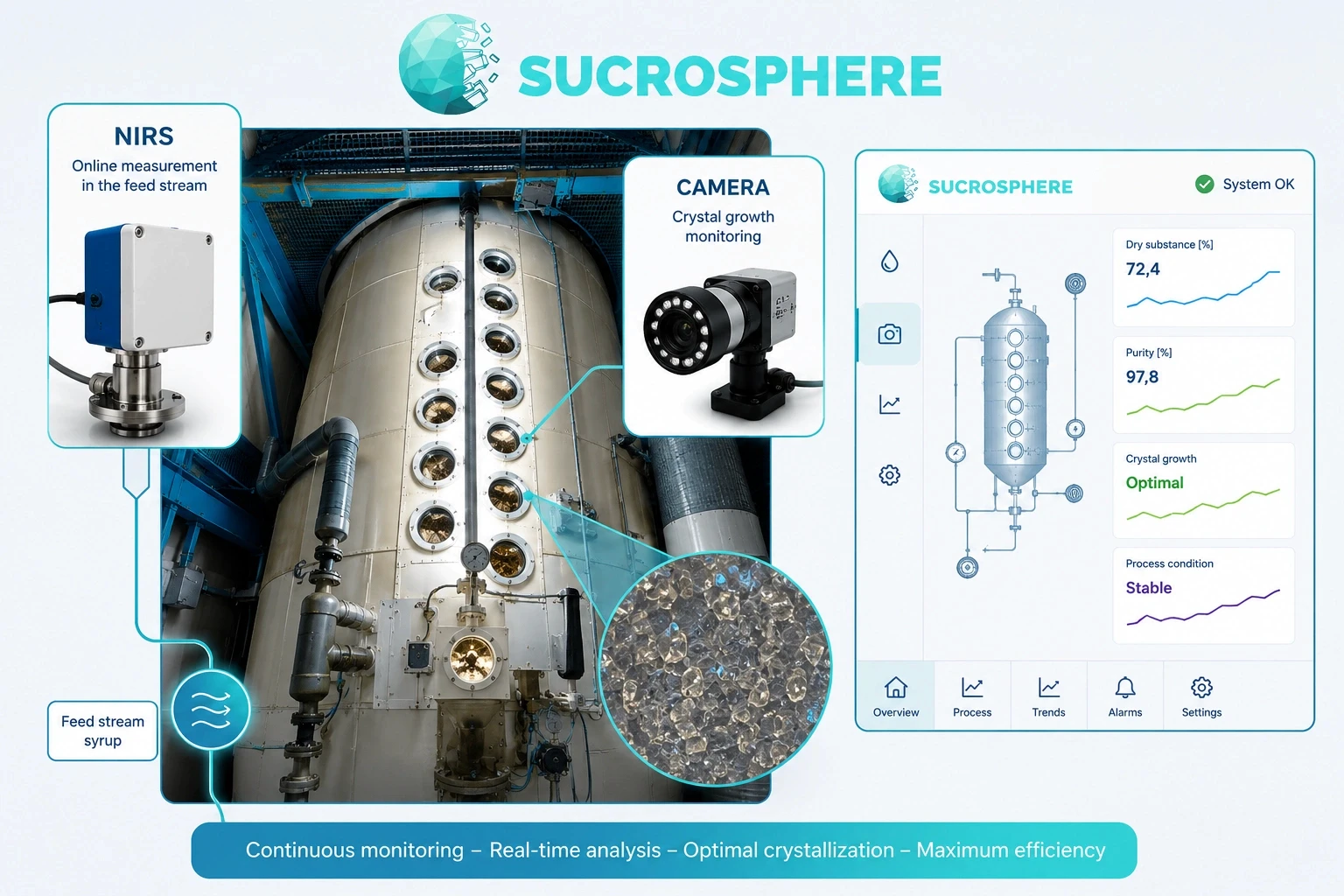
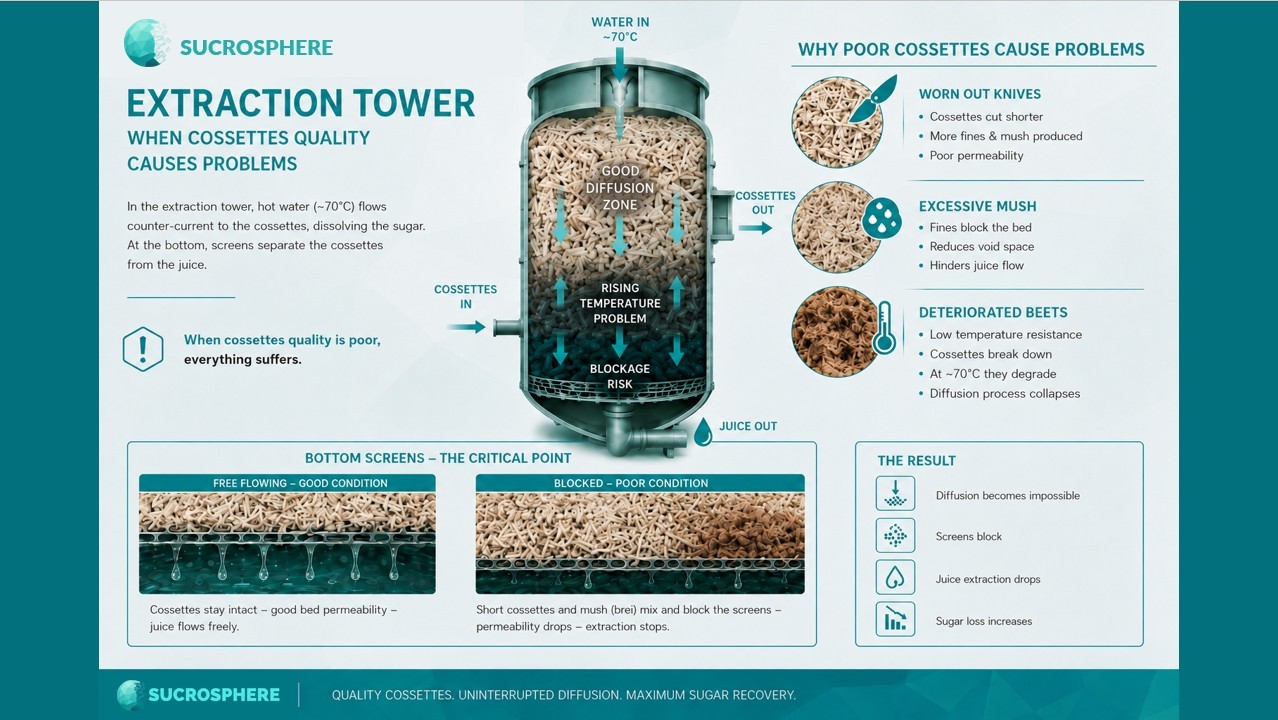
Take extraction. Instead of holding a fixed level setpoint, MPC can control tower torque directly, raising sugar recovery and reducing mechanical stress at the same time. Or take crystallisation, the most operator-dependent step in the plant: MPC folds the process model, the NIR and vision sensors, and the production target into 1 stable control of supersaturation. Fewer off-spec strikes, a tighter crystal size distribution.
Why did it take so long to reach sugar? The pieces were not there yet. The computing power to solve the optimisation fast enough. Sensors good enough to read a messy physico-chemical process in real time. And, frankly, the operator shortage becoming painful enough to force the question. That changed in the last few years. The MPC fundamentals are covered in our post on model predictive control in sugar production.
What Happens When MPC Moves Beyond a Single Stage?
Putting MPC on 1 unit is the start, not the finish. The first deployment usually targets the hardest single area, extraction or a crystallisation stage, and the gains there are real on their own.
The larger prize is coordination. When each MPC controls only its own unit, it still cannot see that pushing harder here will starve or flood a stage downstream. Run the evaporators hard for steam economy and you can starve the pans of the thick juice they need an hour later. The next step is a layer that coordinates the units, so a decision in extraction already accounts for what the evaporators and centrifuges can absorb hours later. No operator can reliably predict a bottleneck several hours ahead across the whole plant. A system working from plant-wide data can.
This is where control stops being a set of loops and turns into a decision system, and where the operator finally steps out of the constant-correction loop and into supervision.
What Do the Factories That Made the Shift Look Like Now?
The results are consistent across sugar operations that have made the move:
- +0.5% sugar recovery
- -5% steam consumption per tonne of sugar
- Clear drop in process variability
- Lower operator workload and fewer manual interventions
- Smoother equipment operation, which extends its life
Payback is often under 8 months, and the gain does not fade, because the system applies the best decision it has, around the clock. The operators are still there, watching for the things the model was never told about, a fouled heat exchanger or a bad delivery of beet.
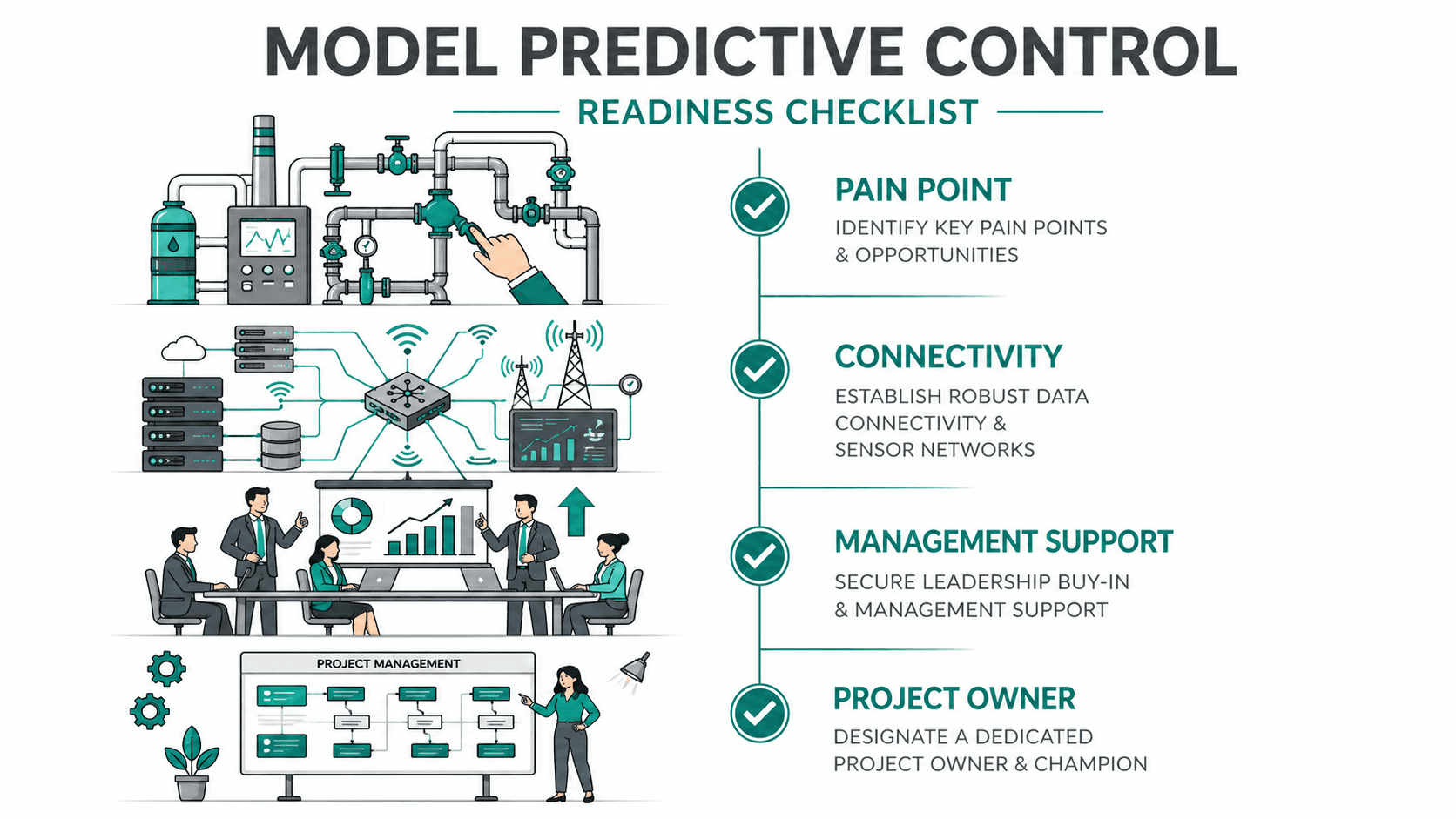
MPC needs reliable process data, clear KPIs you actually agree on, integration with the DCS and PLC systems you already run, and alignment from the control room to management. The hard part has never been the maths. It is getting everyone to agree on what 'better' means before you start.
Want to See the Numbers From Live Deployments?
The deployment methodology and results from our extraction and crystallisation projects are in the Sucrosphere white papers.
Frequently Asked Questions
Is MPC replacing operators?
No. MPC takes over the complex, multi-variable decisions and the constant small corrections, so operators can focus on supervision and the calls that actually need judgment.
Can MPC work with our existing DCS and PLC systems?
Yes. MPC runs as a layer on top of the control systems you already have. The PLCs keep doing exactly what they do today. MPC sets the targets they work to.
Do we need new sensors first?
Not necessarily. MPC can start with the data you already have. Extra sensors, NIR or soft sensors, raise the ceiling on performance, but they are not the price of entry.
How long does implementation take?
Depending on scope, a first deployment runs a few months, then keeps improving as the models are refined against real campaign data.
What is the biggest risk in an MPC project?
Not technical complexity. It is starting without clear KPIs and shared buy-in. Without agreement on what the system is optimising for, even good models cannot help.